
Best 5 Telescopes for Deep Space: Top Professional Grade Models Reviewed for 2024
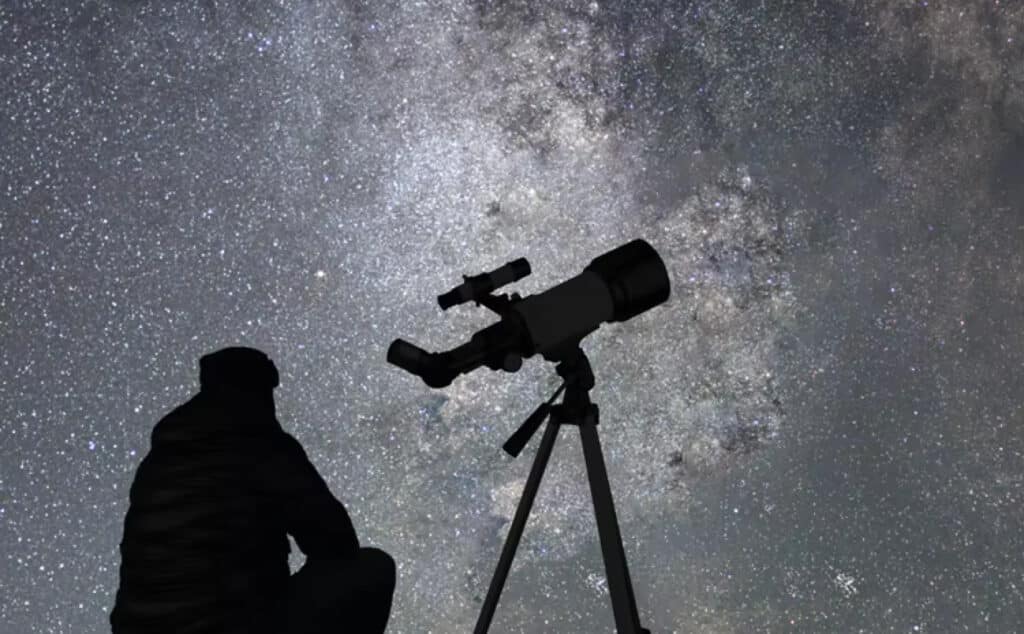
Welcome to our comprehensive guide on the best 5 telescopes for deep space viewing 🔭!
Whether you’re an aspiring astronomer or a seasoned stargazer, finding the right telescope can make all the difference in your celestial observations.
In today’s market, deep space telescopes come with increasingly advanced features and capabilities, making it more important than ever to choose the right one for your specific needs.
We’ve thoroughly tested and analyzed the top models available to help you make an informed decision.
Our team has spent countless hours researching and comparing various telescopes, focusing on key aspects like aperture size, focal length, mount stability, and overall build quality.
We’ve also considered user feedback and expert opinions to ensure our recommendations are both practical and reliable.
Let’s explore these remarkable instruments that can bring the wonders of deep space right to your eyepiece.
From nebulae to distant galaxies, these telescopes will help you unlock the mysteries of the cosmos.

By Logan Chase – Research Specialist
After years of dedicated research and thorough examination of tech gadgets and tools, Logan has immersed himself in the realm of technology, acquiring extensive knowledge. Explore his expertise showcased in our prestigious Top 5 series.
Our Evaluation Standards
Aperture Size
Larger apertures capture more light, enhancing the telescope’s ability to see distant objects.
Resolution
Higher resolution improves image clarity, helping to distinguish fine details in deep space.
Sensitivity
Sensitivity measures the telescope’s ability to detect faint objects, crucial for observing distant galaxies and stars.
Mount Type
A stable, accurate mount (e.g., equatorial or alt-azimuth) is essential for precise tracking of deep-space objects.
#1 TOP PICK OF 2024
Rating
9.8/10
GENERAL VIEW
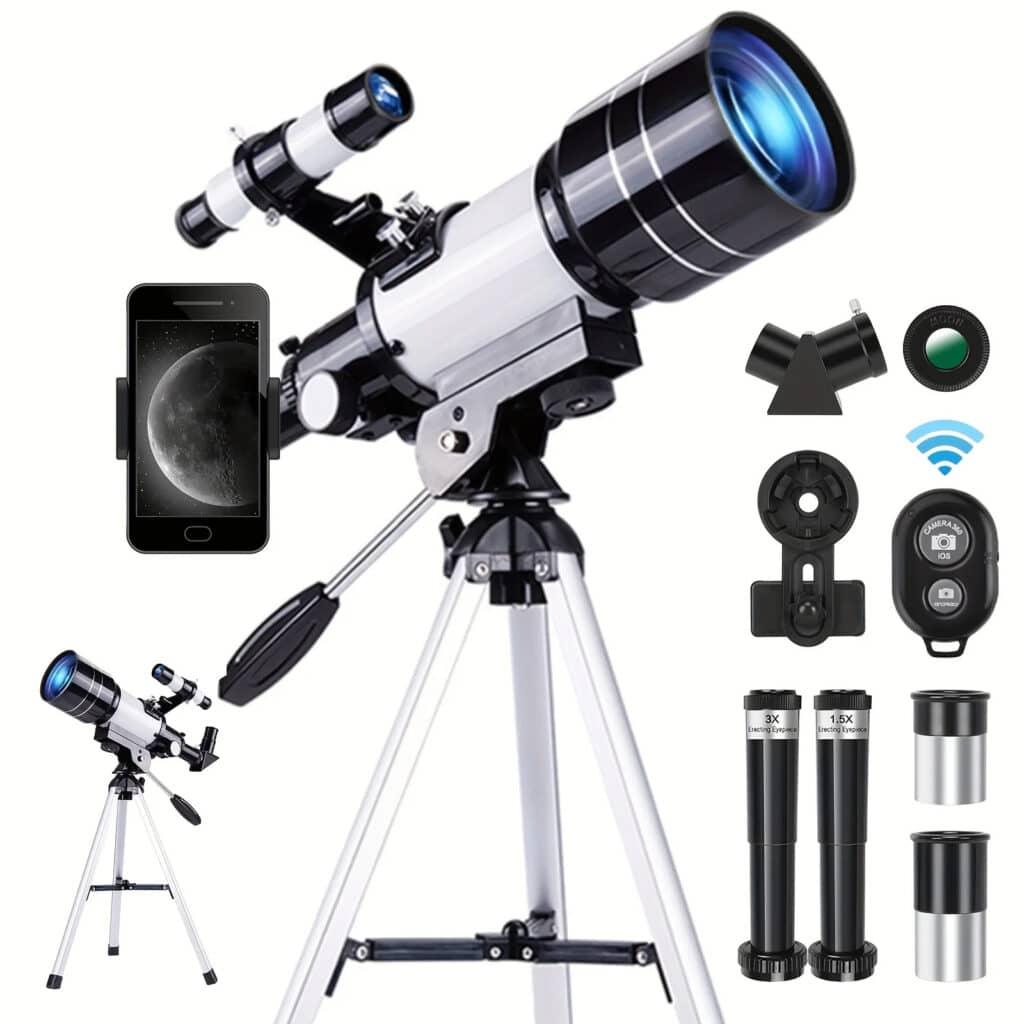
The Astrobupy Telescope for Deep Space stands out as our top choice for deep space observation, combining exceptional optical quality with user-friendly features 🎯.
This 70mm aperture telescope with a 300mm focal length delivers impressive performance for both beginners and intermediate astronomers.
What truly sets this telescope apart is its versatile magnification range, offering 15X to 150X capabilities 🔍.
The inclusion of multiple eyepieces (H20mm and H6mm) along with both 1.5X and 3X Barlow lenses provides incredible flexibility in viewing different celestial objects.
The telescope’s advanced multi-coated optics ensure superior light transmission and minimal chromatic aberration, resulting in crisp, clear images of deep space objects ⭐.
The integration of modern features like smartphone compatibility and wireless control makes it especially appealing to tech-savvy astronomers.
Its robust aluminum alloy tripod and precise mechanical controls make it stable and easy to operate, while the included 5×24 optical finder scope helps in quickly locating celestial objects.
Pros
- Superior optical clarity with multi-coated lenses
- Versatile 15X-150X magnification range
- Wireless control capabilities
- Comprehensive accessory package
- Durable aluminum construction
- User-friendly interface
- Excellent smartphone compatibility
- Stable tripod system
- Advanced light transmission
- Professional-grade build quality
Cons
- Often out of stock due to high demand
WRAP-UP
The Astrobupy Telescope For Deep Space combines professional-grade optics, versatile magnification options, and modern features, making it an outstanding choice for both serious astronomers and beginners. Its exceptional build quality and comprehensive accessory package provide excellent value. EXPLORE NOW!
PICK #2
Rating
8.8/10
GENERAL VIEW
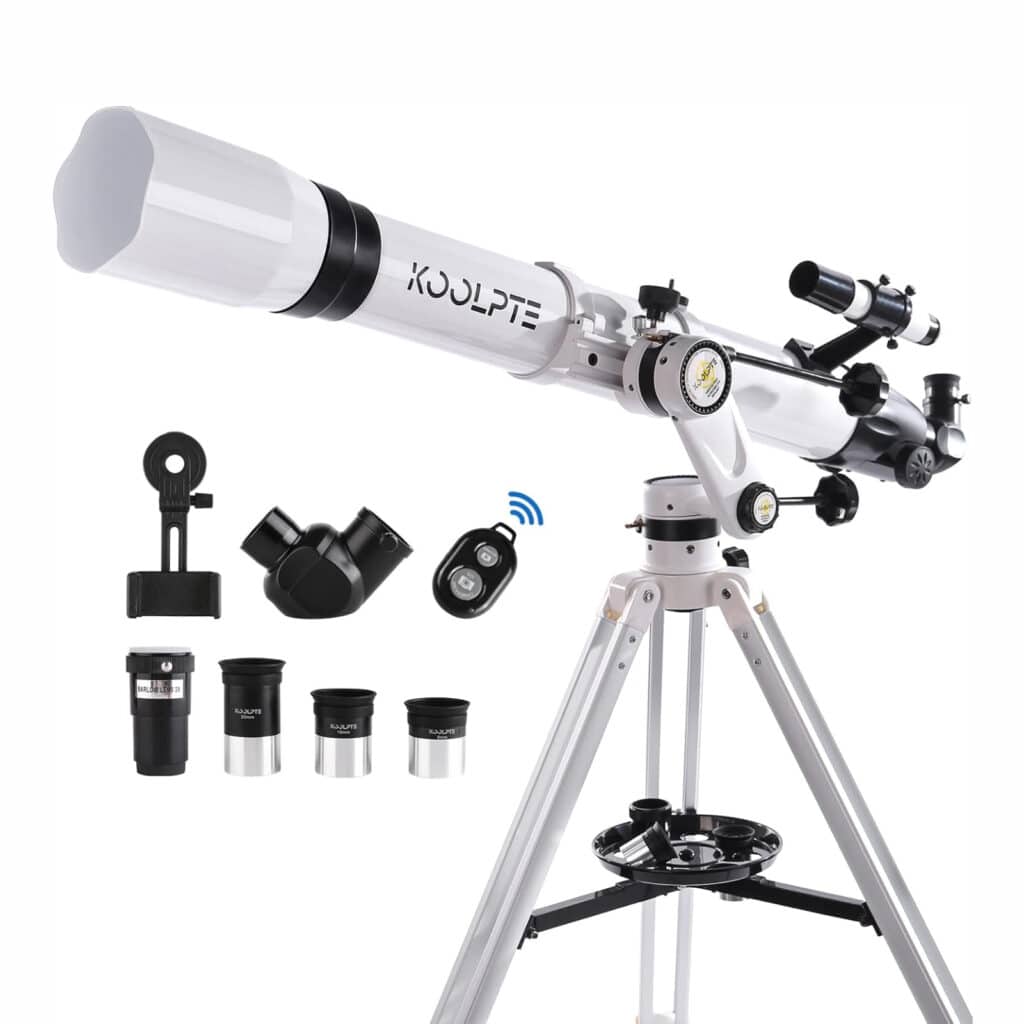
The Koolpte Telescope for Deep Space offers a significant step up in aperture size with its 90mm objective lens and impressive 900mm focal length. This robust configuration makes it particularly well-suited for detailed deep space observation.
What makes this telescope stand out is its professional-grade Vertisteel Altazimuth Mount, providing exceptional stability and precise tracking capabilities. The inclusion of both a digital eyepiece and phone adapter system demonstrates Koolpte’s commitment to blending traditional and modern astronomy techniques.
The telescope’s lightweight yet durable construction makes it an excellent choice for astronomers who value portability without sacrificing optical quality. Its user-friendly design ensures that both beginners and experienced users can quickly set up and start observing.
The wireless remote control feature adds another layer of convenience, allowing for steady image capture without introducing vibrations from manual operation.
Pros
- Large 90mm aperture
- Professional Vertisteel mount
- Advanced phone adapter system
- Excellent stability
- High-precision tracking
- Portable design
- Wireless remote functionality
- Quality optics
Cons
- Higher price point
- Steeper learning curve
PICK #3
Rating
8.3/10
GENERAL VIEW
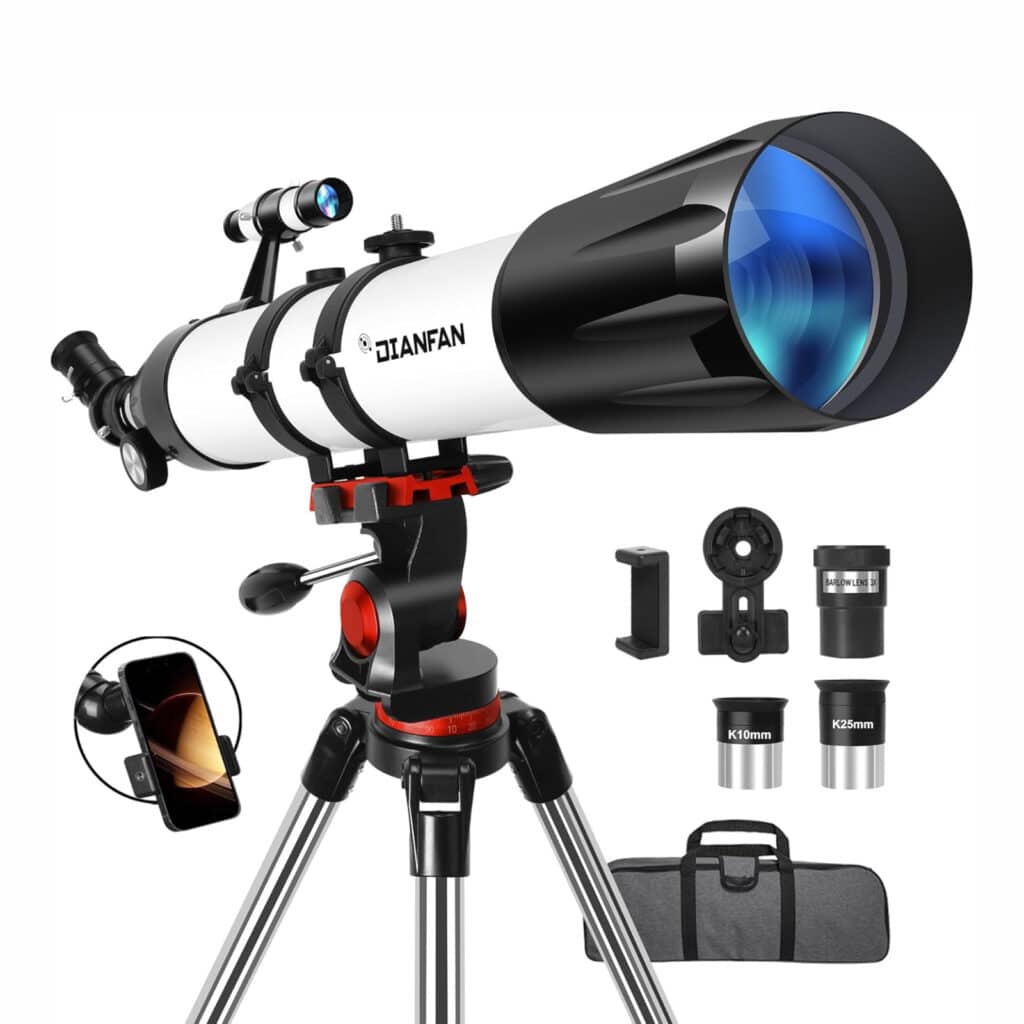
The Dianfan Telescope for Deep Space features an impressive 800mm focal length with a 90mm objective lens, offering excellent light-gathering capabilities for deep space observation.
This telescope stands out with its high-transmission coatings and versatile magnification range from 32X to 240X, making it suitable for various astronomical targets. The inclusion of a 3X Barlow lens significantly enhances its viewing capabilities.
What makes this model particularly appealing is its user-friendly design and straightforward assembly process. The telescope comes with comprehensive documentation and intuitive controls that make it accessible to astronomers of all skill levels.
The lightweight construction and included carrying bag make it a solid choice for those who prioritize mobility without compromising on optical performance.
Pros
- Impressive 800mm focal length
- High-quality coated optics
- Wide magnification range
- Easy assembly
- Comprehensive documentation
- Portable design
- Excellent value for money
Cons
- Limited accessory options
- Basic mount system
PICK #4
Rating
7.8/10
GENERAL VIEW
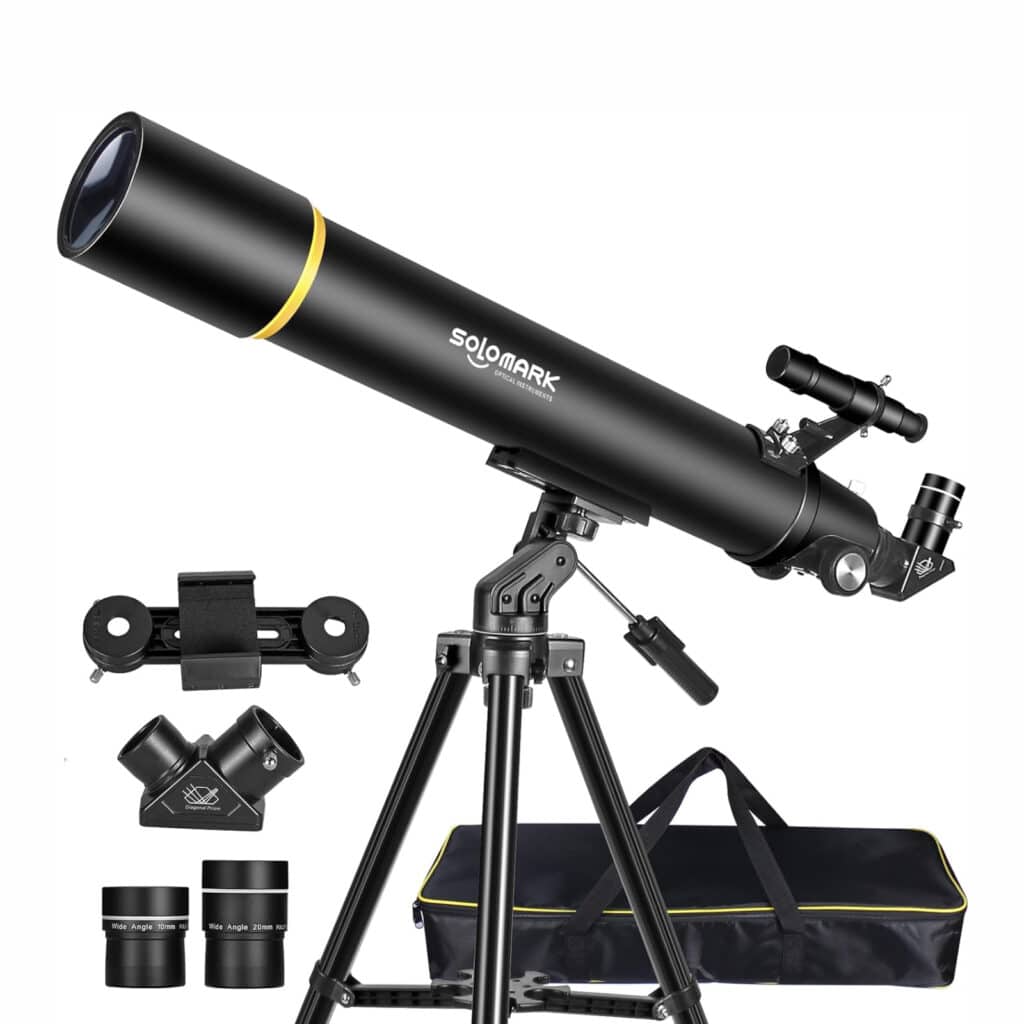
The Solomark Telescope for Deep Space distinguishes itself with an 80mm aperture and professionally coated green optics glass lens, delivering impressive light-gathering capabilities.
One of its strongest features is the Super Azimuth Gimbal system, which provides exceptional stability and precise positioning control. The altitude and azimuth scales make object tracking and location significantly more accurate.
The telescope’s high-quality WA eyepieces (10mm and 20mm) offer versatile magnification options of 45X and 90X, suitable for various astronomical observations. The multi-coated optics ensure bright, clear images with minimal distortion.
This model particularly excels in its ease of assembly and operation, making it a smart choice for those new to astronomy while still offering features that appeal to more experienced users.
Pros
- Professional-grade 80mm aperture
- Superior Azimuth Gimbal system
- High-quality WA eyepieces
- User-friendly design
- Excellent stability
- Precise positioning
- Durable construction
Cons
- Limited magnification range
- Basic phone adapter
- Higher maintenance requirements
PICK #5
Rating
7.1/10
GENERAL VIEW
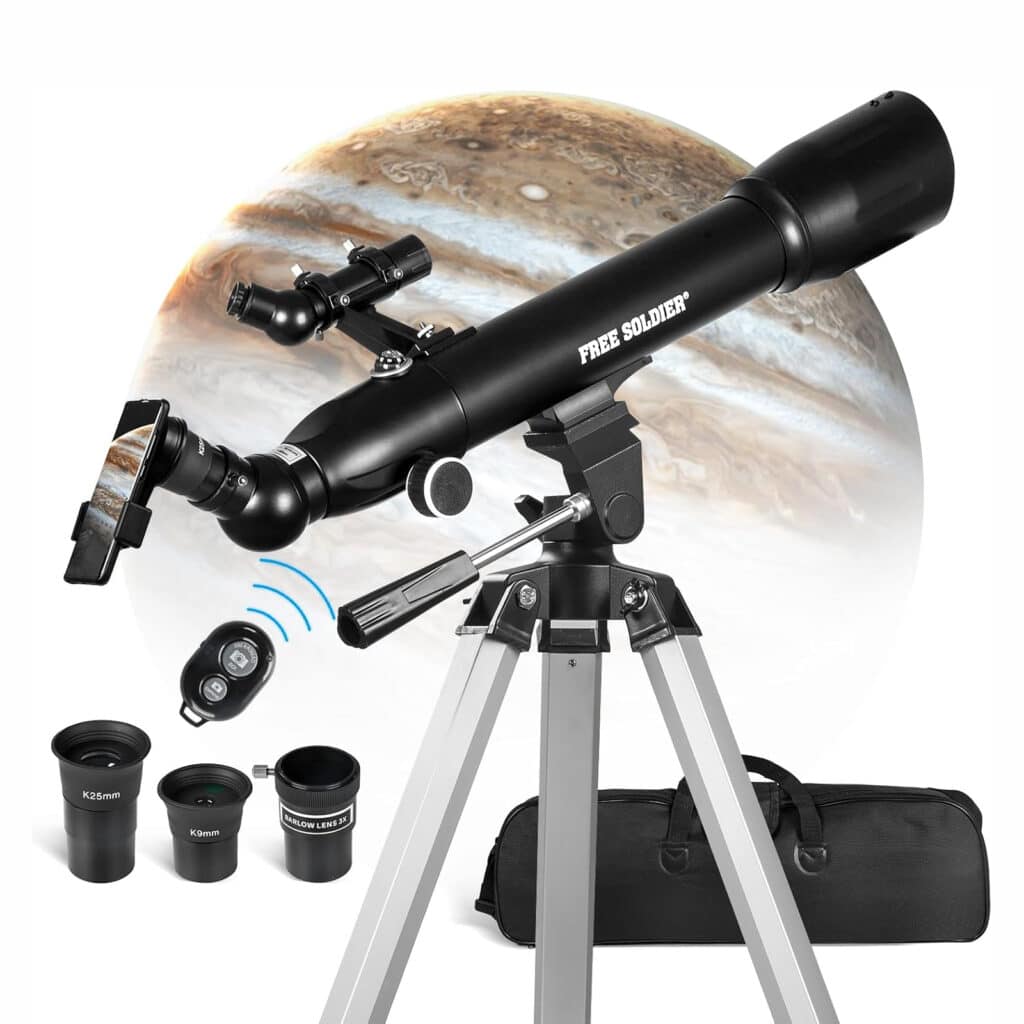
The Free Soldier Telescope for Deep Space delivers impressive versatility with its 700mm focal length and substantial 90mm aperture, providing excellent light-gathering capabilities.
A standout feature is its advanced magnification range of 28X-233X, complemented by high-quality K9mm and K25mm eyepieces. The inclusion of a 3X Barlow lens expands its viewing capabilities significantly.
The telescope’s patented 360° Rotating Zenith Lens design sets it apart, offering comfortable viewing angles for extended observation sessions. The adjustable tripod system provides stable support while maintaining portability.
This model excels in user-friendly features, including smartphone compatibility and wireless remote control, making it particularly appealing for those interested in astrophotography.
Pros
- Advanced 360° rotating system
- Wide magnification range
- Quality K-series eyepieces
- Comprehensive smartphone integration
- Stable tripod design
- Remote control capability
Cons
- Complex assembly process
- Limited warranty coverage
- Higher price point
- Heavier than competitors
❓WHAT IS A TELESCOPE FOR DEEP SPACE
A telescope for deep space is a specialized optical instrument designed specifically for observing distant celestial objects beyond our solar system. These telescopes typically feature larger apertures, superior light-gathering capabilities, and advanced optics to reveal detail in galaxies, nebulae, and star clusters. Modern deep space telescopes often incorporate digital features and sophisticated mounting systems for precise tracking of celestial objects.
⭐ Benefits of a Telescope for Deep Space
- Enhanced Light Gathering: Larger apertures collect more light for viewing faint deep space objects
- Superior Image Quality: Advanced optics provide sharp, clear views of distant celestial bodies
- Versatile Magnification: Multiple eyepiece options allow for different viewing experiences
- Stable Observation: Professional mounting systems ensure steady viewing
- Digital Integration: Modern features enable astrophotography and sharing
- Educational Value: Provides hands-on learning about astronomy and space
- Long-term Investment: Quality telescopes maintain their value and usefulness
- Community Engagement: Enables participation in astronomy groups and events
Things To Consider When Choosing a Telescope for Deep Space
- Aperture Size: The diameter of the primary lens or mirror determines light-gathering ability and image clarity. Larger apertures generally provide better deep space views.
- Focal Length: The distance between the primary lens/mirror and focal point affects magnification capabilities and field of view. Choose based on your viewing preferences.
- Mount Type: The stability and tracking ability of your mount significantly impacts viewing experience. Consider computerized mounts for easier object tracking.
- Optical Quality: Look for fully multi-coated optics and high-quality glass to ensure the best image clarity and contrast.
- Portability: Consider the telescope's weight and size if you plan to transport it frequently for dark sky viewing.
- Digital Features: Modern capabilities like smartphone adaptation and WiFi connectivity can enhance your astronomy experience.
What To Avoid When Choosing a Telescope for Deep Space
- Unrealistic Magnification Claims: Be wary of telescopes advertising extreme magnification numbers without supporting specifications.
- Poor Mount Quality: Avoid telescopes with flimsy or unstable mounts, as they can make observation frustrating and difficult.
- Limited Upgrade Options: Choose telescopes that allow for future upgrades and accessory additions as your skills improve.
- Inadequate Aperture Size: Don't compromise on aperture size for deep space viewing, as it's crucial for seeing faint objects.

By Logan Chase – Research Specialist
After years of dedicated research and thorough examination of tech gadgets and tools, Logan has immersed himself in the realm of technology, acquiring extensive knowledge. Explore his expertise showcased in our prestigious Top 5 series.