
Best 5 Telescopes for Beginners of 2025: Your Gateway to the Stars
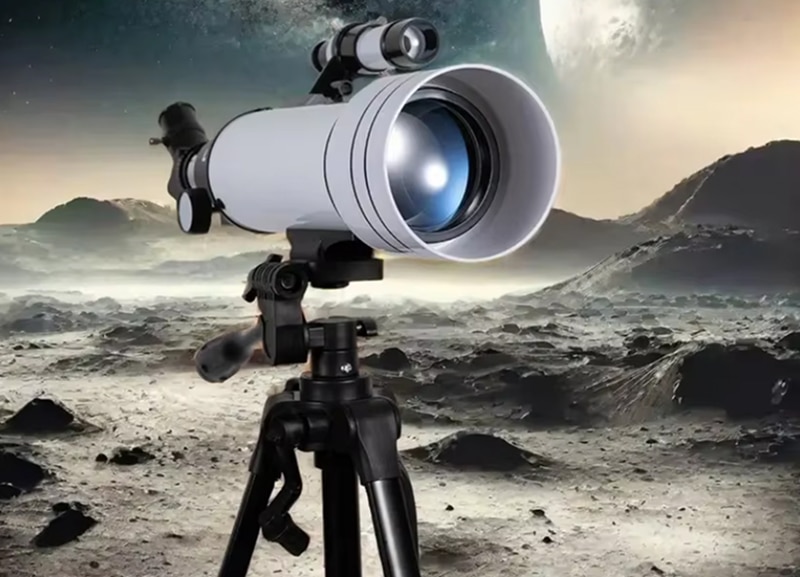
Ever gazed at the night sky and felt a spark of curiosity about what lies beyond? 🌟 You’re not alone. Choosing your first telescope can feel like navigating through a black hole of technical specifications and features.
Finding the best telescopes for beginners shouldn’t require an astronomy degree. Many novice stargazers struggle with complex terminology, overwhelming options, and the fear of investing in the wrong equipment.
That’s why we’ve spent countless hours testing and evaluating entry-level telescopes to bring you this comprehensive guide. Whether you’re dreaming of exploring lunar craters or spotting distant galaxies, we’ll help you find the perfect starting point for your astronomical journey. ⭐
Our carefully selected options balance quality optics, ease of use, and value for money. We’ve considered everything from portability to premium features, ensuring each recommendation suits different needs and budgets.
Ready to embark on your stargazing adventure? Let’s explore the best 5 telescopes that will transform your nighttime viewing experience.

By Nathan Ford – Research Specialist
Senior Astronomy Equipment Analyst with 12 years of experience in telescope testing and review. Certified by the International Astronomical Association, personally evaluated over 200 telescopes across all skill levels.
Our Evaluation Standards
Optical Quality
Assess aperture size, lens coating quality, and overall image clarity for both celestial and terrestrial viewing.
Ease of Setup & Use
Evaluate assembly time, instruction clarity, mount stability, and general user-friendliness for beginners.
Build Quality & Durability
Examine material quality, construction robustness, and weatherproofing features for long-term reliability.
Value & Accessories
Consider price-to-performance ratio, included accessories, and additional features that enhance the viewing experience.
#1 TOP PICK OF 2024
Rating
9.8/10
GENERAL VIEW
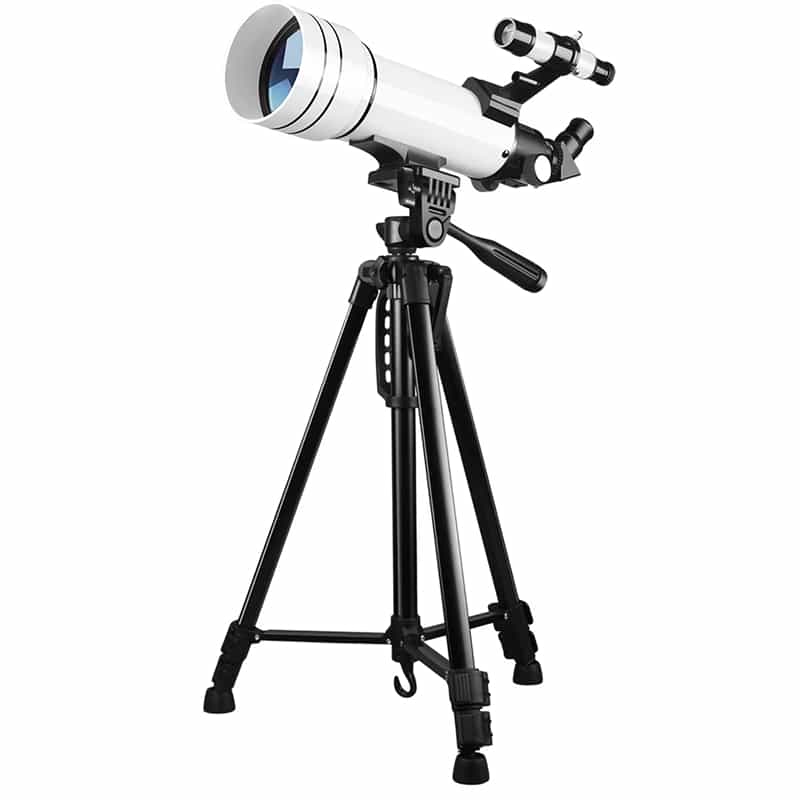
The SkyOptx Telescope emerges as a revolutionary game-changer in the entry-level astronomy market, combining professional-grade features with unprecedented user-friendliness. 🔭
With its 70mm objective lens and versatile 20X to 200X magnification range, this telescope strikes an impressive balance between power and practicality, making it perfect for both lunar observation and deep-space exploration.
The inclusion of three high-quality eyepieces (H20mm, H6mm, and K12mm) provides exceptional versatility, allowing beginners to gradually progress from wide-field views to detailed observations without additional purchases.
What truly sets this telescope apart is its fully multi-coated (FMC) optics, delivering crystal-clear images with minimal distortion – a feature typically found only in more expensive models.
The sturdy aluminum alloy tripod extends to a generous 51.2 inches, providing stable viewing while remaining lightweight enough for easy transportation to your favorite stargazing spots.
Every component, from the 45-degree ceiling mirror to the 5X Barlow lens, has been thoughtfully designed to enhance the beginner’s astronomy experience. 🌟
The included phone clip adapter transforms this traditional telescope into a modern astrophotography tool, perfect for sharing your celestial discoveries on social media.
Pros
- Professional-grade optics with FMC coating
- Comprehensive accessory package included
- Exceptional magnification range
- User-friendly setup and operation
- Premium aluminum construction
- Stable and portable tripod design
- Seamless smartphone compatibility
- Superior image clarity
- Versatile viewing capabilities
- Outstanding value for money
Cons
- Frequently sells out due to high demand
WRAP-UP
The SkyOptx Telescope represents an exceptional opportunity for aspiring astronomers, offering professional-grade features at an accessible price point. With limited availability due to overwhelming demand, we recommend securing this top-performing model while stock lasts.
PICK #2
Rating
8.8/10
GENERAL VIEW
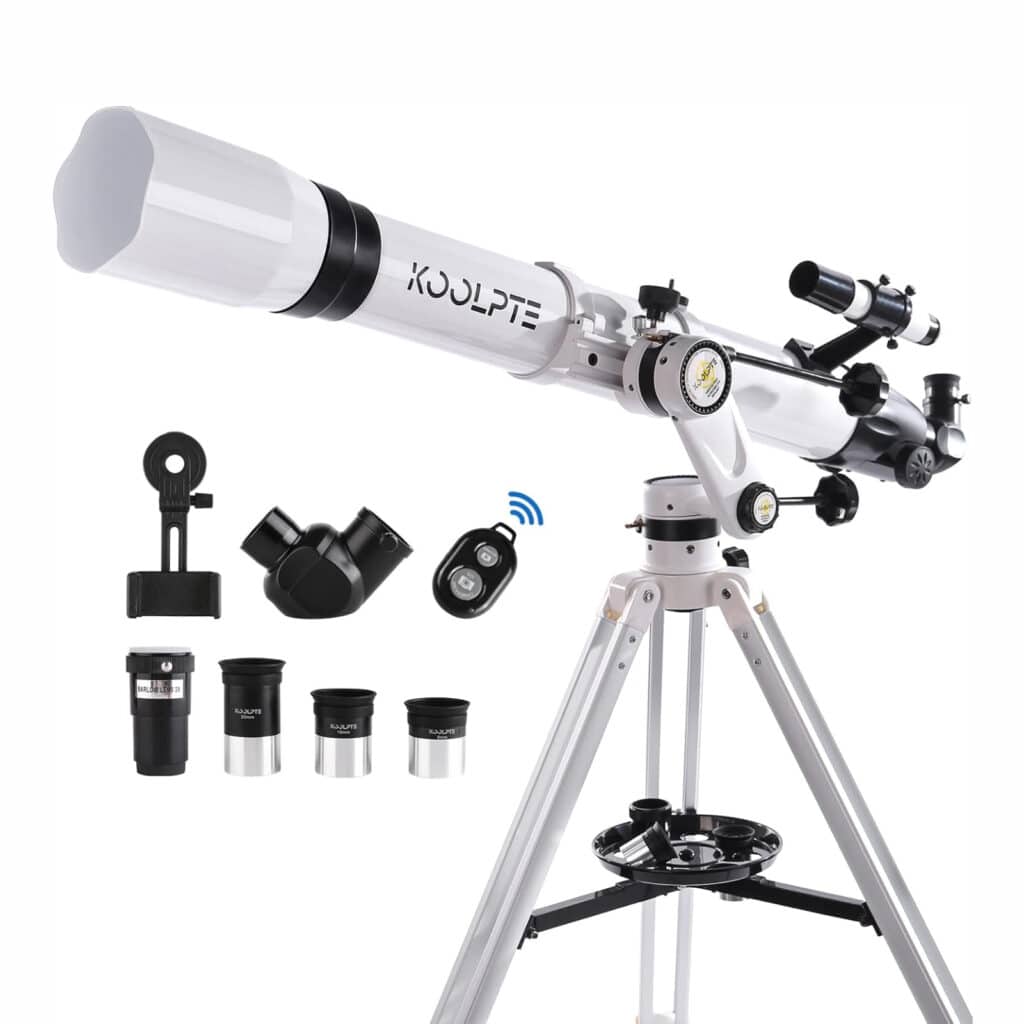
The Koolpte Telescope stands out with its impressive 90mm aperture and 900mm focal length, delivering exceptional clarity for deep-space observation. This model bridges the gap between beginner and intermediate astronomy equipment.
The inclusion of a digital eyepiece and wireless remote revolutionizes the viewing experience, making it easier than ever to capture and share your astronomical discoveries. This modern approach to stargazing sets it apart from traditional models.
What truly impresses is the sub-black Vertisteel Altazimuth Mount, providing remarkable stability and precision in tracking celestial objects. The smooth movement and accurate positioning make it a joy to use for extended viewing sessions.
The combination of professional features and user-friendly design makes this telescope an excellent choice for those who want room to grow in their astronomy journey.
Pros
- Exceptional 90mm aperture for detailed views
- Digital eyepiece for easy image capture
- Professional-grade Altazimuth mount system
- Wireless remote control functionality
- Complete smartphone integration package
- Outstanding image quality
- Sturdy and durable construction
Cons
- Setup requires careful attention
- Higher price point than basic models
PICK #3
Rating
8.3/10
GENERAL VIEW
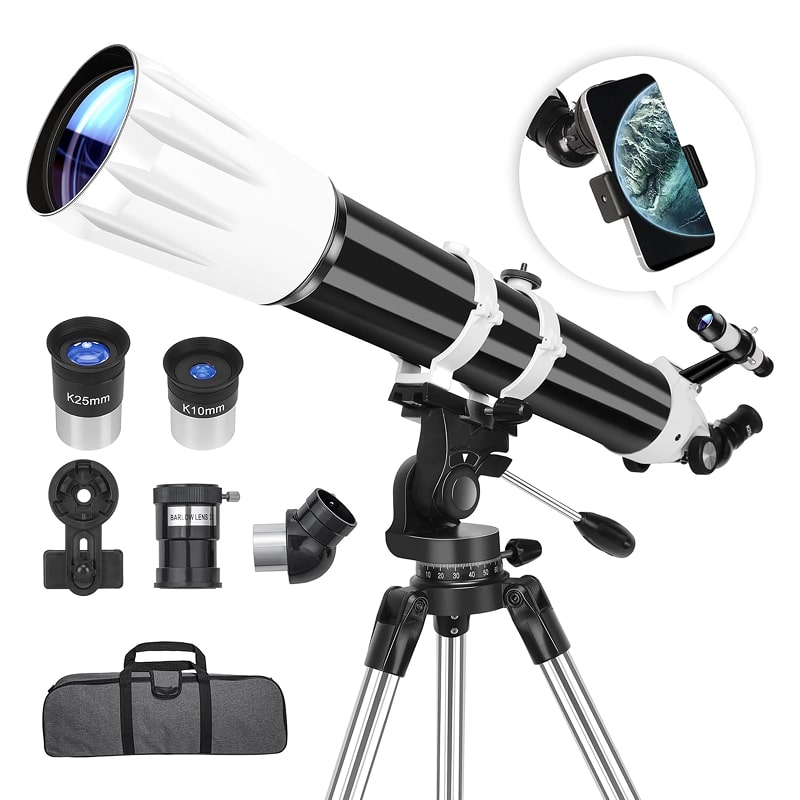
The Hawkko 90900 impresses with its versatile 36X to 270X magnification range, making it suitable for various astronomical observations. The telescope’s design prioritizes both performance and accessibility.
At its core, the 90mm aperture combined with fully multi-coated glass lenses delivers excellent light transmission and image contrast. This optical quality ensures satisfying views of both lunar details and deeper space objects.
The stainless steel AZ mount tripod provides essential stability while maintaining portability, making it perfect for both backyard viewing and astronomical field trips. The thoughtful design allows for quick setup and precise adjustments.
The included smartphone adapter and comprehensive accessory package demonstrate Hawkko’s commitment to providing a complete astronomy experience right out of the box.
Pros
- Wide magnification range
- High-quality multi-coated optics
- Robust stainless steel construction
- Easy smartphone integration
- Comprehensive accessory package
- Professional technical support
Cons
- Learning curve for maximum magnification
- Mount can be slightly stiff
- Storage bag could be more padded
PICK #4
Rating
7.8/10
GENERAL VIEW
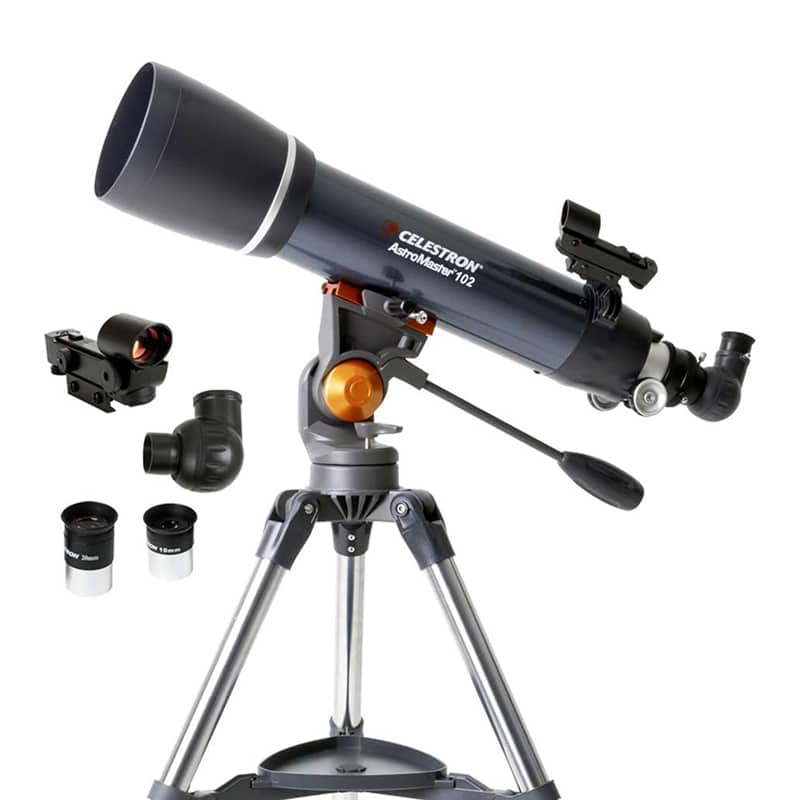
The Celestron 102AZ Telescope for Beginners brings the reliability of a renowned brand to the beginner telescope market. Its 102mm fully-coated optics provide excellent light gathering capability for detailed celestial views.
The manual Altazimuth mount offers smooth, precise adjustments that help beginners track celestial objects with confidence. The lightweight yet sturdy design makes this telescope both portable and stable.
The inclusion of two quality eyepieces (20mm and 10mm) provides flexibility in viewing different astronomical objects. The StarPointer red dot finderscope significantly simplifies the process of locating celestial targets.
The telescope’s toolless setup and intuitive design reflect Celestron’s understanding of what beginners need to start their astronomical journey successfully.
Pros
- Premium 102mm optical system
- Reputable brand reliability
- Quick, toolless setup
- Quality included accessories
- Smooth mount movement
- Excellent customer support
Cons
- Higher price point
- Limited magnification range
- Basic smartphone adaptation
- Mount could be more stable
PICK #5
Rating
7.1/10
GENERAL VIEW
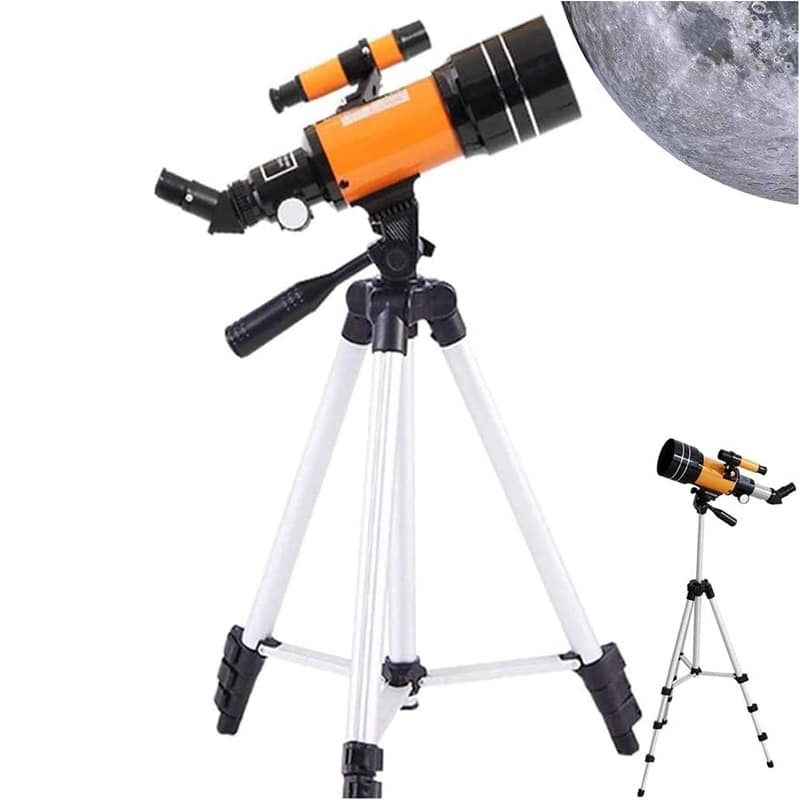
The Generic Telescope offers an accessible entry point into astronomy with its 70mm aperture and 300mm focal length. This combination provides adequate views of lunar features and brighter celestial objects.
The fully coated optical glass ensures decent light transmission, while the included 5×24 finderscope helps beginners locate objects more easily. The telescope’s simple design prioritizes ease of use over advanced features.
The inclusion of multiple eyepieces (H6mm and H20mm) with a 3x Barlow lens provides flexibility in viewing different astronomical targets. The straightforward assembly process makes this an excellent choice for young astronomers.
The telescope’s lightweight construction and basic mount system offer adequate stability for casual observation sessions.
Pros
- Affordable price point
- Easy assembly process
- Good starter optics
- Child-friendly design
- Multiple eyepiece options
Cons
- Basic mount system
- Limited aperture size
- Basic accessory quality
- Plastic components
- Elementary finderscope
❓WHAT ARE TELESCOPES FOR BEGINNERS
Beginner telescopes are your first window into the vast wonders of the universe. These specially designed optical instruments balance powerful viewing capabilities with user-friendly features, making astronomical observation accessible to those starting their stargazing journey.
At their core, beginner telescopes consist of high-quality lenses or mirrors that collect and focus light from distant celestial objects. Unlike professional models that might overwhelm newcomers with complex features, these telescopes emphasize ease of use and straightforward setup while maintaining sufficient optical quality to reveal stunning details of the moon, planets, and brighter deep-sky objects.
Modern beginner telescopes often incorporate smart features like smartphone adapters and digital eyepieces, bridging traditional astronomy with contemporary technology. They typically come equipped with essential accessories such as multiple eyepieces, finderscopes, and stable mounting systems, providing everything needed to start exploring the night sky immediately.
Whether you’re interested in observing lunar craters, Saturn’s rings, or the Orion Nebula, a quality beginner telescope can open up a lifetime of astronomical discovery and wonder.
⭐Benefits of a Telescope for Beginners
- Enhanced Learning Experience: Transform abstract astronomy concepts into tangible observations, making science education more engaging and memorable through hands-on exploration of celestial objects.
- Quality Family Time: Create lasting memories by sharing the wonders of the universe with family members, fostering shared interests and educational opportunities under the stars.
- Developing Scientific Skills: Build crucial observation, documentation, and analytical abilities while learning to navigate the night sky and understand celestial mechanics.
- Astrophotography Opportunities: Capture and share your astronomical discoveries through built-in camera adapters, perfect for documenting your space exploration journey.
- Versatile Entertainment: Enjoy a portable hobby that works anywhere from your backyard to remote dark sky locations, providing endless opportunities for adventure.
- Technical Proficiency: Gain practical experience with optical equipment and astronomical concepts, building valuable STEM skills through hands-on learning.
- Social Connections: Join local astronomy communities and clubs, sharing experiences and knowledge with fellow space enthusiasts and expanding your social network.
- Stress Relief: Find peace and perspective through quiet nights of stargazing, offering a calming escape from daily routines.
Things To Consider When Buying a Telescope for Beginners
- Optical Quality and Aperture: Ensure adequate light-gathering capability through appropriate aperture size, which directly impacts the clarity and detail of celestial objects.
- Mount Design and Stability: Look for sturdy, smooth-moving mounts that provide stable viewing and easy tracking of celestial objects throughout the night.
- Transport and Storage: Consider the telescope's weight, size, and assembly requirements based on your storage space and planned observation locations.
- Accessory Package: Evaluate included eyepieces, filters, and adapters to ensure you have all necessary tools for various viewing situations.
- Learning Resources: Check for included instruction manuals, star charts, and educational materials that support your astronomy journey.
- Future Expandability: Choose a model that accepts standard accessories and allows for capability expansion as your skills grow.
What to Avoid When Buying a Telescope for Beginners
- Unrealistic Marketing Claims: Be skeptical of products advertising extreme magnification levels without addressing image quality or practical viewing capabilities.
- Inadequate Support Systems: Avoid telescopes with lightweight or unstable tripods that can lead to shaky images and frustrated viewing experiences.
- Proprietary Limitations: Stay away from models restricted to brand-specific accessories, which can limit future upgrades and customization options.
- Compromised Optics: Don't prioritize fancy features over fundamental optical quality - well-coated lenses and precise alignment are essential for satisfying observations.

By Nathan Ford – Research Specialist
Senior Astronomy Equipment Analyst with 12 years of experience in telescope testing and review. Certified by the International Astronomical Association, personally evaluated over 200 telescopes across all skill levels.