
Best 5 Telescopes for Astrophotography: Top Expert Picks for Stellar Images
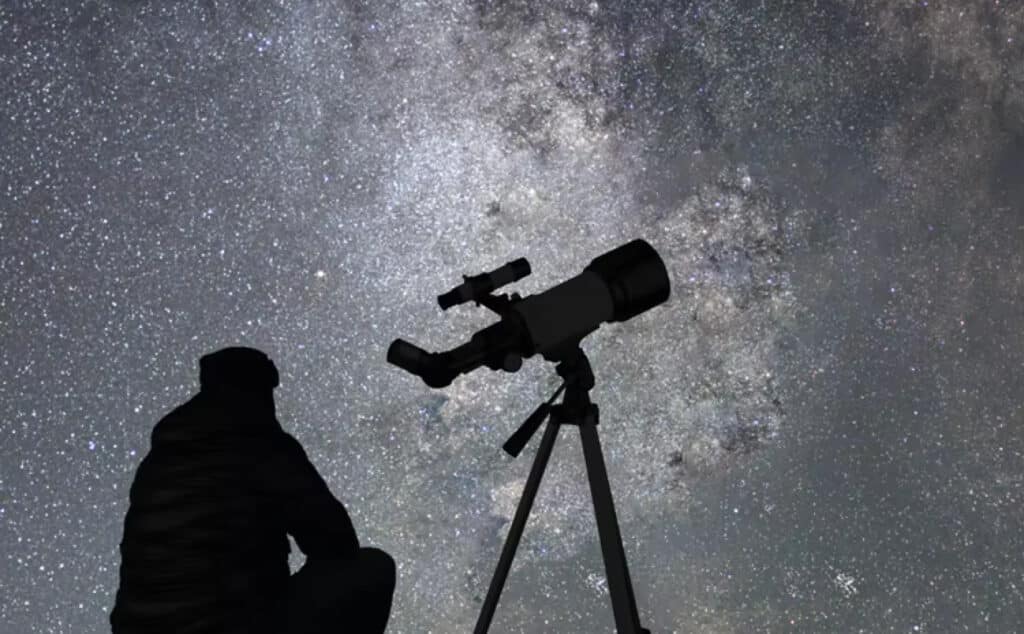
Welcome to our comprehensive guide on telescopes for astrophotography, where we explore the finest options for capturing the wonders of the night sky 🔭.
In today’s digital age, combining traditional astronomy with modern photography has opened up incredible possibilities for both amateur and professional astronomers.
As we venture into 2024, the market for astrophotography telescopes has evolved significantly, offering advanced features and improved imaging capabilities that were once only available in professional observatories 📸.
Whether you’re a beginner looking to capture your first lunar photograph or an experienced astronomer seeking to document deep-space objects, choosing the right telescope is crucial for your success in this fascinating field.
In this detailed review, we’ll examine the best 5 telescopes for astrophotography in the market, considering factors like optical quality, mount stability, and compatibility with modern camera systems ⭐.
Our selections cater to various skill levels and budgets, ensuring you’ll find the perfect match for your astronomical pursuits.

By Logan Chase – Research Specialist
After years of dedicated research and thorough examination of tech gadgets and tools, Logan has immersed himself in the realm of technology, acquiring extensive knowledge. Explore his expertise showcased in our prestigious Top 5 series.
Our Evaluation Standards
Optical Quality
Sharpness and clarity of images, with minimal aberrations, are crucial for high-quality astrophotography.
Aperture Size
A larger aperture gathers more light, allowing for clearer, more detailed images of faint celestial objects.
Mount Stability
A stable, precise mount ensures accurate tracking of celestial objects, reducing blur in long-exposure photos.
Ease of Use
User-friendly design and setup, with intuitive controls and features, making it suitable for both beginners and advanced astrophotographers.
#1 TOP PICK OF 2024
Rating
9.8/10
GENERAL VIEW
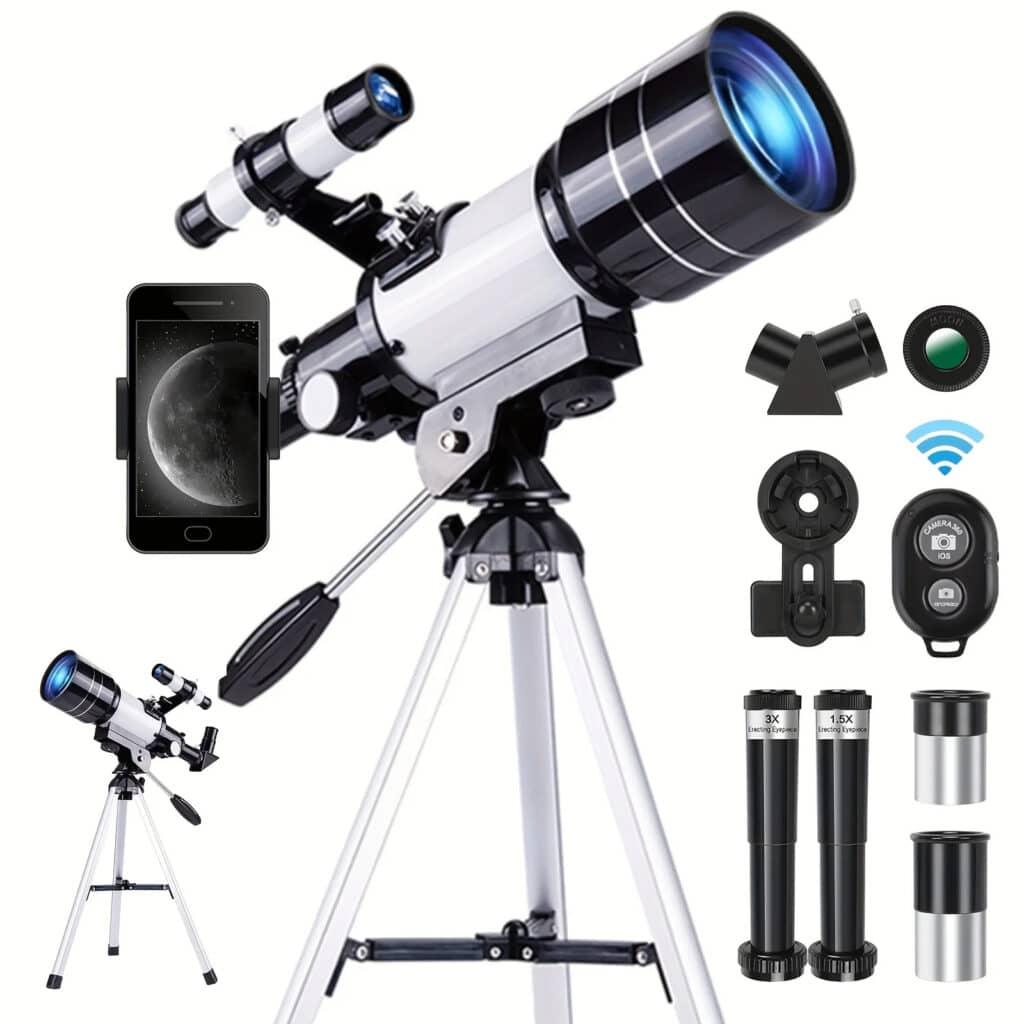
The Astrobupy Telescope For Astrophotography stands out as our top pick for its exceptional combination of features and versatility 🔭.
This 70mm aperture refractor telescope delivers outstanding performance for both visual astronomy and astrophotography, making it an ideal choice for enthusiasts at any skill level.
What truly sets this telescope apart is its impressive optical system with a 300mm focal length and multi-coated lenses 🎯.
The fully coated optical glass with high transmission layer technology ensures superior light gathering capability and minimal chromatic aberration, resulting in crisp, clear images of celestial objects.
The telescope comes equipped with advanced features including a wireless control system and smartphone integration 📱.
The included smartphone holder and Bluetooth remote control make it incredibly easy to capture and share stunning images of the night sky, perfect for modern astrophotographers who value connectivity and convenience.
Perhaps most impressively, the Astrobupy offers remarkable versatility in magnification ranges, from 15X to 150X 🔍.
With multiple eyepieces (H20mm and H6mm) and both 1.5X and 3X Barlow lenses, users can easily adjust their viewing experience based on their target object and conditions.
Pros
- Advanced multi-coated optical system
- Wireless control capabilities
- Comprehensive magnification range (15X-150X)
- Included smartphone adapter and remote
- High-quality aluminum alloy tripod
- User-friendly setup process
- Multiple eyepiece options
- Excellent light gathering capability
- Built-in moon filter
- Portable and lightweight design
Cons
- Occasionally out of stock due to high demand
WRAP-UP
The Astrobupy Telescope For Astrophotography delivers exceptional value with its comprehensive feature set and user-friendly design. Its combination of premium optics, wireless capabilities, and versatile magnification options makes it an outstanding choice for both beginners and experienced astrophotographers. EXPLORE NOW!
PICK #2
Rating
8.8/10
GENERAL VIEW
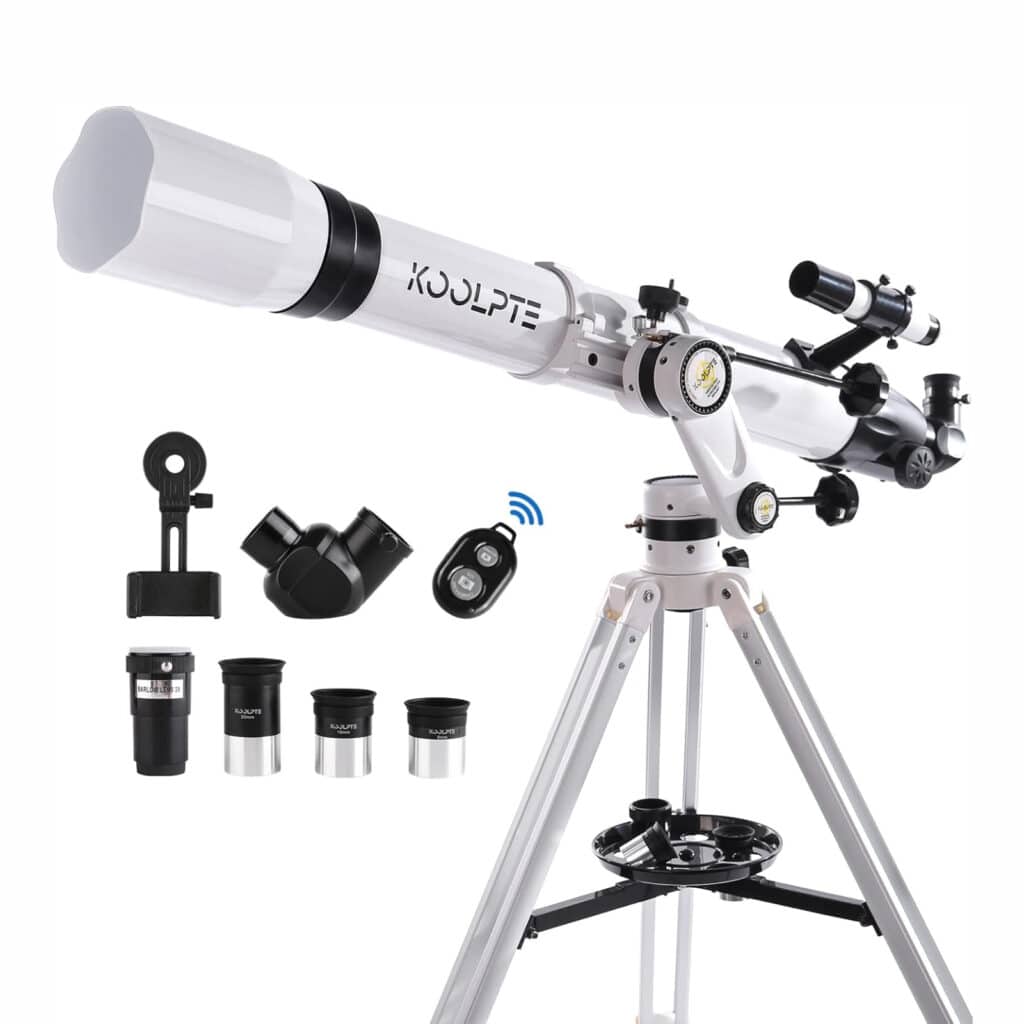
The Koolpte Telescope for Astrophotography distinguishes itself with its impressive 90mm aperture and substantial 900mm focal length, making it a powerful choice for serious astrophotographers.
What makes this telescope particularly noteworthy is its Vertisteel Altazimuth Mount, providing a level of stability that’s crucial for long-exposure astrophotography. The mount’s smooth movement and precise positioning capabilities ensure that you can track celestial objects with minimal vibration.
The inclusion of a professional-grade Digital eyepiece along with a dedicated phone adapter and wireless remote sets this model apart from its competitors. These features combine to create a seamless photography experience, allowing users to capture and share their astronomical observations with remarkable ease.
The telescope’s lightweight yet durable construction makes it an excellent choice for both stationary and mobile astronomy sessions. Despite its professional-grade capabilities, it maintains an approachable design that won’t intimidate newcomers to the field.
Pros
- Large 90mm aperture
- Professional-grade mount system
- Digital eyepiece included
- Wireless remote control
- Excellent build quality
- User-friendly design
- Portable construction
- High-precision tracking
Cons
- Higher price point
- Steeper learning curve
PICK #3
Rating
8.3/10
GENERAL VIEW
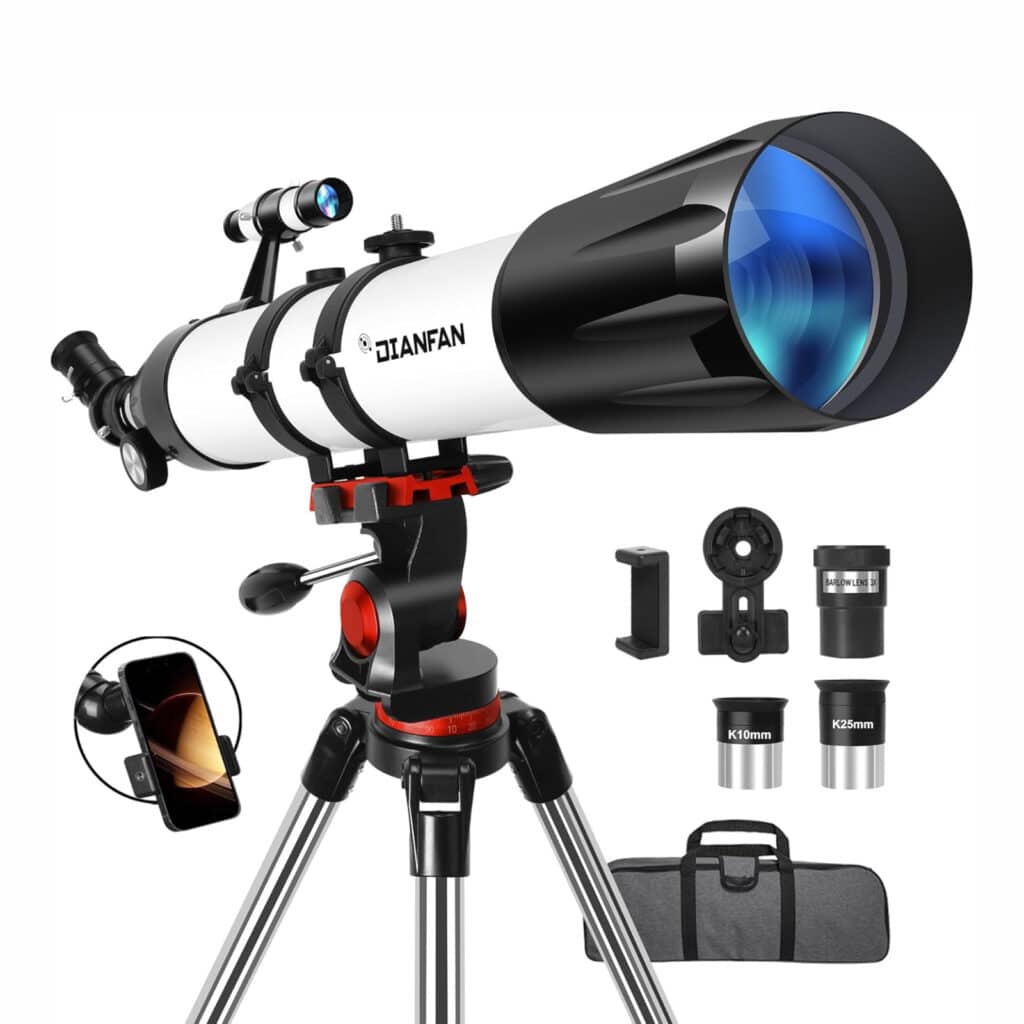
The Dianfan Telescope for Astrophotography impresses with its superior optical system, featuring an 800mm focal length and 90mm objective lens. This combination, enhanced by high transmission coatings, delivers exceptional clarity when observing planets and the moon.
A standout feature of this model is its versatile magnification capabilities. The inclusion of two quality eyepieces and a 3X Barlow lens allows users to achieve magnifications ranging from 32X to 240X, providing flexibility for different astronomical targets.
The telescope’s user-friendly design is particularly noteworthy, with an intuitive assembly process and straightforward controls that make it accessible to beginners. The detailed installation manual ensures that even those new to astronomy can quickly set up and start observing.
What truly sets this telescope apart is its portability combined with stability. The lightweight design and included carrying bag make it perfect for travel, while the high-quality tripod ensures steady viewing during observation sessions.
Pros
- High-quality optical coatings
- Wide magnification range
- User-friendly assembly
- Portable design
- Includes phone holder
- Comprehensive accessories
- Excellent customer service
Cons
- Limited deep-space capabilities
- Phone adapter requires adjustment
PICK #4
Rating
7.8/10
GENERAL VIEW
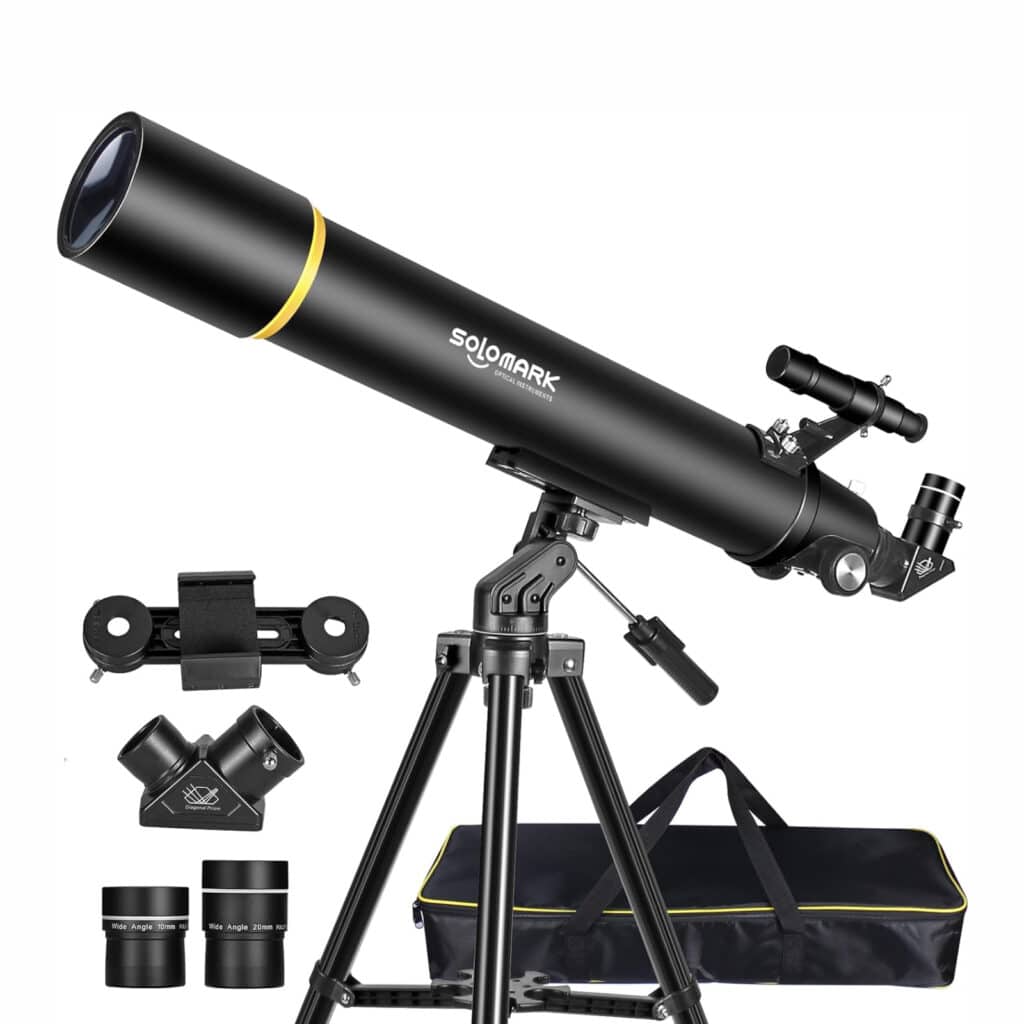
The Solomark Telescope for Astrophotography sets itself apart with its professional-grade 80mm aperture and fully coated green optics glass lens. This combination delivers superior light capture capabilities and enhanced image clarity, particularly beneficial for astrophotography enthusiasts.
What makes this telescope particularly impressive is its Super Azimuth Gimbal mounted on a robust aluminum tripod. The inclusion of both altitude and azimuth scales allows for precise positioning, making it easier to locate and track celestial objects.
The telescope’s optical performance is enhanced by its carefully selected WA eyepieces. With 10mm and 20mm options providing 90X and 45X magnification respectively, users can achieve impressive views of both lunar details and planetary features.
Perhaps most notably, the Solomark emphasizes ease of use without compromising on quality. The straightforward assembly process and comprehensive instruction manual make it accessible to beginners while still offering the features that experienced astronomers appreciate.
Pros
- Professional-grade optics
- Precise positioning system
- Quality WA eyepieces
- Stable aluminum tripod
- Easy assembly process
- Comprehensive instructions
- Excellent customer support
Cons
- Limited magnification range
- Heavier than competitors
- Manual tracking only
PICK #5
Rating
7.1/10
GENERAL VIEW
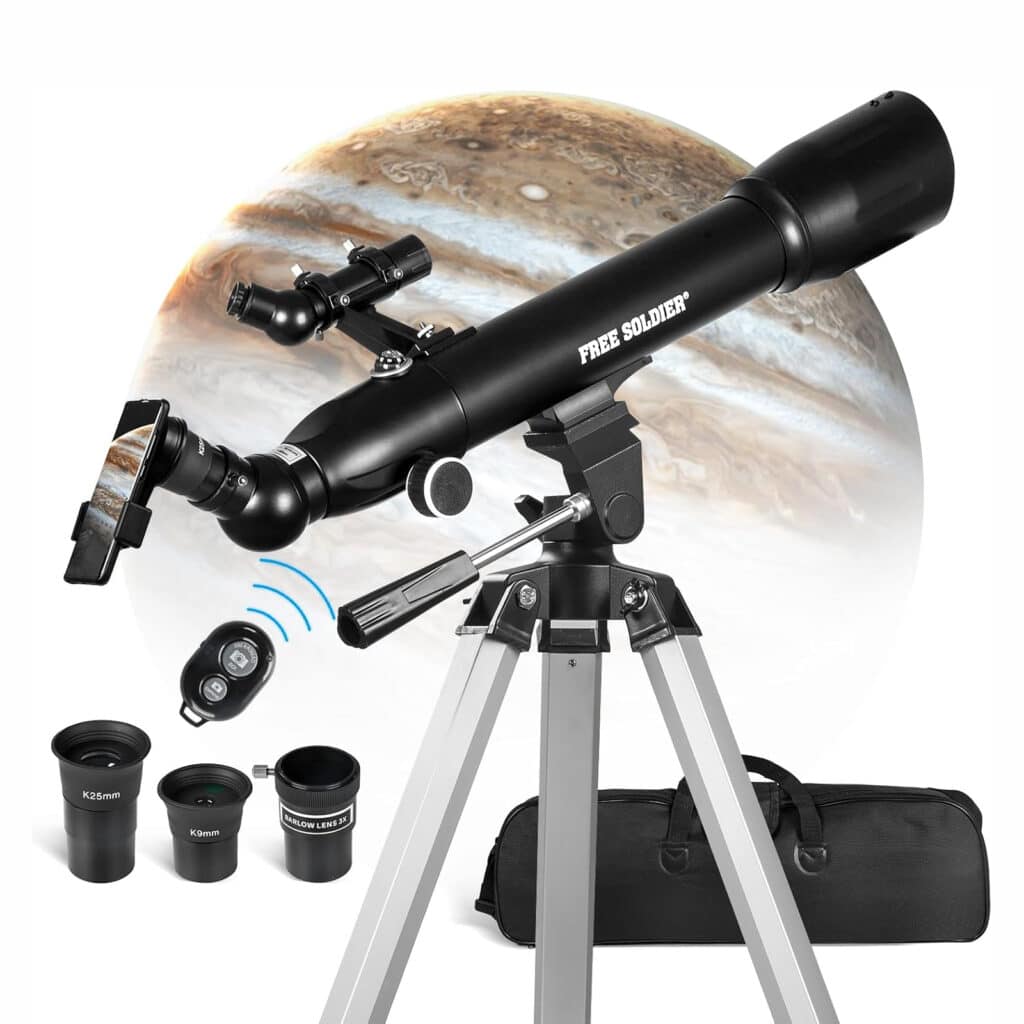
The Free Soldier Telescope for Astrophotography distinguishes itself with its impressive magnification range of 28X to 233X, achieved through its 700mm focal length and quality K-series eyepieces.
A notable feature is its superior light-gathering capability with the 90mm aperture, surpassing many competitors in its class. This larger aperture proves particularly valuable for capturing detailed images of celestial objects.
The telescope’s patented 360° Rotating Zenith Lens adds a unique advantage, offering comfortable viewing positions that reduce strain during extended observation sessions.
What makes this telescope particularly interesting is its comprehensive photography setup, including a universal phone adapter and wireless remote, making it easy to capture and share astronomical observations.
Pros
- Wide magnification range
- Large 90mm aperture
- 360° rotating zenith lens
- Complete photography kit
- Detailed instructions
- Stable tripod system
Cons
- Complex initial setup
- Limited accessory compatibility
- Higher price point
- Heavier build
❓WHAT IS A TELESCOPE FOR ASTROPHOTOGRAPHY
A telescope for astrophotography is a specialized optical instrument designed specifically for capturing detailed images of celestial objects. Unlike regular telescopes, these instruments are engineered with features that optimize them for photography, including:
- Enhanced Light Gathering: These telescopes typically feature larger apertures and specialized coatings to maximize light collection, crucial for photographing dim celestial objects.
- Stable Mounting Systems: They come equipped with precise tracking mechanisms to compensate for Earth’s rotation during long exposure shots.
- Camera Compatibility: Built with adapters and interfaces that allow seamless integration with both DSLR cameras and specialized astronomical cameras.
⭐ Benefits of a Telescope for Astrophotography
- Superior Image Quality: Advanced optical systems enable capturing highly detailed images of planets, nebulae, and galaxies
- Versatile Documentation: Ability to record and share astronomical observations through high-quality photographs
- Educational Value: Helps in learning about celestial objects through detailed visual documentation
- Scientific Contribution: Enables amateur astronomers to contribute to scientific research through image documentation
- Creative Expression: Allows artistic capture of astronomical phenomena and celestial events
- Long-term Record: Creates permanent records of astronomical observations for future reference
- Community Engagement: Facilitates sharing discoveries and techniques with the broader astronomy community
Things To Consider When Choosing a Telescope for Astrophotography
- Aperture Size: The larger the aperture, the more light the telescope can gather, crucial for capturing faint objects.
- Mount Quality: A stable, accurate mount is essential for long-exposure photography and tracking celestial objects.
- Focal Length: Determines the field of view and magnification capabilities for different types of astronomical subjects.
- Camera Compatibility: Ensure the telescope works with your existing camera equipment or planned future upgrades.
- Portability: Consider the weight and size if you plan to transport the telescope to dark sky locations.
- Budget Allocation: Factor in additional costs for essential accessories like filters, adapters, and software.
What To Avoid When Choosing a Telescope for Astrophotography
- Cheap Mounts: Avoid unstable or lightweight mounts that can't support long exposure photography effectively.
- Excessive Magnification Claims: Be wary of products that advertise unrealistic magnification capabilities.
- Limited Adaptability: Avoid telescopes that don't offer flexibility for different types of astrophotography.
- Poor Quality Optics: Stay away from telescopes with inadequate coating or low-quality glass that can affect image quality.

By Logan Chase – Research Specialist
After years of dedicated research and thorough examination of tech gadgets and tools, Logan has immersed himself in the realm of technology, acquiring extensive knowledge. Explore his expertise showcased in our prestigious Top 5 series.