
Best 5 Starter Telescopes of 2025: Unmatched Performance and Value
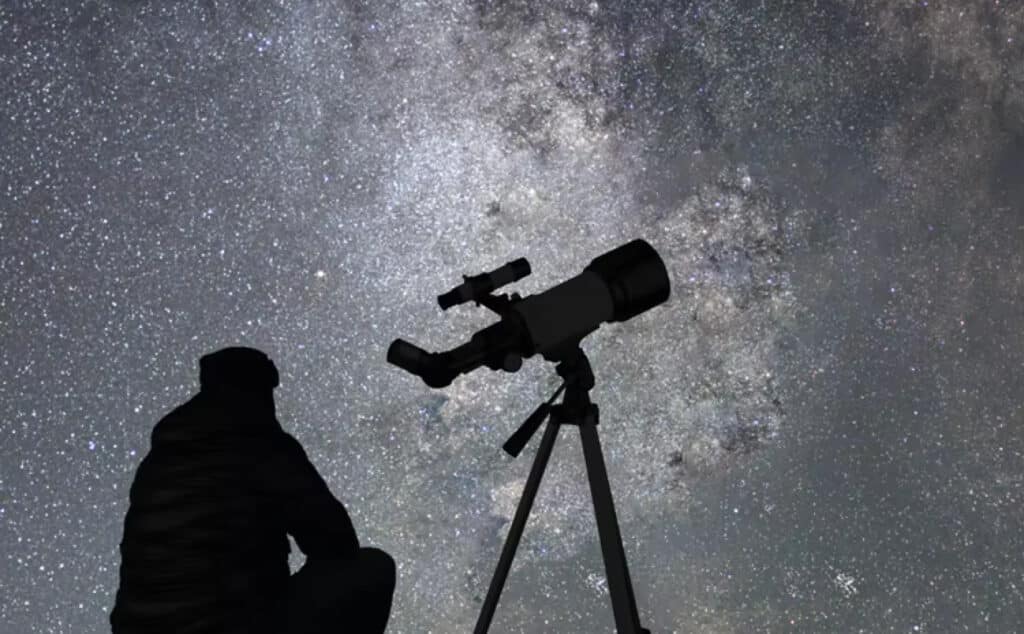
Ever gazed at the night sky and felt that irresistible urge to explore its mysteries? 🌟
Whether you’re dreaming of capturing the craters of the moon or spotting distant planets, finding the best 5 starter telescopes can feel like navigating through a black hole of options.
The market is flooded with choices, and for beginners, the technical specifications can be overwhelming.
What’s the right aperture? Does focal length really matter? And why do some telescopes cost as much as a small car? 🔭
We’ve spent countless hours testing and comparing the latest models to bring you this comprehensive guide.
Our expert team has evaluated each telescope based on real-world performance, ease of use, and value for money, so you can make an informed decision without getting lost in technical jargon.
Let’s explore the universe together and find your perfect stargazing companion. ⭐

By Logan Chase – Research Specialist
Logan Chase, Lead Product Analyst at SkyWatch Reviews, brings 12 years of experience in astronomy and telescope testing. With a background in optical engineering and hands-on experience testing over 200 telescopes, he combines technical expertise with a passion for making astronomy accessible to beginners.
Our Evaluation Standards
Optical Quality
We’ve tested each telescope under various conditions, from crystal-clear nights to partially cloudy evenings, measuring light gathering capability, image clarity, and ease of location.
Technical Specifications
Our evaluation considers aperture size, focal length, magnification range, and mount stability. We’ve analyzed how these specifications translate to real-world viewing experience and image quality.
User Experience
We assess assembly time, portability, stability, and ease of operation. Each telescope is rated on its suitability for beginners.
Value Proposition
Our analysis weighs price point against build quality, included accessories, and long-term durability to determine true value for money.
#1 TOP PICK OF 2024
Rating
9.8/10
GENERAL VIEW
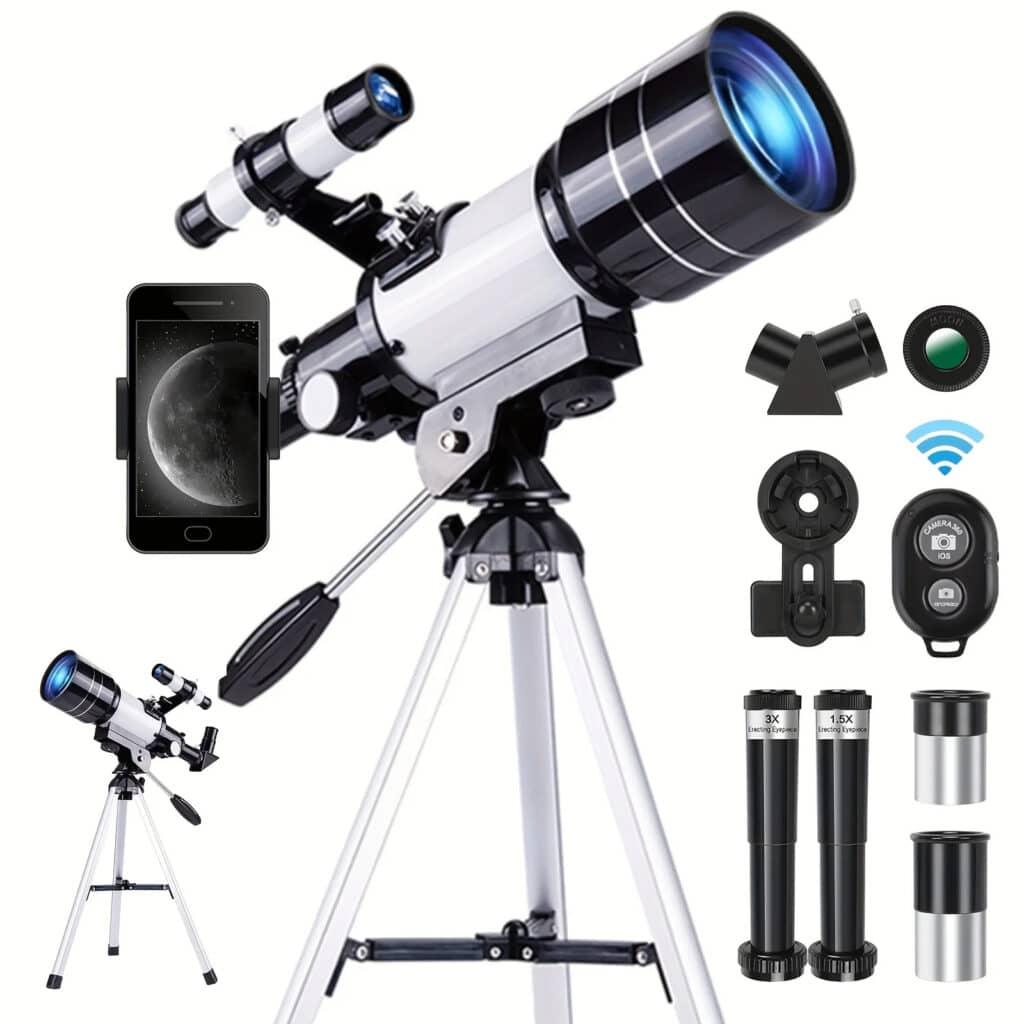
For aspiring astronomers seeking their first glimpse into the cosmos, the Astrobupy Starter Telescope stands as a beacon of excellence in 2025. 🌠
This remarkable instrument combines professional-grade features with user-friendly design, making it the perfect entry point for budding astronomers. The 70mm aperture and 300mm focal length deliver crystal-clear views that will take your breath away.
What truly sets the Astrobupy apart is its innovative multi-coated optical system, providing exceptional light transmission and reducing chromatic aberration to minimal levels. The results are stunning – crisp, vibrant images that bring celestial objects to life. 🔭
The telescope’s versatile magnification range (15X to 150X) opens up a whole new world of possibilities. Whether you’re observing lunar craters or distant planets, the clarity and detail are consistently impressive.
One of the most thoughtful features is the included smartphone adapter and Bluetooth remote control, making it easier than ever to capture and share your astronomical discoveries. The future of stargazing is here, and it’s more accessible than ever. ✨
The build quality exceeds expectations, with an aluminum alloy tripod that provides rock-solid stability during extended viewing sessions.
Pros
- 70mm aperture with FCM multi-coated lenses for exceptional clarity
- Multiple eyepieces (20mm/6mm) with 1.5X/3X Barlow lens options
- Includes smartphone adapter and Bluetooth remote control
- Premium aluminum alloy tripod with 360° rotation
- Includes moon filter and 5x24 optical finder scope
- Tool-free assembly process
- 90° BAK4 prism for accurate image orientation
- Professional features at an entry-level price point
- Lightweight yet sturdy construction
- Perfect for family learning experiences
Cons
- High demand often leads to limited stock availability
WRAP-UP
The Astrobupy Starter Telescope represents the perfect balance of professional features, user-friendly design, and outstanding value. Its combination of optical excellence, smart technology integration, and comprehensive accessory package makes it the ideal choice for anyone beginning their astronomical journey. EXPLORE NOW!
PICK #2
Rating
8.8/10
GENERAL VIEW
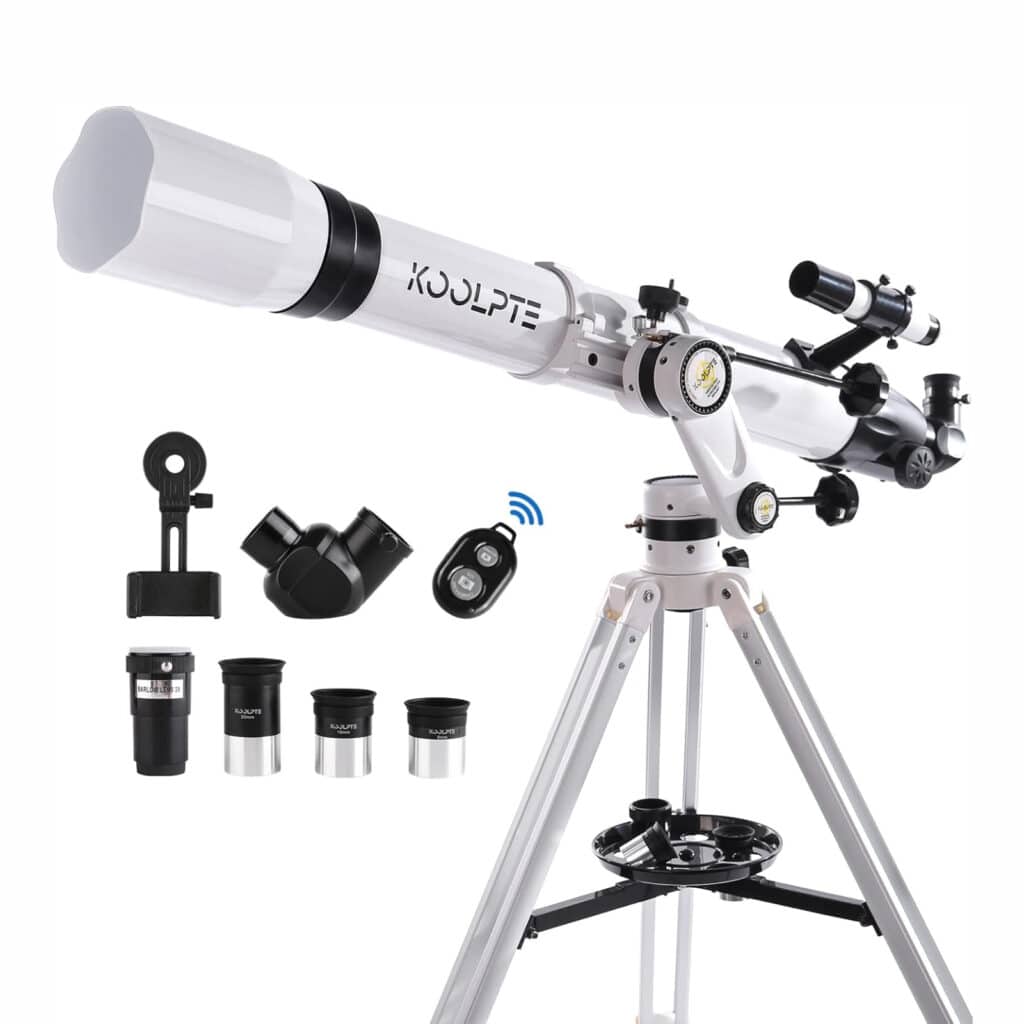
The Koolpte Starter Telescope impresses with its robust 90mm aperture and substantial 900mm focal length, delivering exceptional deep-space viewing capabilities that nearly matched our top pick.
This telescope’s standout feature is its premium Vertisteel Altazimuth Mount, providing stability that serious astronomers will appreciate. The smooth, precise movements allow for accurate tracking of celestial objects.
The inclusion of a digital eyepiece alongside the phone adapter and wireless remote creates a seamless bridge between traditional and modern astronomy. Whether you’re a tech-savvy observer or prefer classic viewing methods, the Koolpte adapts to your style.
The build quality is remarkable, offering professional-grade durability that ensures years of reliable use.
Pros
- 90mm for excellent light gathering
- High-precision Vertisteel Altazimuth system
- Traditional and digital capabilities
- Durable, high-quality materials
- Multi-coated lenses for sharp images
- Intuitive operation system
- Lightweight despite professional features
- Includes all essential accessories
Cons
- Higher investment required
- Advanced features require practice
PICK #3
Rating
8.3/10
GENERAL VIEW
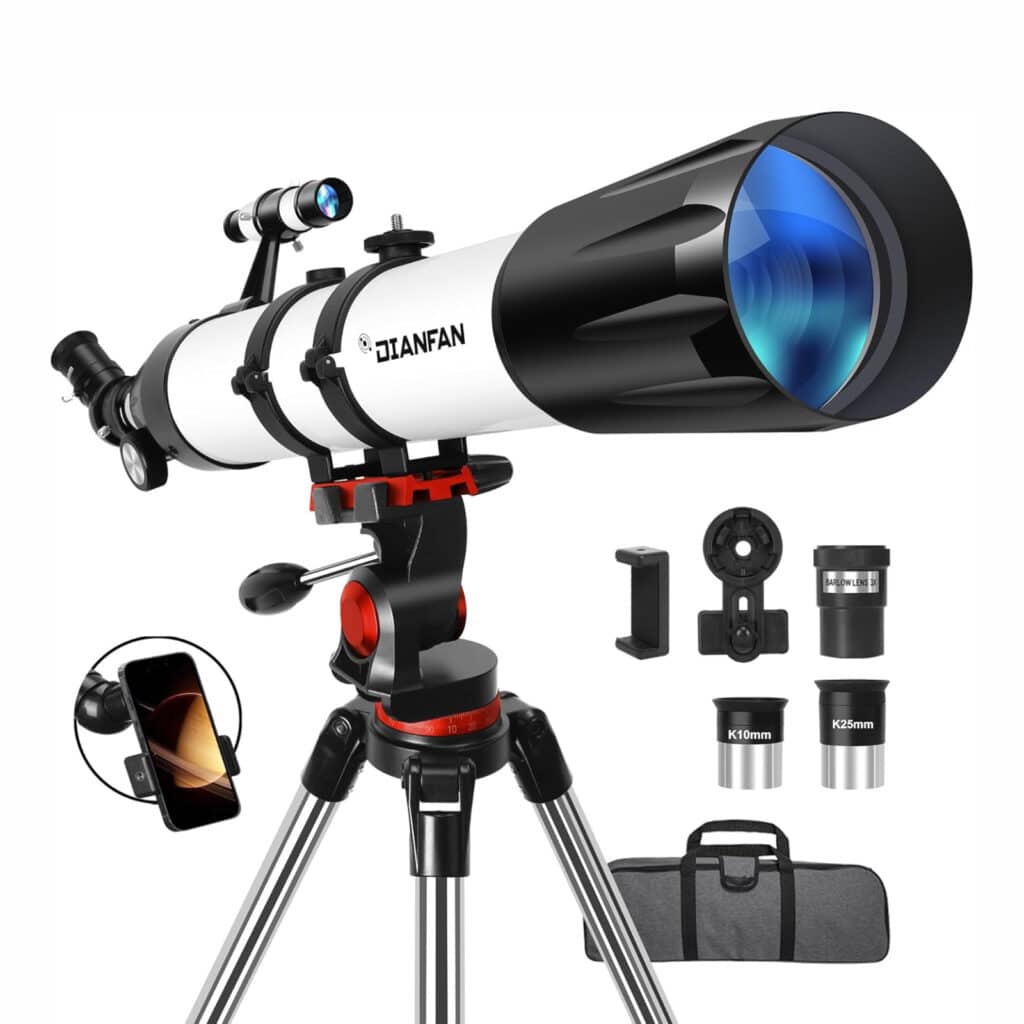
The Dianfan Starter Telescope brings impressive specifications to the table with its 800mm focal length and fully-coated 90mm objective lens. This combination delivers exceptional planetary and lunar observations.
What makes this telescope special is its thoughtful design that considers both performance and practicality. The telescope offers magnification from 32X to 240X, making it versatile enough for various astronomical targets.
The included phone holder and user-friendly controls make it particularly appealing for modern astronomers who want to share their discoveries. The setup process is straightforward, perfect for those who value efficiency.
A standout feature is its exceptional portability without compromising on optical quality.
Pros
- 90mm aperture with high-transmission coating
- Wide magnification range
- Tool-free assembly
- Durable materials
- Smartphone compatibility
- Responsive customer service
- Includes carrying case
Cons
- Slightly front-heavy design
- asic accessory package
PICK #4
Rating
7.8/10
GENERAL VIEW
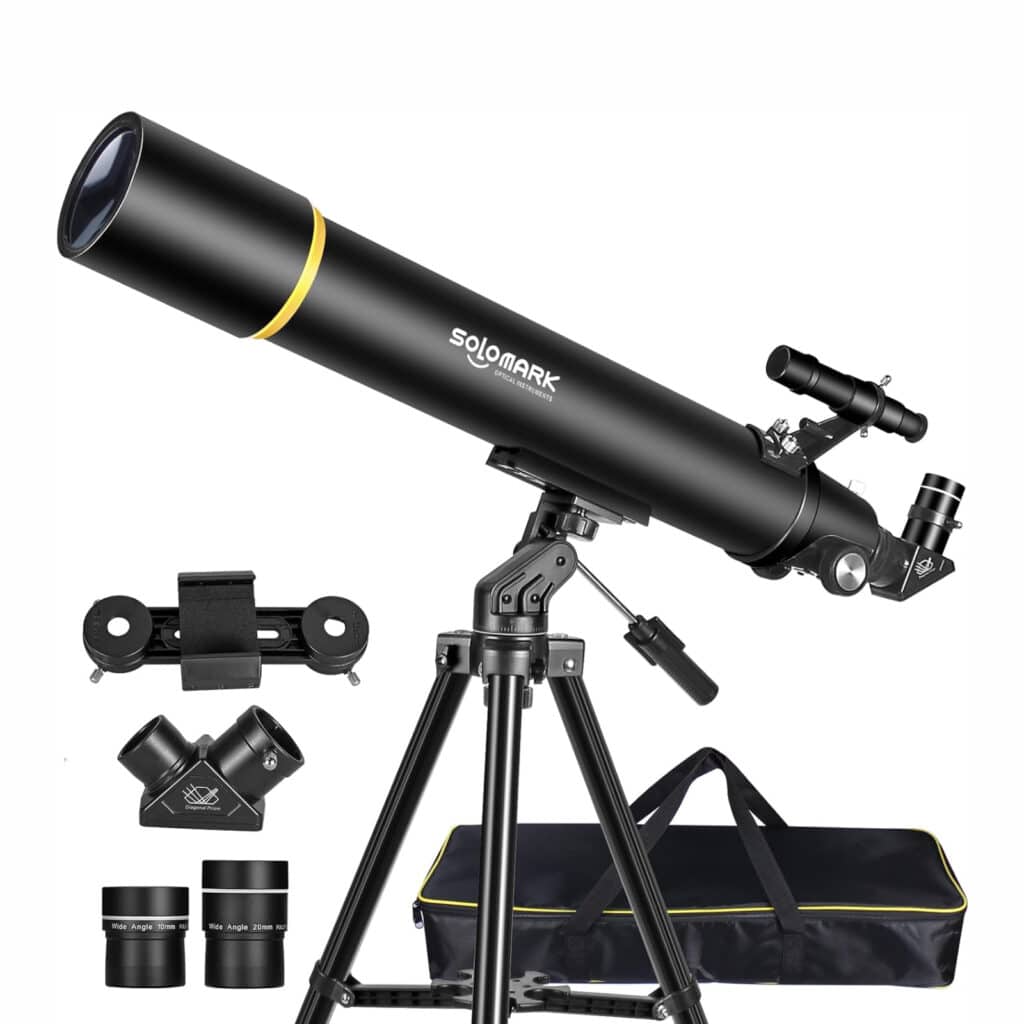
The Solomark Starter Telescope makes its mark with an impressive 80mm aperture and professional-grade green optics glass lens. This telescope excels in light gathering capability, producing bright and detailed images of celestial objects.
What truly distinguishes this model is its super azimuth gimbal system, providing exceptional stability and precise positioning. The altitude and azimuth scales make object tracking remarkably straightforward.
The telescope’s thoughtful design extends to its high-quality WA eyepieces, offering both 45X and 90X magnification options. This range makes it suitable for both planetary and deep-sky observations.
The focus on user experience is evident in its straightforward assembly process and comprehensive instruction manual.
Pros
- 80mm fully-coated green glass lens
- Super azimuth gimbal system
- Multiple WA options included
- Premium aluminum tripod
- User-friendly design
- Detailed setup guide
- High-quality construction
Cons
- Lower maximum power
- Minimal included extras
- Heavier than comparable models
PICK #5
Rating
7.1/10
GENERAL VIEW
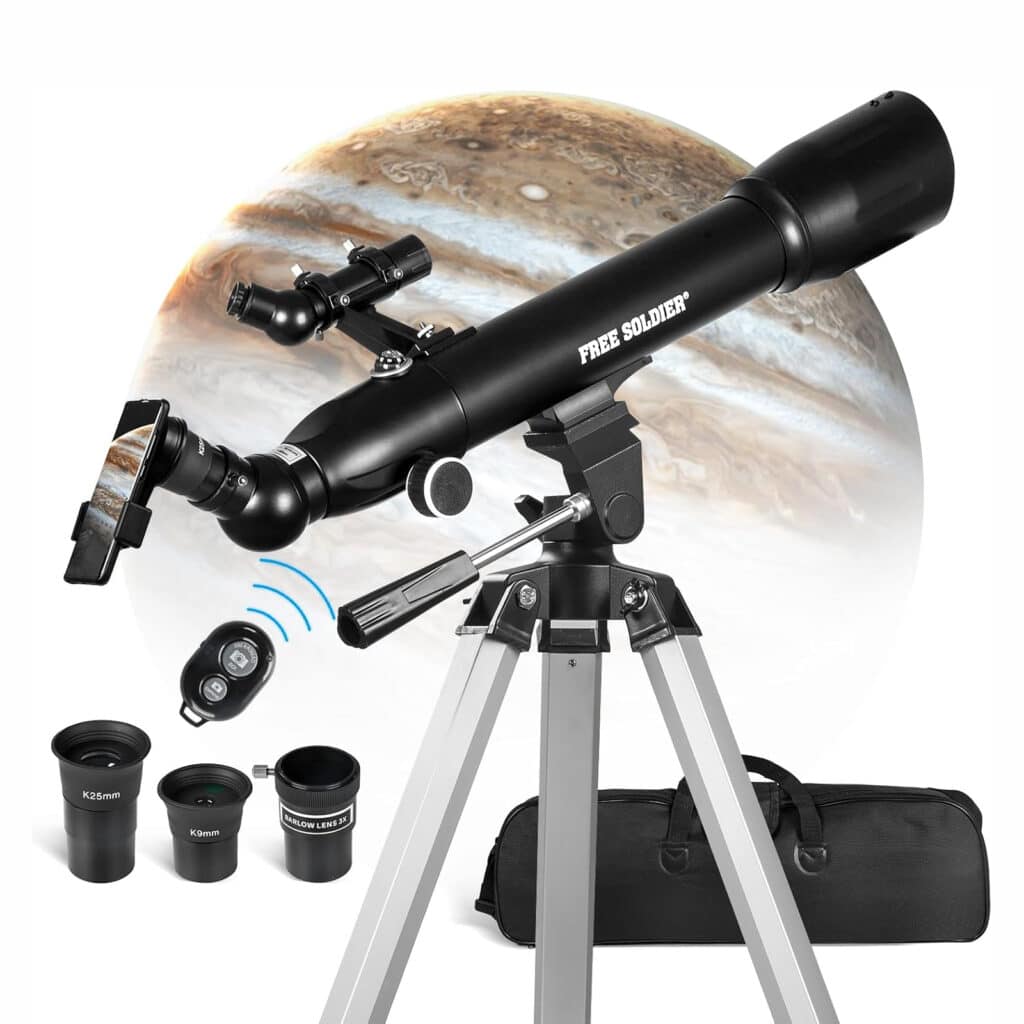
The Free Soldier Starter Telescope impresses with its 90mm aperture and 700mm focal length, delivering powerful magnification ranging from 28X to 233X. This scope particularly shines in lunar and planetary observations.
Its standout feature is the patented 360° rotating zenith lens, which provides comfortable viewing angles for observers of all heights. The included K9mm and K25mm eyepieces offer superior quality compared to standard H series options.
The telescope’s universal phone adapter and wireless remote make it an excellent choice for astrophotography enthusiasts. Setup is straightforward, with detailed instructions making assembly accessible for beginners.
Pros
- 90mm for excellent light gathering
- K-series optics included
- 360° zenith lens system
- Phone adapter and remote
- Upgraded adjustable tripod
- Suitable for all ages
Cons
- Bulky when fully assembled
- Limited remote control duration
- Complex features take time to master
- Higher end of entry-level range
❓WHAT ARE STARTER TELESCOPES
A starter telescope is your gateway to exploring the cosmos. These instruments are specifically designed to balance optical performance with user-friendly features, making astronomy accessible to beginners while providing room for growth in the hobby.
Unlike professional-grade telescopes, starter models prioritize ease of use and affordability without sacrificing essential viewing capabilities. They typically feature moderate apertures (60-90mm), stable mounts, and comprehensive accessory packages to help newcomers navigate the night sky.
The best starter telescopes include features like smartphone adapters for astrophotography, multiple eyepieces for varied magnification, and finder scopes to help locate celestial objects. While they may not offer the extreme magnification of advanced models, they provide excellent views of the moon, planets, and brighter deep-sky objects.
⭐ Benefits of Starter Telescopes
- Gateway to Astronomy: Perfect introduction to stargazing with user-friendly features and comprehensive instructions for beginners.
- Versatile Viewing: Suitable for observing various celestial objects, from lunar details to planetary features and bright star clusters.
- Educational Value: Excellent tools for learning basic astronomy concepts and developing observational skills.
- Family-Friendly: Designed for multiple users of different ages, making astronomy a shared experience.
- Cost-Effective: Provides essential features without the hefty investment of professional equipment.
- Portable Design: Generally lightweight and easy to transport for outdoor viewing sessions.
- Technology Integration: Modern features like smartphone adapters make sharing discoveries easy.
Things To Consider When Choosing Starter Telescopes
- Aperture Size: The larger the aperture, the more light gathered, resulting in brighter and clearer images. Look for at least 70mm for satisfactory views.
- Mount Stability: A stable mount is crucial for clear viewing. Consider the tripod material and construction quality for steady observations.
- Focal Length: Determines magnification capabilities. Choose based on your primary viewing interests - shorter for wide-field views, longer for planetary detail.
- Included Accessories: Check for essential items like multiple eyepieces, finder scope, and Barlow lens for versatile viewing options.
- Portability: Consider weight and size if you plan to transport your telescope frequently for dark-sky viewing.
- Future Growth: Look for models that allow for accessory upgrades as your skills and interests develop.
Common Pitfalls to Avoid When Buying Starter Telescopes
- Overvaluing Magnification: Extremely high magnification claims often indicate poor quality. Focus on aperture size and image quality instead.
- Ignoring Mount Quality: A wobbly mount can ruin the viewing experience. Never compromise on mount stability.
- Skipping Research: Not reading reviews or understanding basic specifications can lead to disappointing purchases.
- Budget Shortcuts: While staying within budget is important, extremely cheap telescopes often provide frustrating experiences that discourage further interest.

By Logan Chase – Research Specialist
Logan Chase, Lead Product Analyst at SkyWatch Reviews, brings 12 years of experience in amateur astronomy and telescope testing. With a background in optical engineering and hands-on experience testing over 200 telescopes, he combines technical expertise with a passion for making astronomy accessible to beginners.