Best 5 Coding Robots of 2025: Transform Your Child’s Learning Journey with Interactive STEM Education
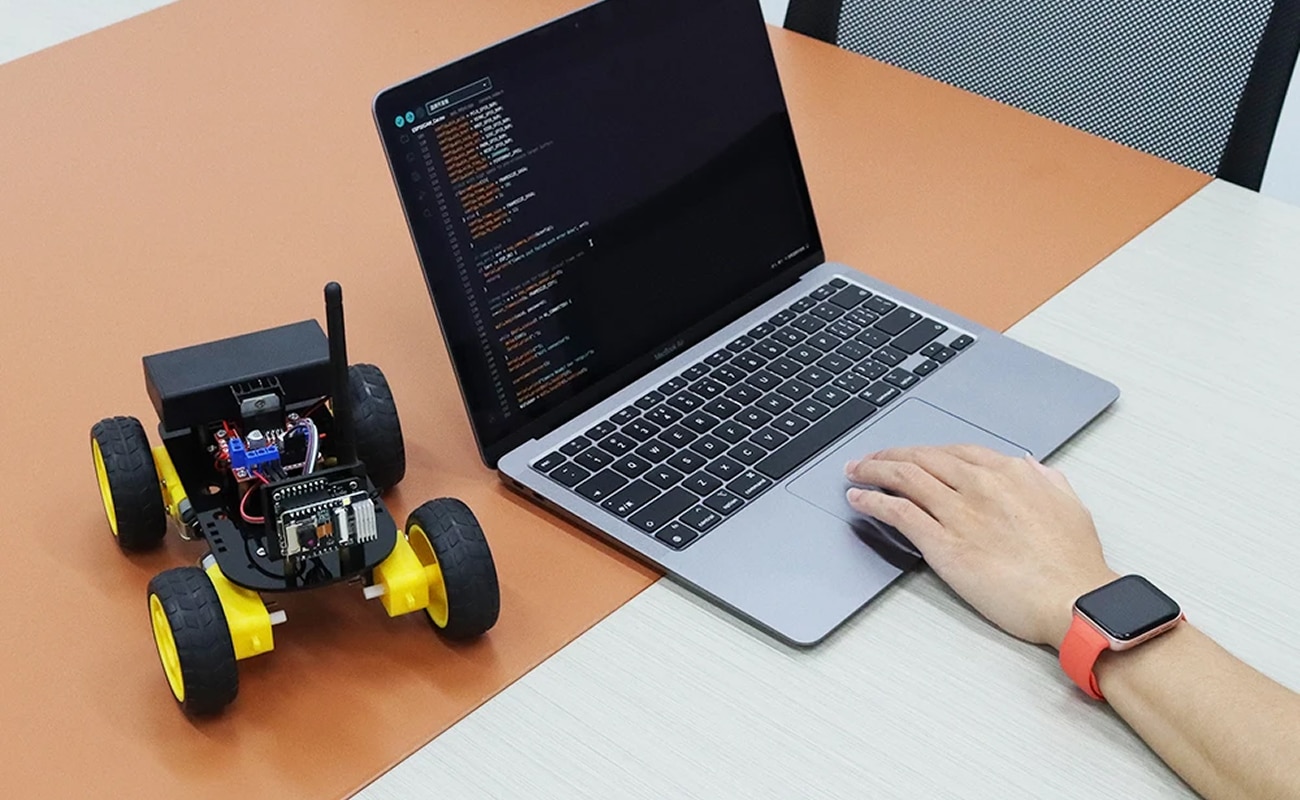
I'll never forget the night my 9-year-old daughter came home in tears because she felt "stupid" compared to her classmates who were already coding. 😢 As a parent, watching your child struggle with technology in today's digital-first world is absolutely terrifying. The nightmare of seeing them fall behind their peers while traditional learning methods fail to engage them is something no parent should endure.
Choosing the right coding robot can feel overwhelming and frustrating. With countless options flooding the market, how do you know which one will actually teach programming skills rather than just being an expensive toy collecting dust? The anxiety of making the wrong investment—wasting hundreds of dollars on something that doesn't deliver—keeps many parents paralyzed with indecision. 😰
That's exactly why we've created this comprehensive guide to the best 5 coding robots of 2025. After rigorous testing and evaluation, we've identified the top-performing educational robotics kits that genuinely transform children from complete beginners into confident young programmers. These aren't just toys—they're powerful learning tools that make coding accessible, engaging, and fun.
Throughout this article, we'll address the most painful challenges parents face: finding age-appropriate difficulty levels, ensuring lasting educational value, getting responsive customer support, and most importantly, seeing genuine skill development in your child. We'll explore how each robot tackles common frustrations like complicated assembly, limited programming options, and poor instructional materials that leave families feeling helpless. 💡
Ready to discover which coding robot will unlock your child's potential and give them the competitive edge they need for future success? Let's dive into our expert evaluation standards and explore the top 5 options that are revolutionizing STEM education in homes and classrooms across America.

Our Evaluation Standards
Educational Value & Programming Depth
Assembly & User Experience
Software Platform & Support
#1 TOP PICK
Rating
9.8/10
GENERAL VIEW
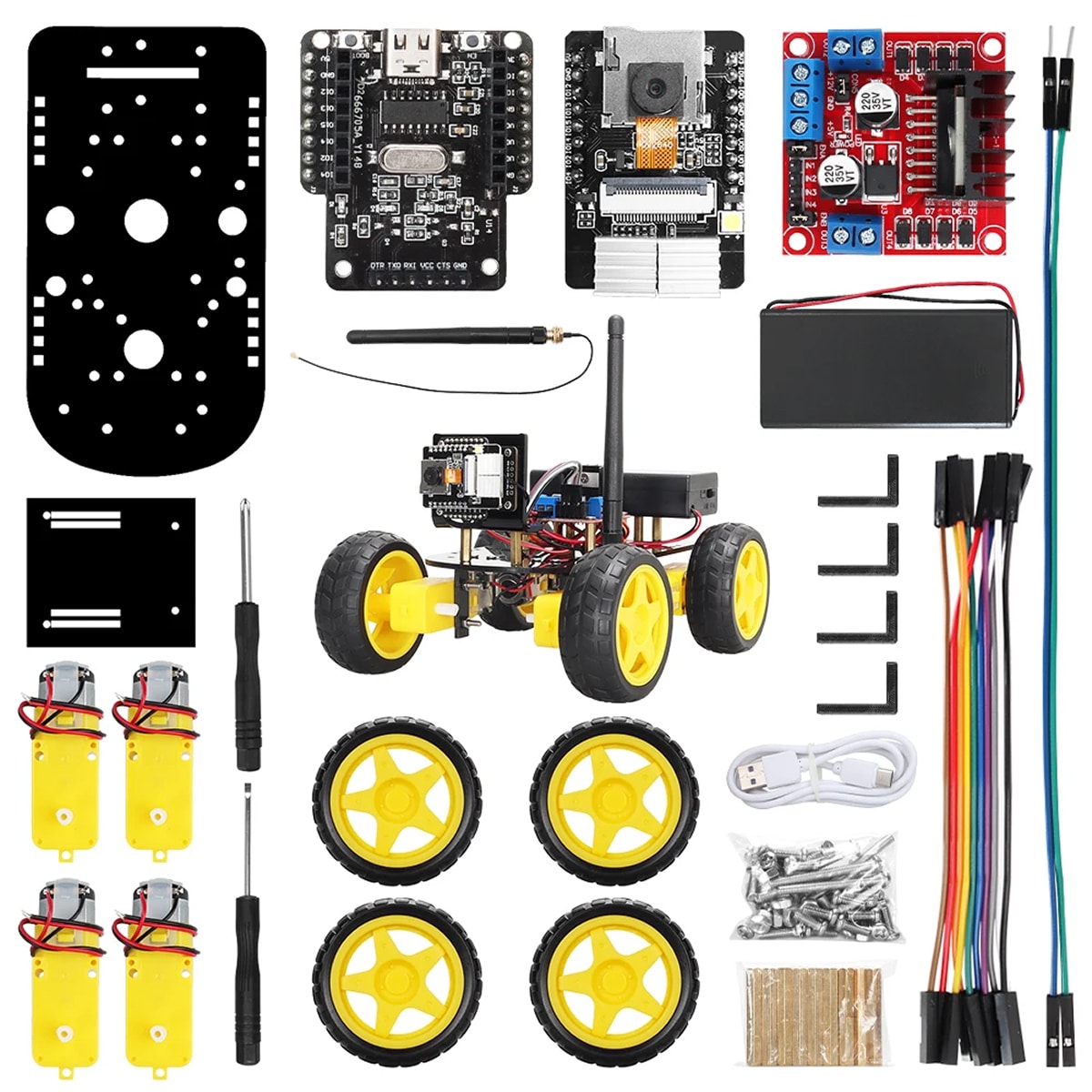
The CodieBotz Coding Robot dominates the 2025 educational robotics market as the undisputed champion for transforming children into confident programmers. 🏆 This ESP32 CAM SMART ROBOT CAR KIT represents a revolutionary leap forward in accessible STEM education, combining professional-grade components with beginner-friendly design that makes advanced coding concepts tangible and exciting for learners aged 8 and above.
What sets the CodieBotz apart is its innovative Wi-Fi camera integration that enables real-time video streaming and visual programming applications that were previously only available in robots costing three times as much. The ESP32 CAM module delivers crystal-clear live video feeds, allowing young programmers to experiment with computer vision, object detection, and autonomous navigation—skills that are increasingly valuable in today's technology-driven job market. This isn't just learning to code; it's mastering real-world AI applications that professional developers use daily. 💻
The educational methodology behind CodieBotz is brilliantly structured for progressive skill development. Starting with simple movement commands, children quickly advance to complex programming challenges involving sensor integration, conditional logic, and wireless communication protocols. The comprehensive instruction manual and assembly guide eliminate the frustration that typically derails coding education, providing clear, step-by-step guidance that builds confidence with every completed project. Parents consistently report that their children transition from complete coding novices to creating custom programs within just 2-3 weeks of regular use.
The hardware quality is exceptional, featuring a robust drive module that handles diverse terrain and a modular design that encourages experimentation and customization. The kit's compatibility with 18650 3.7v batteries (sold separately) provides extended runtime for lengthy coding sessions, while the unassembled kit format transforms construction into a valuable learning experience about electronics, circuit design, and mechanical engineering principles. 😊
Real-world application scenarios showcase CodieBotz's versatility: children program autonomous patrol routes, create remote surveillance systems, build line-following delivery robots, and develop gesture-controlled vehicles. These aren't theoretical exercises—they're practical projects that demonstrate tangible results and inspire continued learning. The programmable code capability means there's virtually no ceiling to what advanced users can achieve, making this investment valuable for years of continuous skill development.
The overwhelming customer satisfaction stems from CodieBotz's perfect balance of challenge and accessibility. Unlike robots that are either too simplistic (quickly boring) or overwhelmingly complex (immediately frustrating), this kit maintains the ideal difficulty curve that keeps young minds engaged and motivated. The active user community shares project ideas, troubleshooting tips, and creative modifications, creating a supportive ecosystem that extends far beyond the physical product.
Pros
- Professional-grade ESP32 CAM with live video streaming capabilities
- Wi-Fi connectivity enables remote control and advanced programming
- Comprehensive instruction manual eliminates assembly confusion and frustration
- Beginner-friendly design perfect for children aged 8+ with no prior experience
- Expandable architecture supports unlimited customization and advanced projects
- Real-world AI applications teach computer vision and autonomous navigation
- Durable components withstand repeated assembly and active experimentation
- Progressive curriculum grows with learner from basics to advanced coding
- Exceptional value offering premium features at accessible price point
- Active community support provides ongoing inspiration and troubleshooting assistance
Cons
- Frequently experiences stock shortages due to overwhelming demand and popularity
WRAP-UP
PICK #2
Rating
8.8/10
GENERAL VIEW
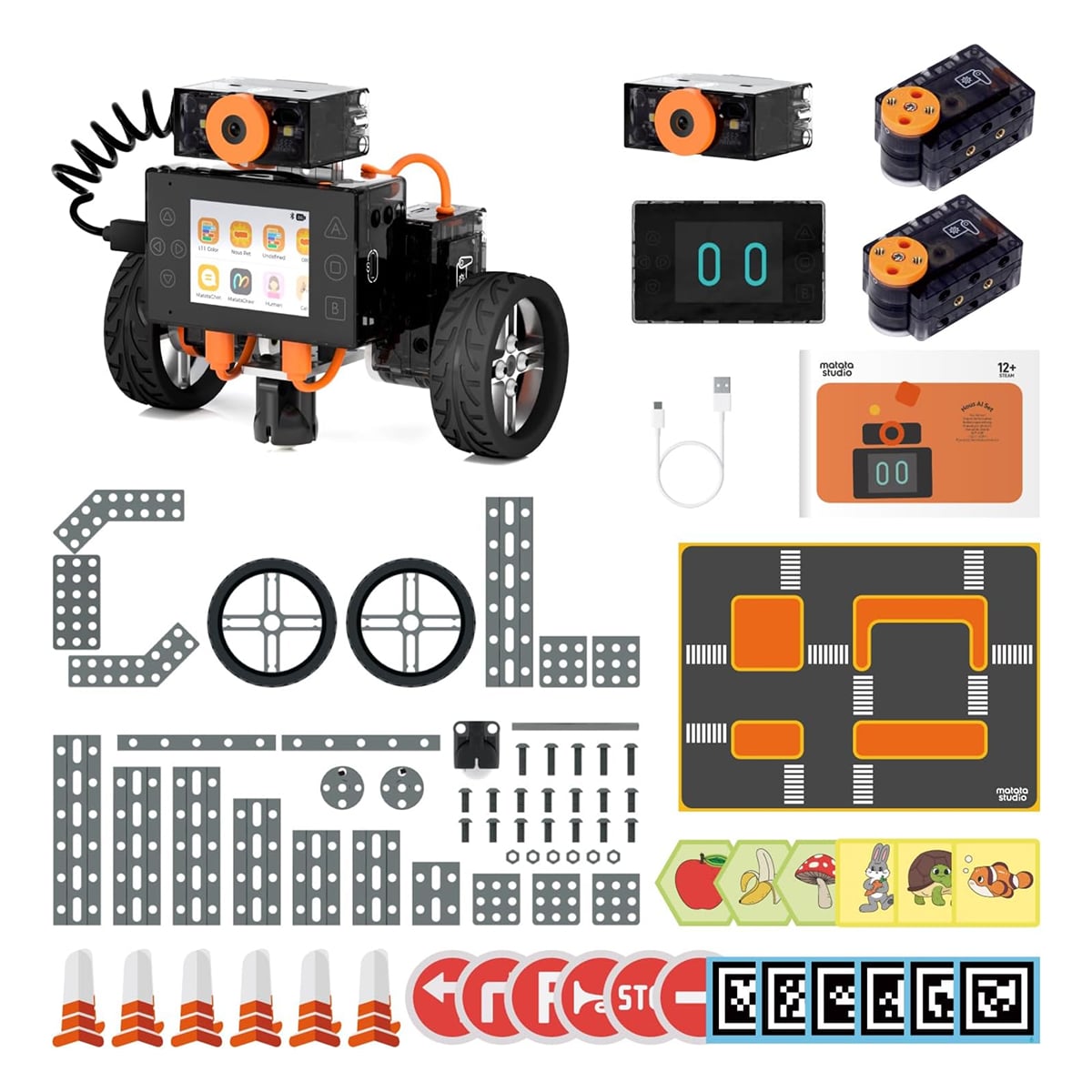
The MatataStudio Nous AI Robot represents the cutting edge of artificial intelligence education, specifically designed for older students (ages 12+) ready to explore advanced programming concepts. This comprehensive STEM robotics kit stands out by integrating ChatGPT-4o technology, providing students with hands-on experience in conversational AI, machine learning, and neural networks—technologies that are reshaping industries worldwide.
What makes the Nous AI Robot exceptional is its dual-language programming support for both Scratch and Python, allowing learners to transition smoothly from visual block-based coding to professional text-based programming. The dedicated nous.matataStudio online platform provides an intuitive environment where students can collect data, train AI models, and deploy intelligent solutions—mirroring real-world AI development workflows used by professional data scientists and engineers.
The educational scope is impressively comprehensive, covering computer vision, speech recognition, autonomous driving, and AIGC (AI-Generated Content). Students don't just learn coding syntax; they understand how AI systems perceive, process, and respond to complex environmental inputs. The detailed assembly instructions transform construction into a valuable learning experience about electronics, mechanics, and robotics components, reinforcing theoretical knowledge with practical application.
The versatility of this platform makes it ideal for diverse educational settings including traditional classrooms, homeschool environments, robotics competitions, and independent learning projects. The free, lifelong access to the programming platform ensures continued value as students advance through increasingly sophisticated projects, from basic sensor integration to complex autonomous systems that make intelligent decisions based on environmental data.
Pros
- ChatGPT-4o integration provides cutting-edge conversational AI experience
- Dual programming languages (Scratch and Python) support skill progression
- Comprehensive AI technologies including machine learning and computer vision
- Free lifetime platform access ensures long-term educational value
- Detailed assembly instructions make complex construction manageable
- Versatile applications suitable for schools, homeschool, and competitions
- Advanced age targeting (12+) provides appropriate challenge level
Cons
- Higher age requirement limits accessibility for younger learners
- Frequently out of stock due to high demand from educational institutions
PICK #3
Rating
8.3/10
GENERAL VIEW
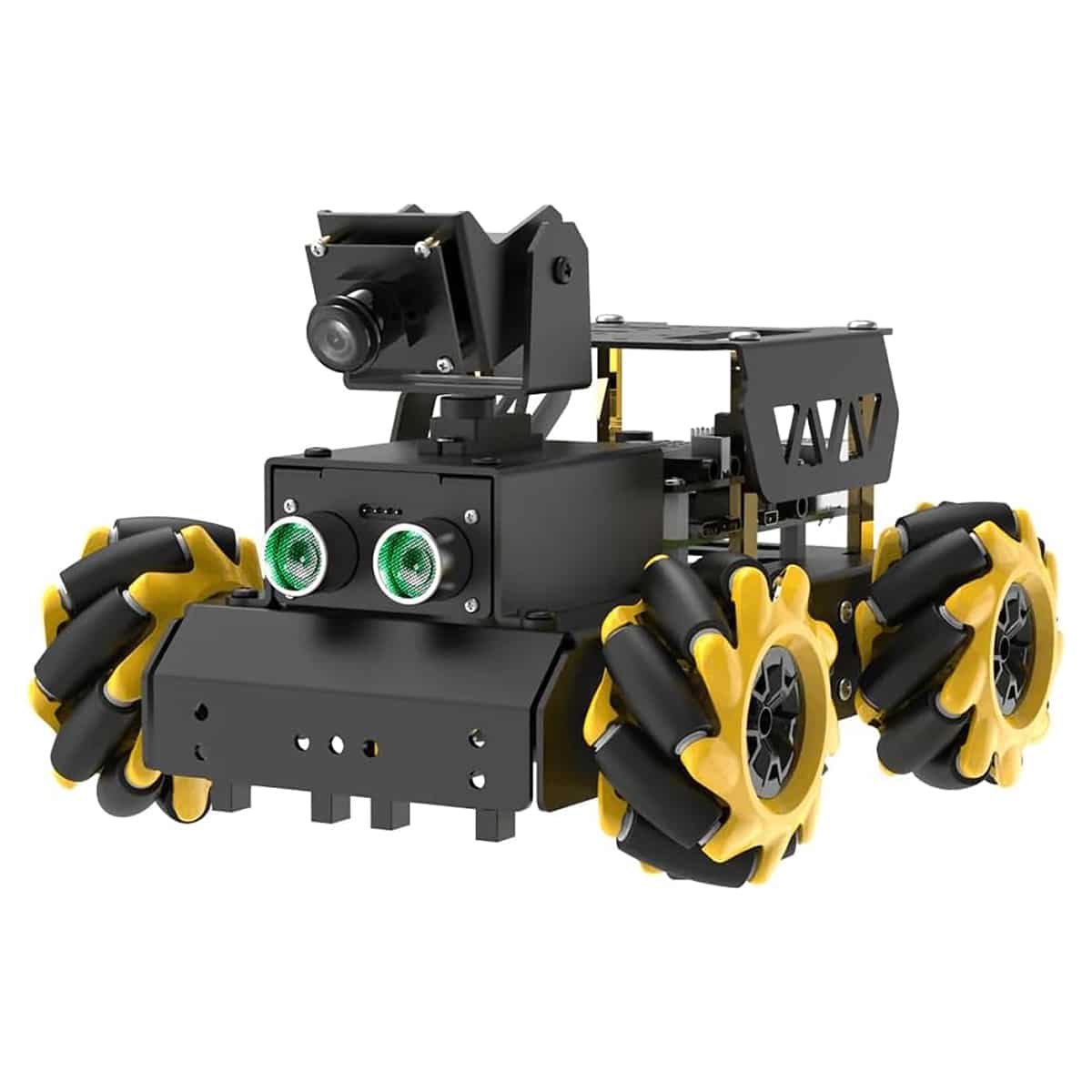
The LewanSoul TurboPi distinguishes itself through its Raspberry Pi 5/4B compatibility and advanced omnidirectional movement capabilities. This smart vision robot car delivers professional-grade functionality with its HD camera and OpenCV library integration, enabling sophisticated image processing applications that teach practical AI implementation skills through Python programming.
The standout feature is the 360° omnidirectional Mecanum wheels chassis, which provides movement flexibility that standard wheeled robots simply cannot match. Students can program forward, horizontal, diagonal, and rotational movements, tackling complex navigation challenges that mirror real-world robotics applications in warehouses, hospitals, and manufacturing facilities. This advanced mobility, combined with pan-tilt servos, creates a remarkably versatile platform for experimentation.
TurboPi excels at practical AI applications including color sorting, target tracking, gesture recognition, and face detection. The dual line-following capability—using either a 4-channel infrared sensor or camera-based vision—demonstrates different approaches to the same problem, teaching students to evaluate trade-offs between sensor types and programming strategies. The traffic light and road sign recognition features provide engaging autonomous driving simulations that captivate student interest.
The dedicated mobile app (iOS/Android) and wireless control options make operation intuitive and engaging, while the high-quality construction ensures durability through repeated programming experiments and physical challenges. For students ready to move beyond basic coding into serious robotics and AI development, TurboPi provides a professional-grade platform at an educational price point.
Pros
- Raspberry Pi 5/4B compatibility provides powerful processing capabilities
- Omnidirectional Mecanum wheels enable complex 360° movement patterns
- HD camera with OpenCV supports advanced computer vision projects
- Dual line-following methods teach multiple sensor approaches
- Traffic recognition features create engaging autonomous driving scenarios
- Wireless app control available for iOS and Android devices
Cons
- Requires separate Raspberry Pi purchase increasing initial investment
- Python-only programming may challenge younger beginners
- Stock availability issues during peak educational purchasing seasons
PICK #4
Rating
7.8/10
GENERAL VIEW
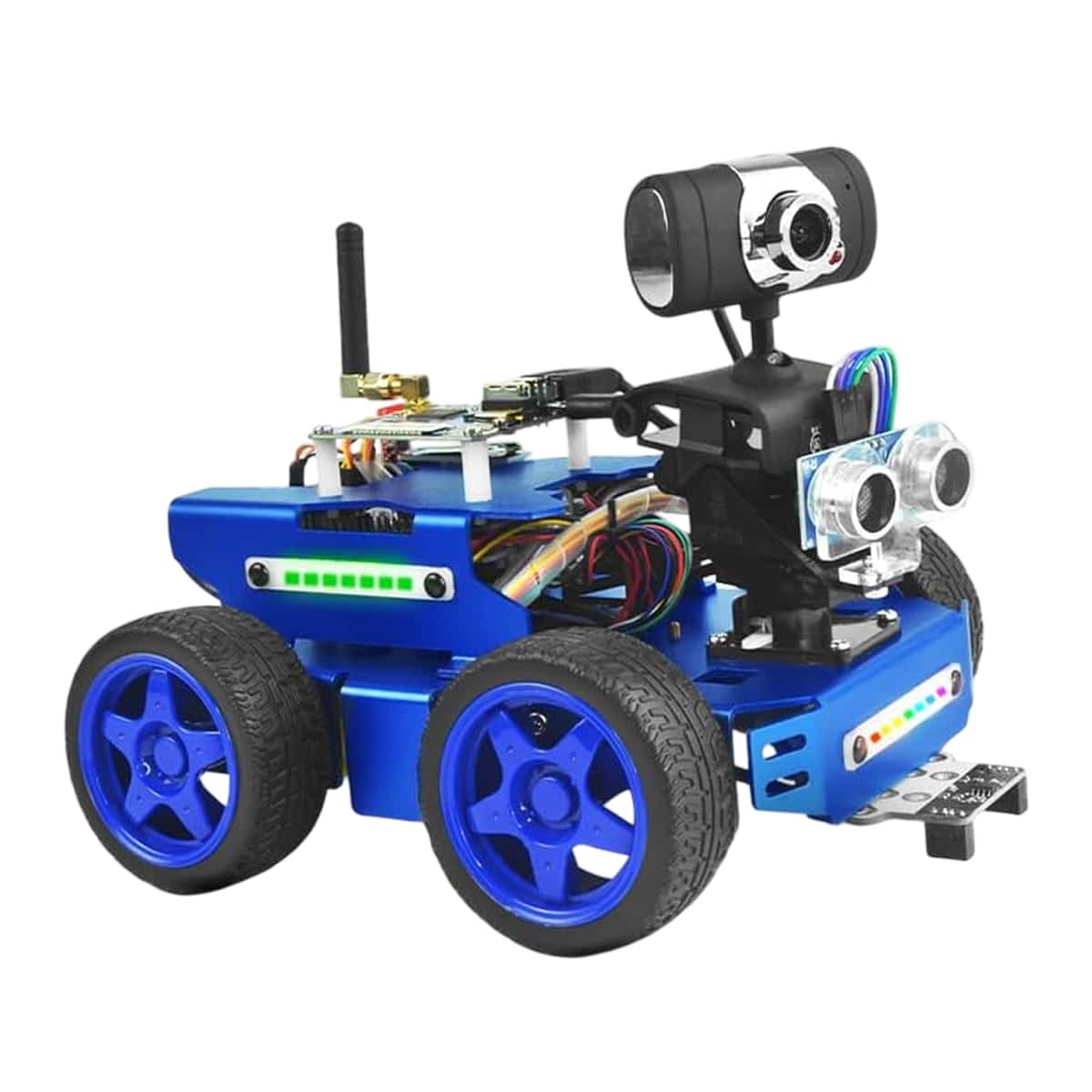
The YonPhsy RC Smart Robot Car positions itself as a versatile Internet of Things training platform supporting multiple development boards including Arduino, STM32, and Raspberry Pi 4B. This flexibility makes it particularly valuable for educational institutions and advanced hobbyists who want to experiment with different microcontroller ecosystems and compare their capabilities within a single hardware platform.
The robot's two-degree-of-freedom camera gimbal provides exceptional visual control, allowing real-time observation through mobile app (iOS/Android) or PC control software. The comprehensive sensor suite—including ultrasonic distance measurement, infrared patrol sensors, and fall prevention systems—enables diverse programming projects from basic obstacle avoidance to complex maze navigation challenges that teach algorithmic thinking and problem-solving strategies.
Hardware quality is evident in the aluminum alloy chassis construction, providing durability that withstands active learning environments. The removable tire system with two tire types allows experimentation with different terrains and traction requirements. The dual-antenna Wi-Fi routing module with optional OpenWRT support demonstrates advanced networking concepts, while the battery protection compartment shows thoughtful design preventing damage during inevitable learning mistakes.
For Raspberry Pi configurations, the visual recognition capabilities—including face detection, color tracking, and QR code recognition—provide engaging projects that demonstrate practical AI applications. The high brightness RGB lighting system with intelligent turning signals and power display adds visual feedback that helps students understand robot state and behavior, making debugging and program verification more intuitive.
Pros
- Multi-board compatibility (Arduino/STM32/Raspberry Pi) maximizes versatility
- Two-degree-of-freedom gimbal provides superior camera control
- Comprehensive sensor suite enables diverse programming projects
- Aluminum alloy chassis ensures durability in active environments
- Dual-antenna Wi-Fi module supports advanced networking applications
- Visual recognition functions demonstrate practical AI implementations
Cons
- Requires separate purchase of development board increasing costs
- Python-focused programming may challenge younger students
- Assembly complexity higher than beginner-focused alternatives
- Frequently experiences stock shortages during academic year start
PICK #5
Rating
7.1/10
GENERAL VIEW
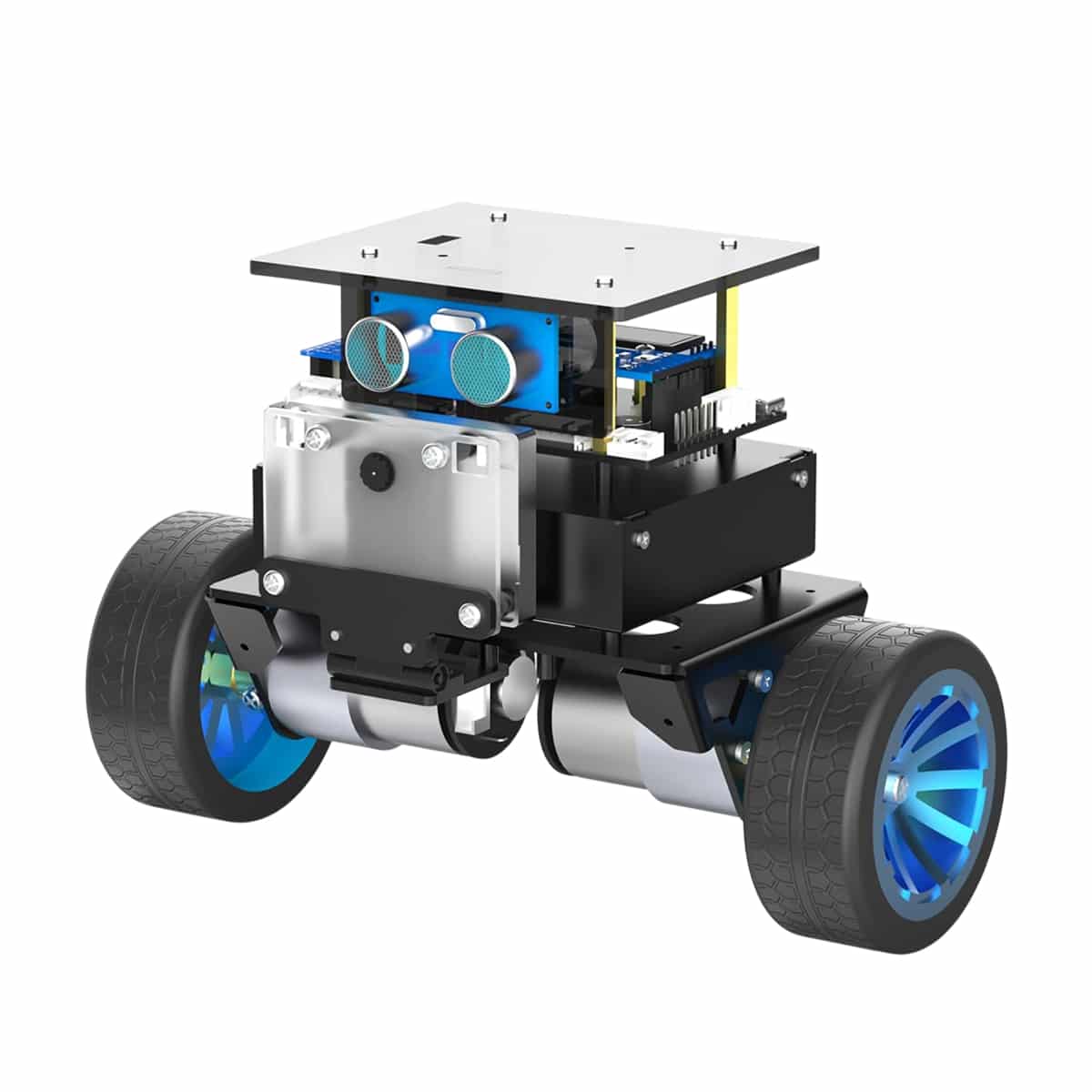
The Yahboom STM32 Balance Car offers a specialized focus on self-balancing robotics, teaching advanced control theory concepts through hands-on experimentation. Using the STM32F103RCT6 microcontroller with 51 programmable GPIO pins, this platform provides exceptional expansion capabilities for students ready to tackle complex embedded systems projects and real-time control algorithms.
The self-balancing functionality introduces students to PID control theory, six-axis IMU sensor fusion, and feedback loop programming—concepts that are fundamental to robotics, aerospace, and automotive engineering. The dedicated Android app provides real-time PID parameter adjustment and waveform visualization, allowing students to observe how control system changes immediately affect robot behavior, creating powerful cause-and-effect learning moments.
Hardware expandability is impressive, with dedicated interfaces for two-way encoder motors, wireless handle control, OLED display, radar, Bluetooth, ultrasonic sensors, K210 vision module, and four-way patrol systems. The three-layer structure supports up to 4kg payload, demonstrating robust mechanical design that enables advanced projects involving cargo transport, sensor platform deployment, or additional computing hardware integration.
The kit includes 20 pre-programmed functional modes accessible through a simple wheel interface, eliminating the initial programming barrier and allowing immediate experimentation. Students can switch between balance modes, patrol functions, and remote control operations without writing a single line of code, then progressively customize and expand functionality as their skills develop. For serious robotics enthusiasts and students pursuing engineering education, this platform provides professional-level capabilities at an accessible price point.
Pros
- Self-balancing technology teaches advanced control theory concepts
- STM32 microcontroller with 51 GPIO pins enables complex projects
- Real-time PID tuning through Android app visualizes control systems
- Exceptional payload capacity (4kg) supports advanced applications
- 20 pre-programmed modes provide immediate functionality without coding
Cons
- Android-only app limits iOS user accessibility
- Advanced concepts may overwhelm absolute beginners
- Steeper learning curve compared to entry-level alternatives
- Assembly complexity requires patience and mechanical aptitude
- Frequently out of stock due to popularity in robotics competitions
What are Coding Robot
Coding robots are interactive educational tools that combine physical robotics hardware with programming software to teach computer science concepts through hands-on experimentation. These STEM learning platforms allow students to write code that directly controls robot behavior, creating immediate visual feedback that makes abstract programming concepts tangible and understandable.
Modern coding robots range from simple beginner kits using visual block-based programming languages to advanced platforms supporting professional text-based coding in Python, C++, and other industry-standard languages. They typically include sensors (cameras, ultrasonic, infrared), actuators (motors, servos), and communication modules (Wi-Fi, Bluetooth) that enable diverse programming projects from basic movement to complex autonomous systems.
The educational value extends beyond coding skills, encompassing electronics assembly, mechanical engineering principles, problem-solving strategies, and computational thinking. Students learn to break complex challenges into manageable steps, debug malfunctioning systems, and iterate on designs—skills that transfer directly to real-world technology careers and everyday problem-solving situations.
In 2025, coding robots have become essential tools in progressive educational curricula, homeschool programs, and extracurricular STEM activities. They address the growing demand for technology literacy by making programming accessible, engaging, and relevant to students who might otherwise find traditional computer science education abstract or intimidating. The best coding robots grow with learners, providing years of educational value through expandable hardware and progressively challenging programming opportunities.
⭐ Benefits of Coding Robot
- Hands-on learning experience makes abstract programming concepts tangible and immediately understandable through physical robot responses
- Progressive skill development from visual block coding to professional text-based languages supports continuous growth without platform changes
- STEM career preparation teaching in-demand skills in robotics, AI, computer vision, and embedded systems that employers actively seek
- Problem-solving enhancement through debugging challenges, algorithm optimization, and iterative design processes that build resilience and critical thinking
- Engagement and motivation through immediate visual feedback and tangible project results that maintain interest far longer than traditional learning methods
- Collaborative learning opportunities enabling family bonding, peer cooperation, and participation in robotics competitions that build social skills
- Customization and creativity allowing students to design unique projects that express individual interests while applying technical skills
- Real-world application understanding demonstrating how coding controls everyday technology from smartphones to autonomous vehicles, making education relevant
Things To Consider When Choosing Coding Robot
- Age appropriateness ensuring the complexity level matches your child's developmental stage and prior experience to prevent frustration or boredom
- Programming language support verifying the robot teaches languages relevant to your educational goals, from beginner Scratch to professional Python
- Hardware quality and durability evaluating component construction to ensure the robot withstands repeated assembly, experimentation, and inevitable learning mistakes
- Educational resources and curriculum confirming comprehensive tutorials, lesson plans, and progressive projects are included to guide learning effectively
- Expansion and upgrade potential assessing whether the platform can grow with your child through additional sensors, modules, and advanced programming challenges
- Software platform sustainability ensuring the programming environment receives regular updates and long-term support rather than becoming obsolete quickly
- Community and support availability checking for active user communities, responsive customer service, and abundant online resources for troubleshooting and inspiration
What To Avoid When Choosing Coding Robot
- Purchasing overly complex robots that immediately overwhelm beginners, creating frustration and abandonment rather than building confidence through achievable challenges
- Choosing proprietary systems with limited programming options that quickly become boring as skills advance, wasting investment on platforms with short educational lifespans
- Ignoring assembly requirements and assuming pre-built robots provide equal learning value when construction itself teaches valuable electronics and mechanical principles
- Overlooking battery and accessory costs that significantly increase total investment beyond the advertised robot price, creating budget surprises
- Neglecting compatibility verification failing to confirm required devices (tablets, computers, operating systems) work with the robot before purchase, causing immediate usability problems