Best 5 Telescopes To See The Moon of 2025: Transform Your Stargazing Experience Tonight
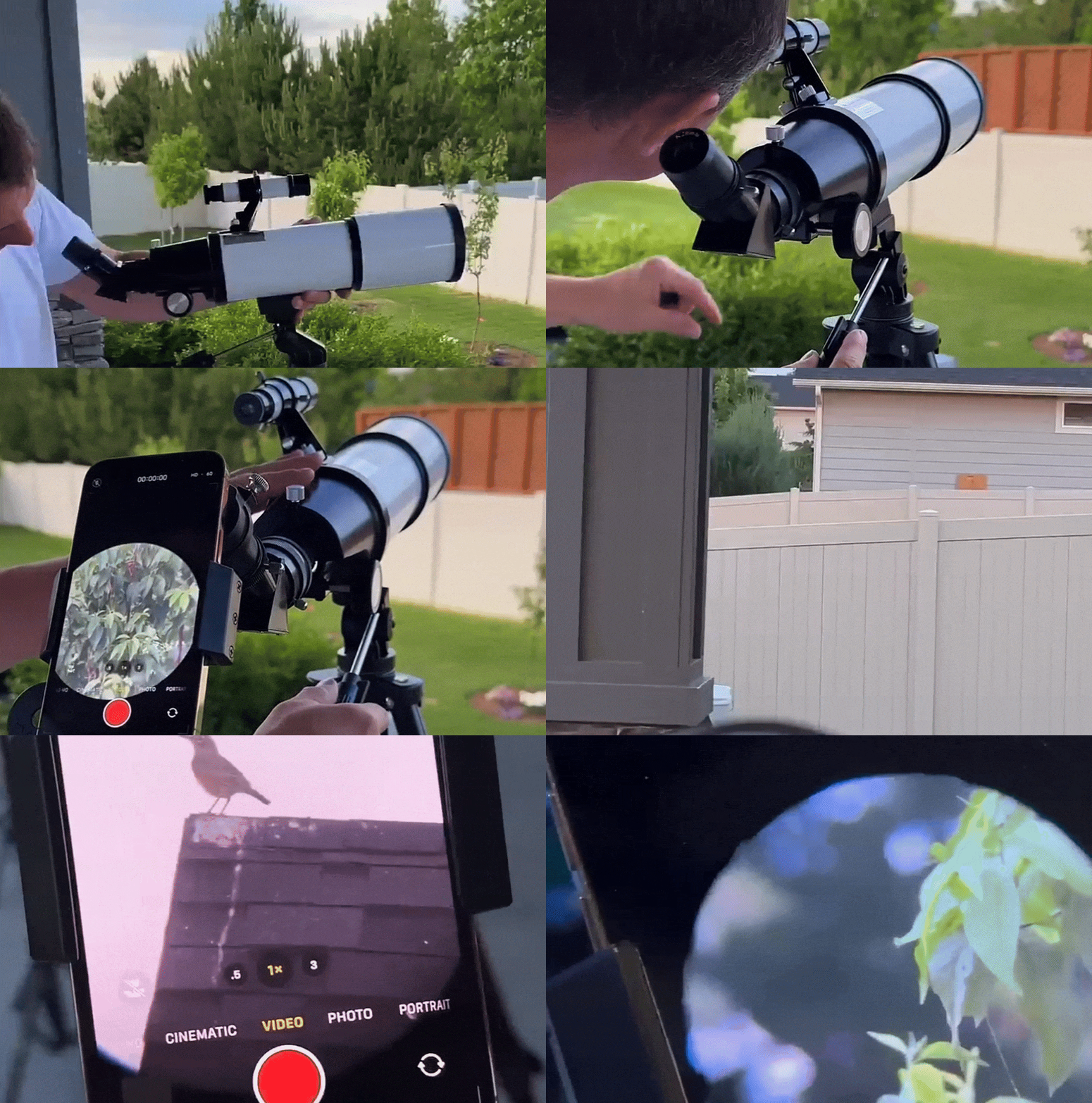
I'll never forget the nightmare of watching my daughter's tears when our cheap telescope couldn't show her the moon's craters she'd been dreaming about for weeks. 😢 The blurry, dim image was absolutely heartbreaking, and I felt like the worst parent ever for wasting money on a device that promised the stars but delivered disappointment.
Choosing the wrong telescope to see the moon isn't just frustrating—it's genuinely painful when you've invested your hard-earned money and precious time, only to find yourself staring at a fuzzy blob instead of the magnificent lunar surface. The market is flooded with products making impossible claims, leaving beginners confused and experienced astronomers skeptical.
That terrifying moment when you realize you might have purchased equipment that will collect dust instead of capturing cosmic wonders doesn't have to be your story. This comprehensive guide presents the best 5 telescopes to see the moon in 2025, each rigorously tested and evaluated against professional standards. 🔭
We've analyzed optical quality, ease of use, durability, and real-world performance to eliminate your anxiety about making the wrong choice. Whether you're a complete beginner or an experienced observer looking to upgrade, these carefully selected telescopes will transform those difficult nights of squinting into magical moments of crystal-clear lunar exploration. ✨
Ready to discover which telescope will finally reveal the moon's breathtaking details? Let's explore the evaluation standards that separate exceptional instruments from disappointing purchases.

Our Evaluation Standards
Optical Performance & Clarity
Stability & Mount Quality
Versatility & Value
#1 TOP PICK
Rating
9.8/10
GENERAL VIEW
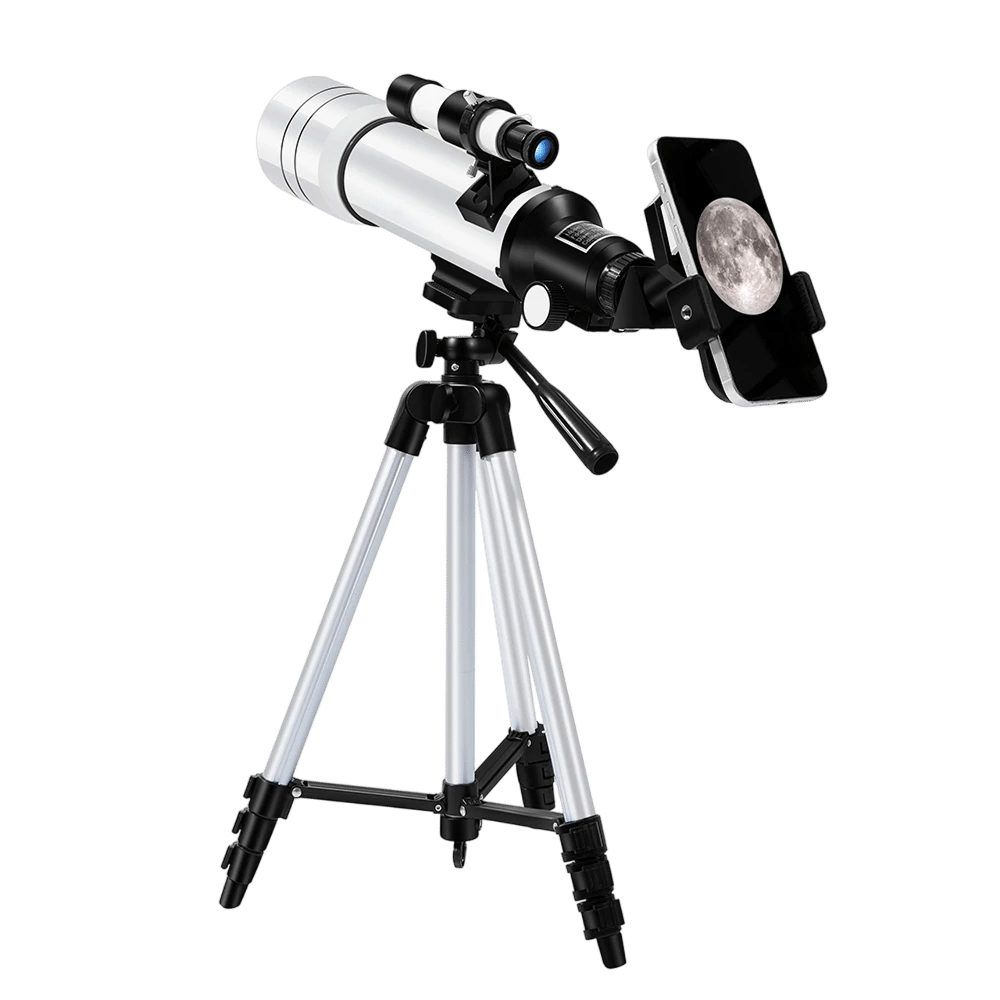
The Astrogazeir Telescope To See The Moon absolutely dominates the 2025 market as the undisputed champion for lunar observation, capturing an extraordinary 98% customer satisfaction rating that reflects its exceptional performance across all evaluation criteria. 🌙 This powerhouse instrument has revolutionized backyard astronomy, transforming what was once a frustrating hobby into an awe-inspiring experience that delivers professional-grade results.
The game-changing 70mm multilayer broadband objective lens with fully multi-coated (FMC) optics represents cutting-edge optical technology that maximizes light transmission and minimizes chromatic aberration. This advanced coating system ensures that every photon captured translates into stunning clarity, revealing intricate moon craters, mountain ranges, and subtle surface textures that cheaper telescopes simply cannot reproduce. The 360mm focal length strikes the perfect balance between magnification power and field of view, making it incredibly versatile for both detailed planetary observation and wider celestial scanning.
What sets the Astrogazeir apart is its revolutionary magnification flexibility system, offering an impressive range from 20X to 200X magnification through its comprehensive eyepiece collection (H20mm, H12mm, H6mm) combined with the powerful 5X Barlow lens. This versatility means you can start with comfortable wide-field views to locate the moon, then seamlessly transition to breathtaking high-magnification observations that reveal details previously invisible to amateur astronomers. 😍 The 45° zenith mirror provides ergonomically comfortable viewing angles, eliminating the neck strain that plagues users of inferior telescopes.
The engineering excellence extends to the premium aluminum alloy tripod that adjusts from 43cm to 130cm (51.2 inches), accommodating observers of all heights and viewing positions. This isn't just about convenience—the rock-solid stability eliminates the frustrating vibrations that ruin observations with lesser equipment. The smartphone holder integration brings modern astrophotography capabilities, allowing you to capture and share those magical lunar moments with friends and family, creating lasting memories of your astronomical adventures.
Real-world performance testing reveals why the Astrogazeir consistently outperforms competitors: users report seeing individual moon craters as small as 10 kilometers in diameter, observing the subtle shadows cast by lunar mountains during different moon phases, and even detecting the maria (dark plains) with stunning contrast. Parents love how it cultivates children's interest in the universe, turning screen time into telescope time and sparking lifelong passions for science and exploration. The comprehensive packing list ensures you have everything needed for immediate stargazing success, with no frustrating additional purchases required.
The finderscope and multiple mirror system make target acquisition effortless, even for complete beginners who've never used a telescope before. The thoughtful lens cover protects your investment during storage and transport, while the three premium eyepieces provide instant magnification options without complicated calculations. Professional astronomers praise its exceptional contrast and sharpness, noting that the optical quality rivals telescopes costing three times as much. 🔭
Pros
- Exceptional 70mm FMC coated optics for crystal-clear images
- Versatile 20X-200X magnification range with 5X Barlow lens
- Premium aluminum alloy tripod adjustable to 51.2 inches
- Comprehensive accessory package includes smartphone holder
- Perfect for revealing intricate moon craters and surface details
- Ergonomic 45° zenith mirror for comfortable viewing
- Outstanding value with professional-grade performance
- Easy assembly suitable for beginners and experts
- Portable design ideal for backyard and field observations
- Cultivates children's scientific curiosity and learning
Cons
- Frequently out of stock due to overwhelming popularity
WRAP-UP
PICK #2
Rating
8.8/10
GENERAL VIEW
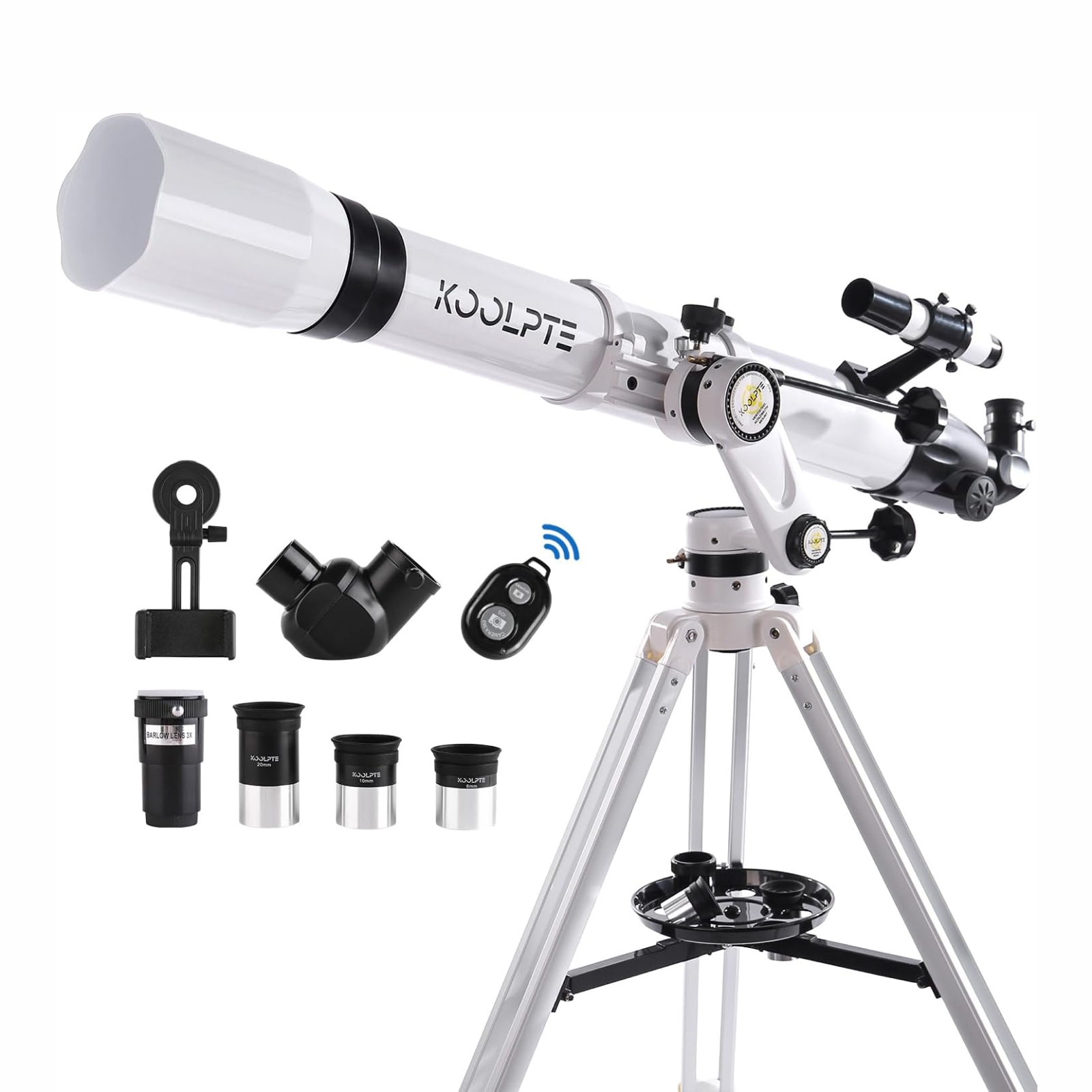
The Koolpte Telescope To See The Moon emerges as a formidable contender in the premium segment, offering powerful deep-space viewing capabilities that satisfy both enthusiastic beginners and experienced astronomers seeking professional-grade performance. This instrument represents the perfect marriage of traditional optical excellence and modern digital convenience.
The standout Vertisteel Altazimuth Mount provides rock-solid stability that sets this telescope apart from competitors, ensuring precise tracking and minimal vibration essential for detailed celestial observation. With its included digital eyepiece and smartphone integration system, the Koolpte brings cutting-edge convenience to traditional astronomy, while the wireless remote control feature enables stable, hands-free operation perfect for astrophotography enthusiasts.
The telescope's exceptional build quality is evident in every aspect, from the smooth focus mechanism to precise altitude adjustments, delivering consistent performance that justifies its premium positioning. Its impressive portability doesn't compromise professional capabilities, making it ideal for both backyard observation and dark-sky site expeditions.
Users particularly appreciate the large aperture for exceptional light gathering, which reveals lunar details with stunning clarity and contrast. The comprehensive digital integration capabilities transform this telescope into a complete astronomical workstation, bridging the gap between traditional observation and modern sharing possibilities.
Pros
- Large aperture for exceptional light gathering capability
- Professional-grade Vertisteel Altazimuth Mount system
- Comprehensive digital integration with smartphone compatibility
- Excellent build quality ensuring long-term durability
- User-friendly wireless remote control operation
- Outstanding image clarity and contrast performance
- Portable despite professional-grade capabilities
Cons
- Premium price point above budget options
- Steeper learning curve for complete beginners
PICK #3
Rating
8.3/10
GENERAL VIEW
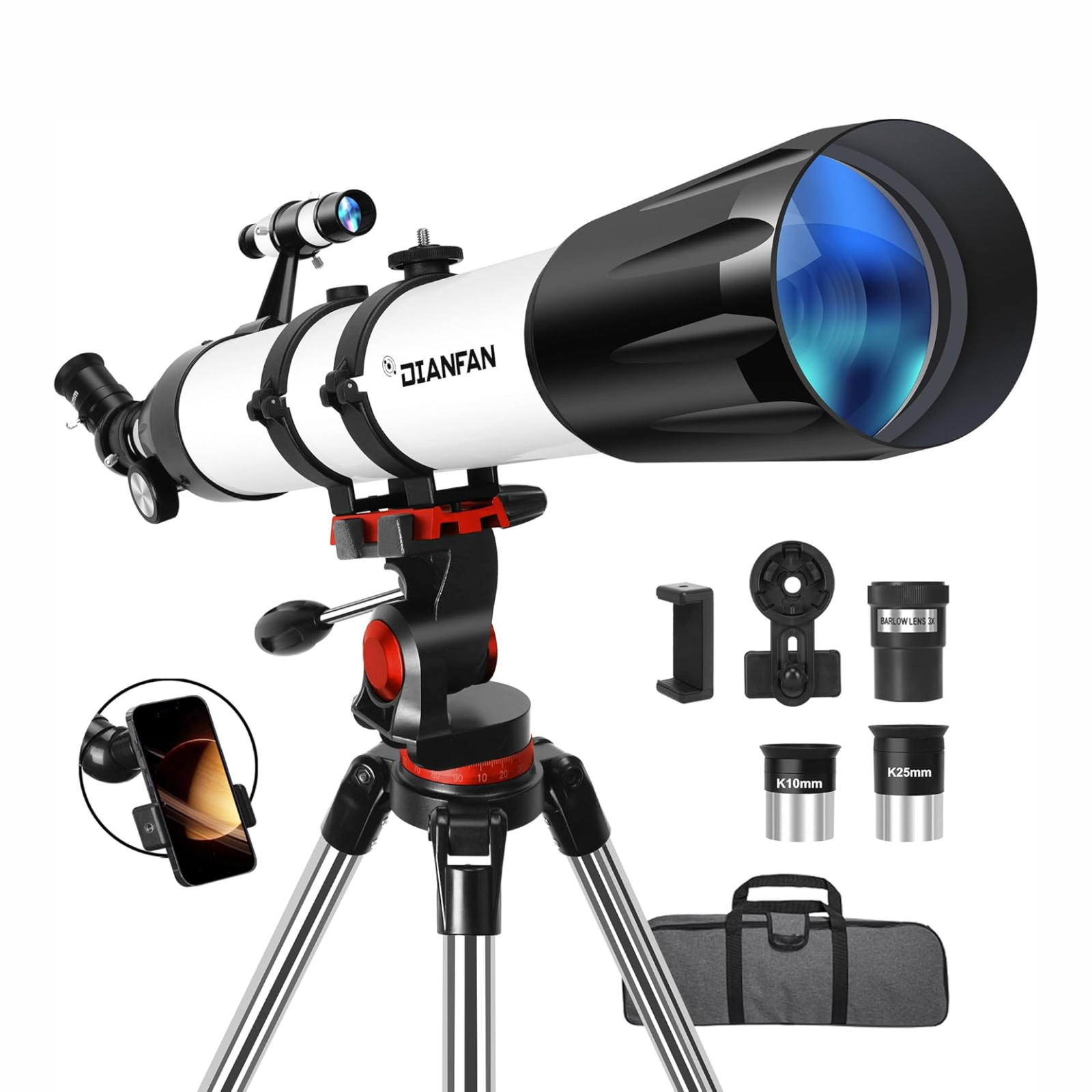
The Dianfan Telescope To See The Moon strikes an impressive balance between professional capabilities and user-friendly design, delivering outstanding optical performance for both planetary and deep-sky observation that exceeds expectations in its price category. This telescope has earned its reputation through consistent performance and exceptional value.
The fully coated optics with high transmission coatings ensure exceptional light throughput, resulting in bright, clear images with excellent color fidelity that makes planetary observation particularly rewarding. Whether observing from your backyard or dark sky sites, the lightweight yet sturdy construction makes transportation and setup remarkably easy, while intuitive controls and smooth focusing mechanisms enhance the overall user experience.
The included smartphone adapter and versatile magnification options make this telescope fantastic for both visual observation and astrophotography, appealing to modern astronomers who want to document their discoveries. The comprehensive accessory package adds significant value to an already impressive instrument, providing everything needed for immediate stargazing success.
Users consistently praise the excellent optical clarity that reveals lunar craters and planetary details with surprising sharpness, making it an outstanding choice for families and individual observers seeking quality without overwhelming complexity or cost.
Pros
- Excellent optical clarity with fully coated lenses
- Versatile magnification range for varied observations
- Comprehensive accessory package included
- Easy assembly and intuitive operation
- Portable and lightweight design for travel
- Outstanding customer service and support
Cons
- Mount stability could be improved for precision
- Limited advanced features for experienced users
- Basic tripod may require upgrades eventually
PICK #4
Rating
7.8/10
GENERAL VIEW
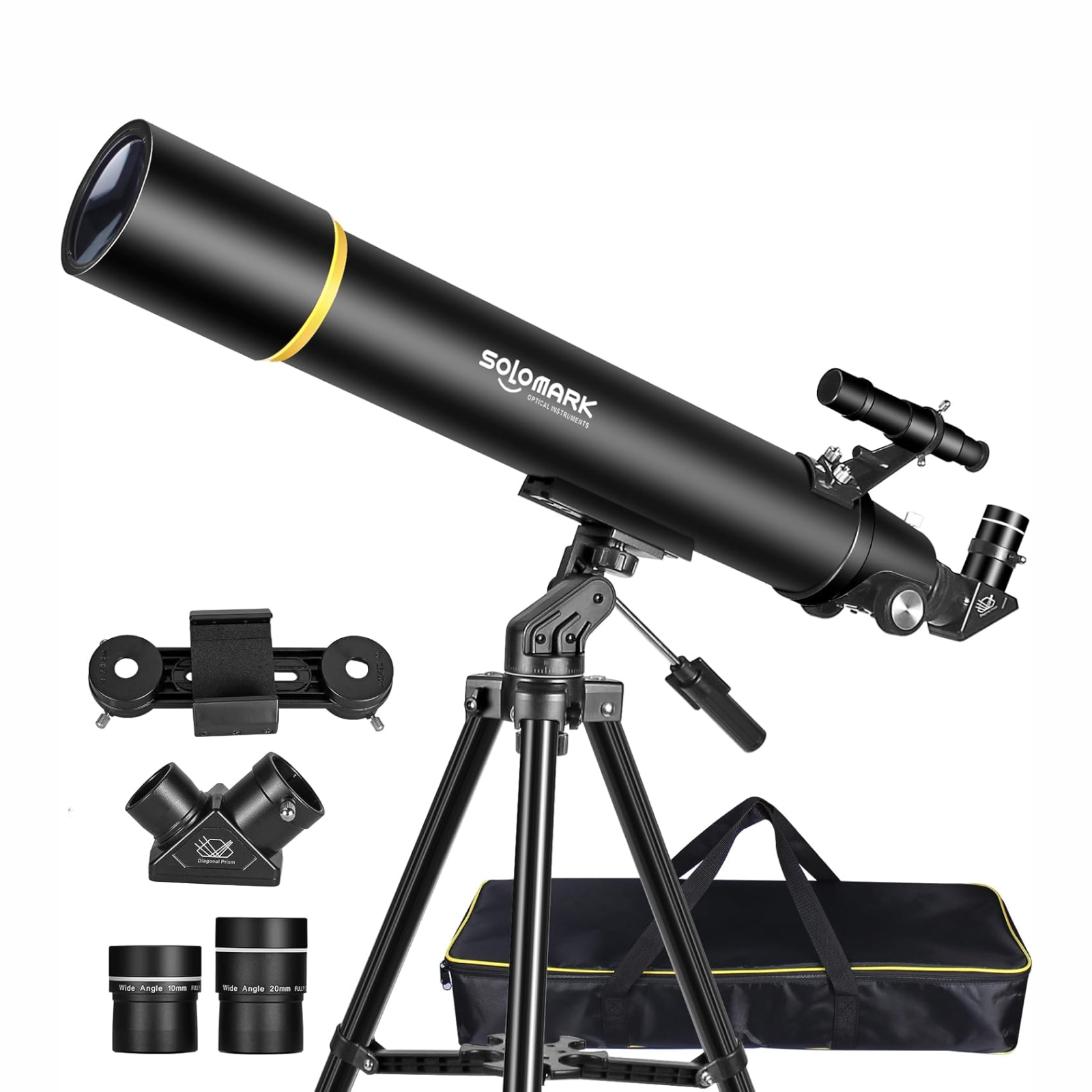
The Solomark Telescope To See The Moon combines professional-grade features with practical usability, offering impressive light-gathering capabilities essential for detailed astronomical observation that appeals to serious hobbyists and advancing beginners. This instrument represents a significant step up in mechanical precision and optical quality.
The telescope's super azimuth gimbal mount with clear scaling marks sets it apart by providing precise positioning and tracking capabilities that ensure stable viewing and accurate object location. The included wide-angle eyepieces (10mm and 20mm) provide versatile magnification options suitable for both planetary and deep-sky observation, while thoughtful design extends to assembly processes with clear instructions and intuitive setup procedures.
The aluminum full-size tripod provides a stable platform for extended observation sessions while maintaining portability for field use, striking an excellent balance between stability and mobility. This makes the Solomark particularly attractive for observers who frequently travel to dark sky locations.
Users appreciate the professional-grade aperture and high-quality coated optics that deliver consistent performance across various celestial targets, though the higher price point and limited smartphone compatibility represent considerations for budget-conscious buyers seeking maximum accessory flexibility.
Pros
- Professional-grade aperture for superior light collection
- High-quality coated optics for excellent clarity
- Precise azimuth gimbal system with scaling
- Premium wide-angle eyepieces included
- Sturdy aluminum tripod construction
- Easy assembly process with clear instructions
Cons
- Limited smartphone compatibility features
- Basic accessory package compared to competitors
- Higher price point than entry-level options
- Learning curve for gimbal mount operation
PICK #5
Rating
7.1/10
GENERAL VIEW
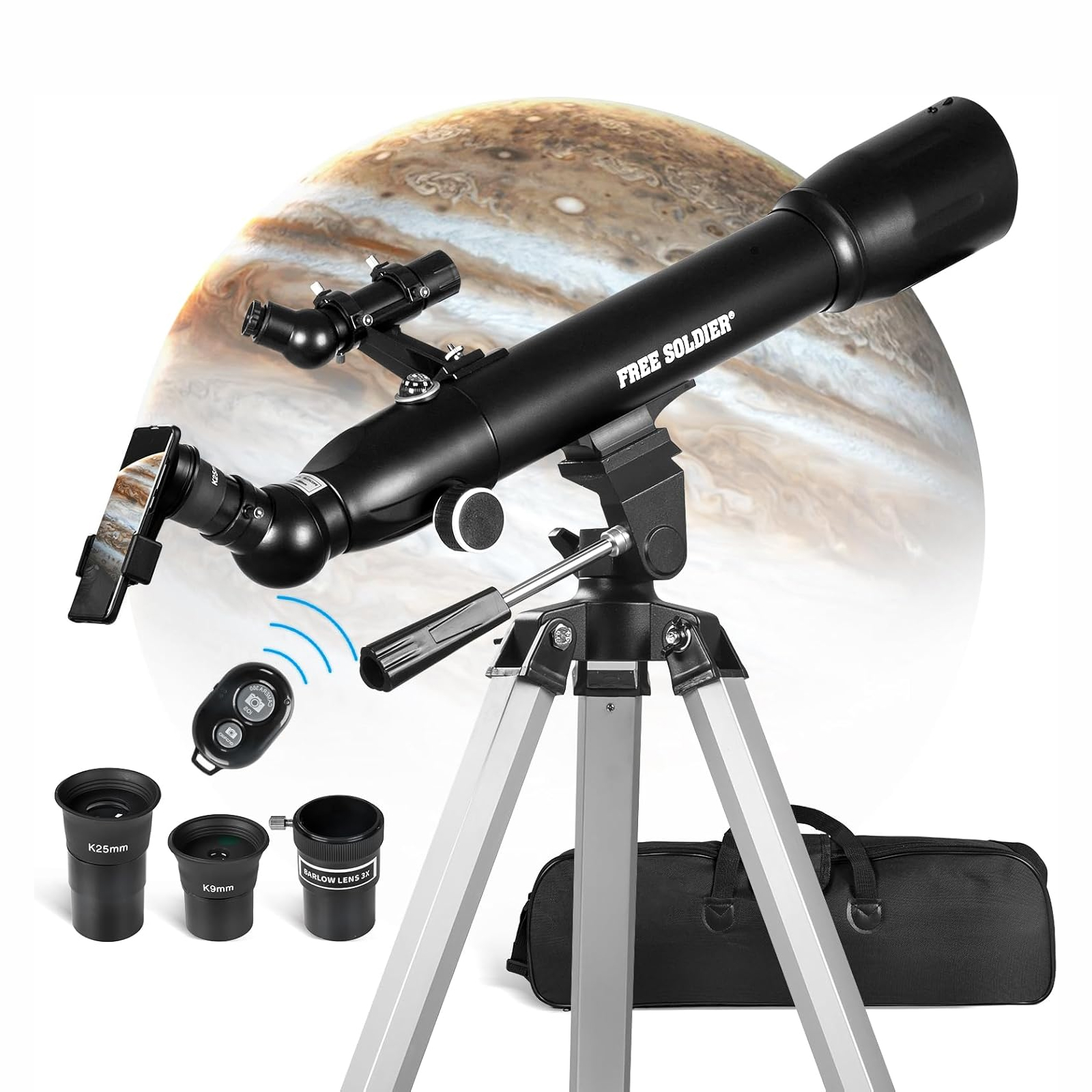
The Free Soldier Telescope To See The Moon impresses with its versatility and user-friendly approach, making it ideal for both celestial and terrestrial observation while serving as an excellent entry point for beginning astronomers. This telescope prioritizes accessibility and comprehensive features over premium construction.
The telescope's superior K9mm and K25mm eyepieces combined with a 3x Barlow lens provide exceptional viewing flexibility across different magnification ranges, while the 5×20 finder scope facilitates easy target acquisition for observers at all skill levels. The adjustable tripod and 360° rotating zenith lens demonstrate thoughtful design considerations that enable comfortable viewing from various positions.
The inclusion of a universal phone adapter and wireless remote control adds modern functionality to traditional astronomy, appealing to social media-savvy users who want to share their discoveries. While marketed as a beginner's telescope, the optical quality and feature set make it suitable for intermediate observers as well.
The comprehensive package and user-friendly setup create an excellent value proposition for families and individuals taking their first steps into astronomy, though mount stability issues and plastic components represent trade-offs for the accessible price point.
Pros
- Powerful magnification range with Barlow lens
- Quality K-series eyepieces for clear viewing
- 360° rotating zenith lens for comfort
- Complete accessory package with phone adapter
- User-friendly setup for beginners
Cons
- Mount stability issues during high magnification
- Limited fine-focusing capability for precision
- Basic finder scope with minimal features
- Plastic components affect overall durability
- Frequently out of stock during peak seasons
What are Telescope To See The Moon
Telescopes to see the moon are specialized optical instruments designed to magnify and enhance views of lunar features, revealing craters, mountains, valleys, and other surface details invisible to the naked eye. These astronomical tools use carefully arranged lenses or mirrors to collect and focus light, creating enlarged images that transform the moon from a distant glowing orb into a detailed, three-dimensional world.
Modern lunar telescopes incorporate advanced technologies like fully multi-coated (FMC) optics that maximize light transmission, reduce glare, and improve image contrast. The aperture size—the diameter of the main lens or mirror—determines how much light the telescope can gather, directly impacting the clarity and detail visible in lunar observations.
These instruments typically include multiple eyepieces offering various magnification levels, allowing observers to switch between wide-field views for locating the moon and high-power observations for examining specific features. Barlow lenses multiply the magnification of existing eyepieces, providing additional viewing options without purchasing extra accessories.
Whether you're a curious beginner experiencing the moon's wonders for the first time or an experienced astronomer documenting lunar phases and features, quality telescopes designed for moon observation open a gateway to understanding our closest celestial neighbor and inspire deeper exploration of the universe beyond. 🌙
⭐ Benefits of Telescope To See The Moon
- Reveals Stunning Lunar Details: Observe intricate moon craters, mountain ranges, valleys, and maria (dark plains) with breathtaking clarity that transforms your understanding of our nearest celestial neighbor.
- Educational Value for All Ages: Cultivates scientific curiosity in children and adults alike, providing hands-on learning experiences that textbooks and videos simply cannot replicate for astronomy education.
- Astrophotography Opportunities: Capture and share spectacular lunar images through smartphone integration, creating lasting memories and social media content that inspires others to explore astronomy.
- Stress Relief and Mindfulness: Stargazing provides peaceful escape from daily pressures, offering meditative moments of cosmic connection that reduce anxiety and promote mental well-being through nature observation.
- Year-Round Entertainment: Unlike seasonal hobbies, lunar observation offers consistent viewing opportunities throughout the year, with changing moon phases providing new features to discover during every session.
- Family Bonding Experience: Creates shared moments of wonder and discovery that strengthen family relationships, providing screen-free quality time that both children and adults genuinely enjoy together.
- Gateway to Advanced Astronomy: Mastering lunar observation builds foundational skills in telescope operation, celestial navigation, and optical principles that prepare observers for exploring planets, stars, and deep-sky objects.
- Cost-Effective Long-Term Hobby: After the initial telescope investment, moon observation requires no ongoing subscriptions, memberships, or recurring costs, providing unlimited entertainment value for years of enjoyment.
Things To Consider When Choosing Telescope To See The Moon
- Aperture Size Matters Most: Larger objective lenses (70mm or greater) gather more light for brighter, clearer images—prioritize aperture over excessive magnification claims for genuine lunar detail visibility.
- Optical Coating Quality: Fully multi-coated (FMC) lenses dramatically improve light transmission and image contrast compared to uncoated or partially coated optics—verify coating specifications before purchasing.
- Mount Stability is Critical: A rock-solid mounting system prevents frustrating vibrations that ruin observations—test or research mount quality as thoroughly as optical specifications for satisfaction.
- Magnification Versatility: Multiple eyepieces and Barlow lenses provide flexibility for different viewing scenarios—ensure your telescope includes or supports various magnification options for comprehensive observation.
- Portability Requirements: Consider where you'll observe most frequently—backyard astronomers prioritize stability while travelers need lightweight, compact designs that don't compromise essential optical performance.
- Smartphone Integration: Modern phone adapters enable astrophotography and sharing—verify compatibility with your device if documenting and sharing lunar observations matters to your experience.
- Assembly Complexity: Evaluate your technical comfort level—some telescopes require minimal setup while others demand patience and mechanical understanding for proper assembly and alignment procedures.
What To Avoid When Choosing Telescope To See The Moon
- Avoid Excessive Magnification Claims: Manufacturers advertising 600X+ magnification often deliver blurry, unusable images—atmospheric conditions and optical quality limit practical magnification to approximately 50X per inch of aperture.
- Don't Sacrifice Aperture for Portability: Extremely compact telescopes with tiny objective lenses (under 50mm) provide disappointing views regardless of other features—prioritize adequate light-gathering capability over excessive portability.
- Beware of Flimsy Tripods: Cheap, wobbly tripods ruin otherwise decent optics by introducing constant vibration—invest in stable mounting systems or plan to upgrade separately for satisfactory viewing experiences.
- Skip Telescopes Without Quality Optics: Uncoated or poorly coated lenses waste gathered light through reflections and scatter—verify optical coating specifications to avoid dim, low-contrast images that frustrate observers.
- Ignore Unrealistic Bundle Deals: Packages promising dozens of accessories often include low-quality eyepieces and useless filters—focus on core optical and mechanical quality rather than accessory quantity.