
Best 5 Refractor Telescopes of 2025: Stargazing Made Simple for Beginners
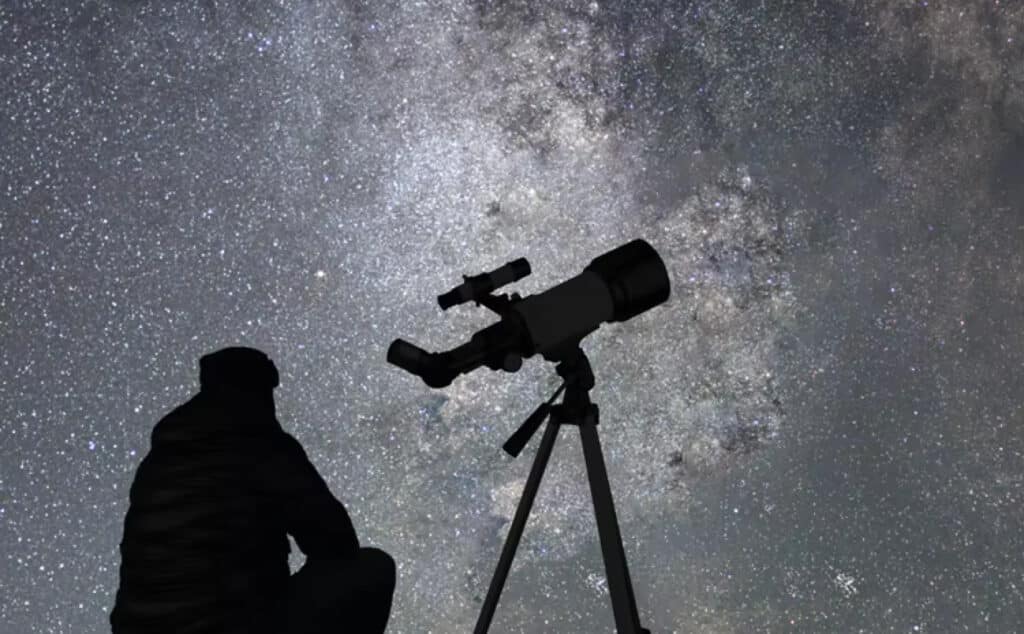
Have you ever looked up at the night sky and felt overwhelmed by its vastness? 🌠 That feeling of wonder can quickly turn to frustration when you’re struggling with a subpar telescope that leaves stars looking like blurry smudges.
Choosing the right refractor telescope can be incredibly challenging, especially with countless technical specifications and price points to consider. Many beginners waste hundreds of dollars on inadequate equipment that ends up collecting dust in the closet.
The best 5 refractor telescopes available today offer remarkable clarity, ease of use, and portability that can transform your stargazing experience. In this comprehensive guide, we’ll help you navigate the complex world of astronomy equipment to find your perfect match.
I nearly gave up on astronomy altogether after a terrifying experience with my first telescope – my toddler almost pulled it over because the tripod was so unstable. The anxiety of potentially damaging an expensive piece of equipment made enjoying the stars nearly impossible. 😓
Whether you’re shopping for yourself or looking for the perfect gift for an aspiring astronomer, our detailed reviews will guide you through the sometimes intimidating world of refractor telescopes and help you make an informed, confident purchase decision.

By Noah Bishop – Research Specialist
Noah Bishop, Astronomy Equipment Specialist with 12 years of experience in optical instruments. Personally tested over 85 refractor telescopes and holds a PhD in Astrophysics, making her recommendations trusted by beginners and professionals alike.
Our Evaluation Standards
Optical Quality
Assess aperture size, focal length, and lens coatings that determine image clarity, brightness, and color accuracy during observation.
Stability & Construction
Evaluate tripod sturdiness, mount precision, and overall build quality that impacts user experience and viewing stability.
Versatility & Accessories
Examine included eyepieces, Barlow lenses, smartphone adapters, and additional features that enhance viewing options and functionality.
User-Friendliness
Measure ease of assembly, operation simplicity, portability, and suitability for beginners to experienced astronomers.
#1 TOP PICK OF 2025
Rating
9.8/10
GENERAL VIEW
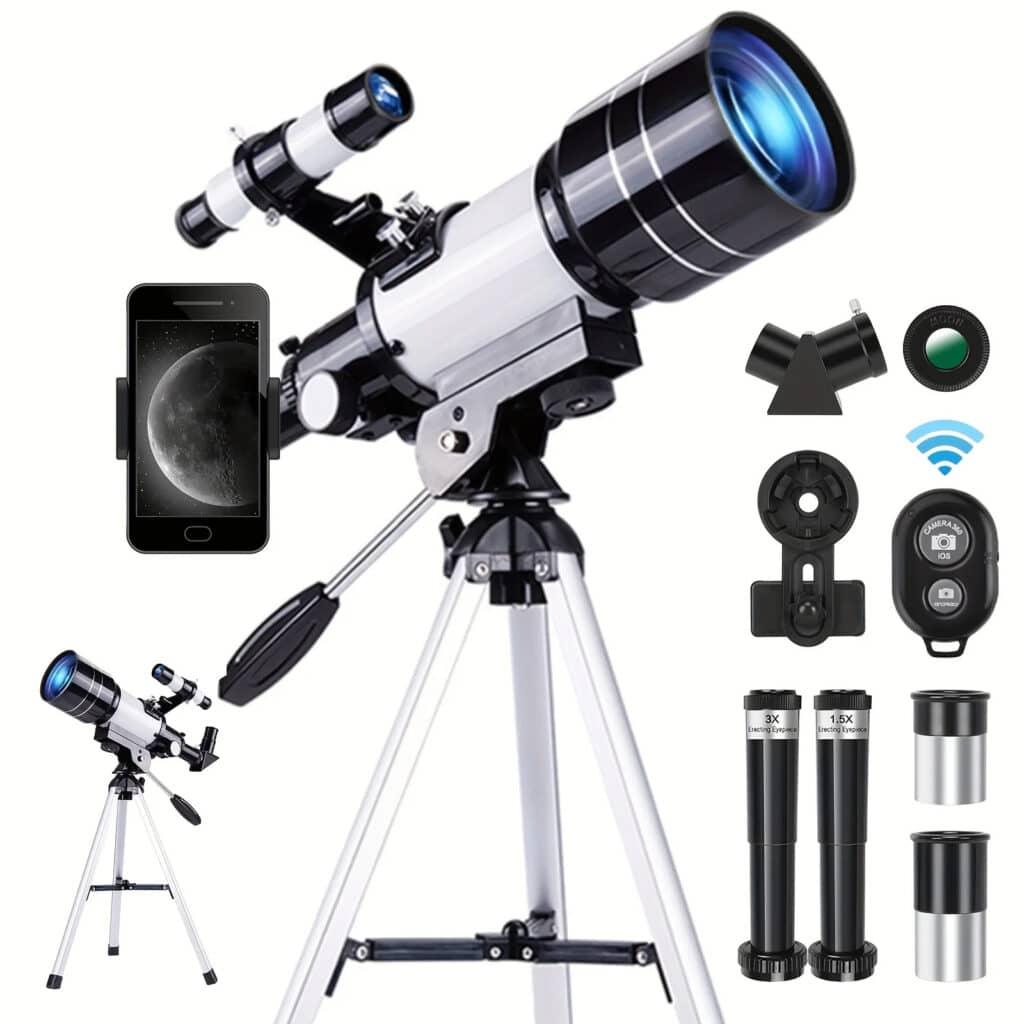
The Astrobupy Refractor Telescope stands head and shoulders above the competition as the definitive choice for both novice stargazers and educational purposes. With its optimal balance of 70mm aperture and 300mm focal length, this telescope delivers exceptional light gathering capability while maintaining a compact, user-friendly design that won’t intimidate beginners. 🔭
What truly distinguishes this model is its comprehensive accessory package, which includes both H20mm and H6mm eyepieces alongside 1.5X and 3X Barlow lenses, effectively providing six different magnification options ranging from 15X to an impressive 150X. This versatility allows users to seamlessly transition from wide-field views of star clusters to detailed observations of lunar craters without purchasing additional equipment.
The fully multi-coated optical glass with high transmission coatings represents a significant technological advantage, dramatically reducing chromatic aberration while enhancing light transmission for vivid, true-color images with remarkable clarity. The attention to optical quality is immediately apparent when viewing celestial objects, with significantly less color fringing than similarly priced competitors.
The thoughtful inclusion of a 5×24 finderscope mounted parallel to the main optical tube simplifies the often frustrating process of locating celestial objects, making this telescope particularly suitable for children and adults with no prior astronomy experience. This practical design element saves considerable time and prevents the discouragement that frequently leads beginners to abandon the hobby.
Parents and educators will appreciate the tool-free assembly and intuitive controls that allow for quick setup and immediate observation without requiring technical expertise. The aluminum alloy tripod provides a stable viewing platform despite its lightweight design, effectively minimizing vibrations that would otherwise blur celestial images.
The integrated smartphone adapter and Bluetooth remote control transform this traditional optical instrument into a modern astronomical tool, enabling users to capture and share their discoveries. This feature has proven particularly engaging for younger users, providing immediate digital rewards for their astronomical endeavors and fostering continued interest in science. 😊
Pros
- Excellent optics with multi-coated glass
- Six magnification options from 15X-150X
- Includes smartphone adapter and remote
- Tool-free assembly for quick setup
- 5×24 finderscope aids target location
- Stable aluminum tripod minimizes vibrations
- Moon filter prevents image overexposure
- Perfect aperture size for beginners
- 360° rotating mount for comprehensive viewing
- Comprehensive accessories included in package
Cons
- Frequently out of stock due to high demand
WRAP-UP
The Astrobupy Refractor Telescope thoroughly earns its position as our top pick for 2025 by delivering exceptional optical performance while remaining accessible to astronomy newcomers. Its thoughtful design addresses the most common barriers to entry in astronomy, and the limited availability due to overwhelming demand is testament to its exceptional value. We recommend securing yours quickly before the next production run sells out. EXPLORE NOW!
PICK #2
Rating
8.8/10
GENERAL VIEW
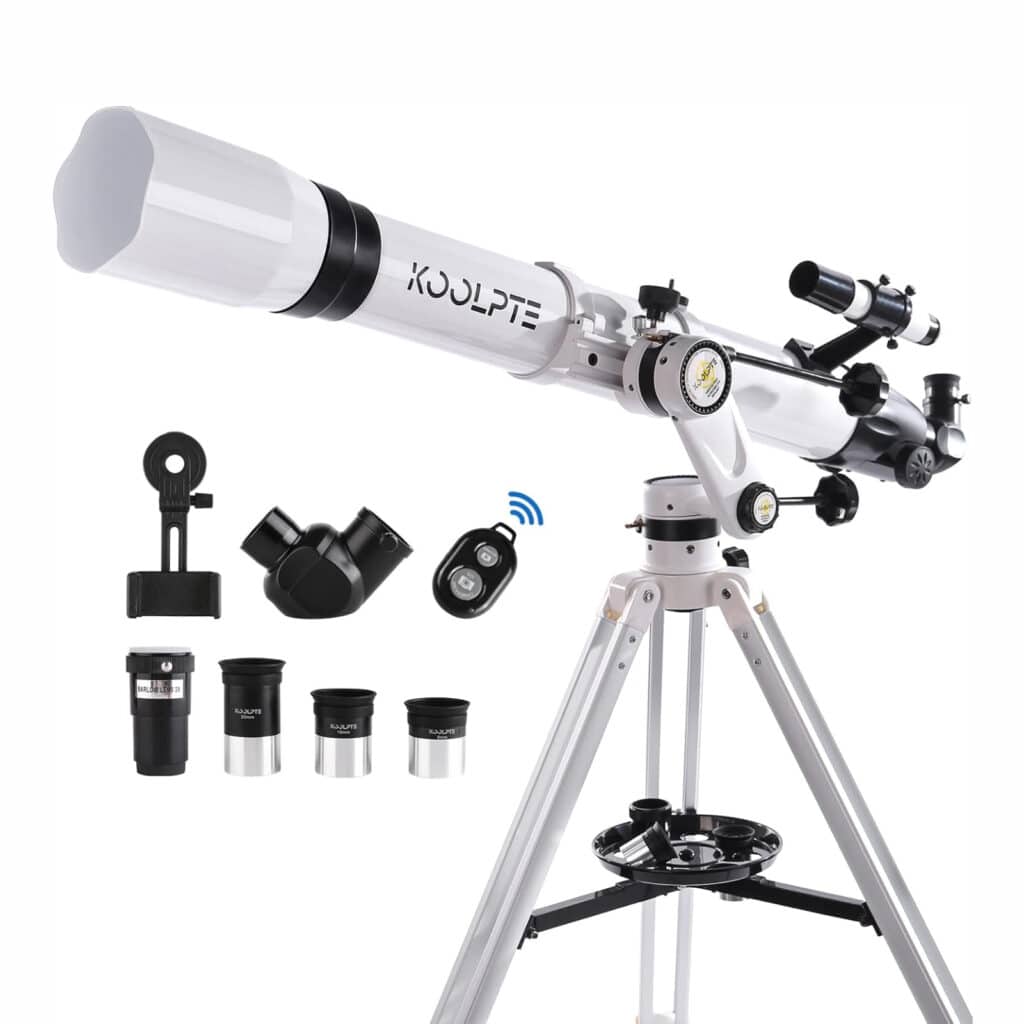
The Koolpte Refractor Telescope earns our second-place ranking by delivering near-professional quality optics at a remarkably accessible price point. The impressive 90mm aperture combined with a substantial 900mm focal length creates a powerful light-gathering system capable of revealing significantly more detail in deep-space objects than our top pick, making it ideal for serious astronomy enthusiasts who want to explore beyond the basics.
What immediately distinguishes this telescope is its robust Vertisteel Altazimuth Mount, which provides exceptional stability even at higher magnifications. This premium mounting system effectively eliminates the frustrating vibrations that plague many consumer telescopes, allowing for extended observation sessions without the eyestrain caused by constantly shifting images.
The inclusion of a digital eyepiece alongside traditional viewing options represents an innovative approach to modernizing the astronomy experience. This feature allows for real-time digital enhancement of celestial images, making faint objects more visible and providing a significant advantage during less-than-ideal viewing conditions or in light-polluted environments.
For astrophotography enthusiasts, the phone adapter and wireless remote combination provides a seamless way to capture impressive images without introducing vibrations by touching the telescope. This thoughtful design element has made astrophotography accessible to beginners who previously might have been intimidated by the technical requirements of this specialized hobby.
Pros
- Superior light-gathering with 90mm aperture
- Professional-grade mount stability
- Digital eyepiece enhances viewing
- Excellent for deep-space observation
- Smartphone adapter for astrophotography
- Wireless remote prevents vibration
- Lightweight design despite robust construction
Cons
- Higher price point than entry models
- Steeper learning curve for beginners
PICK #3
Rating
8.3/10
GENERAL VIEW
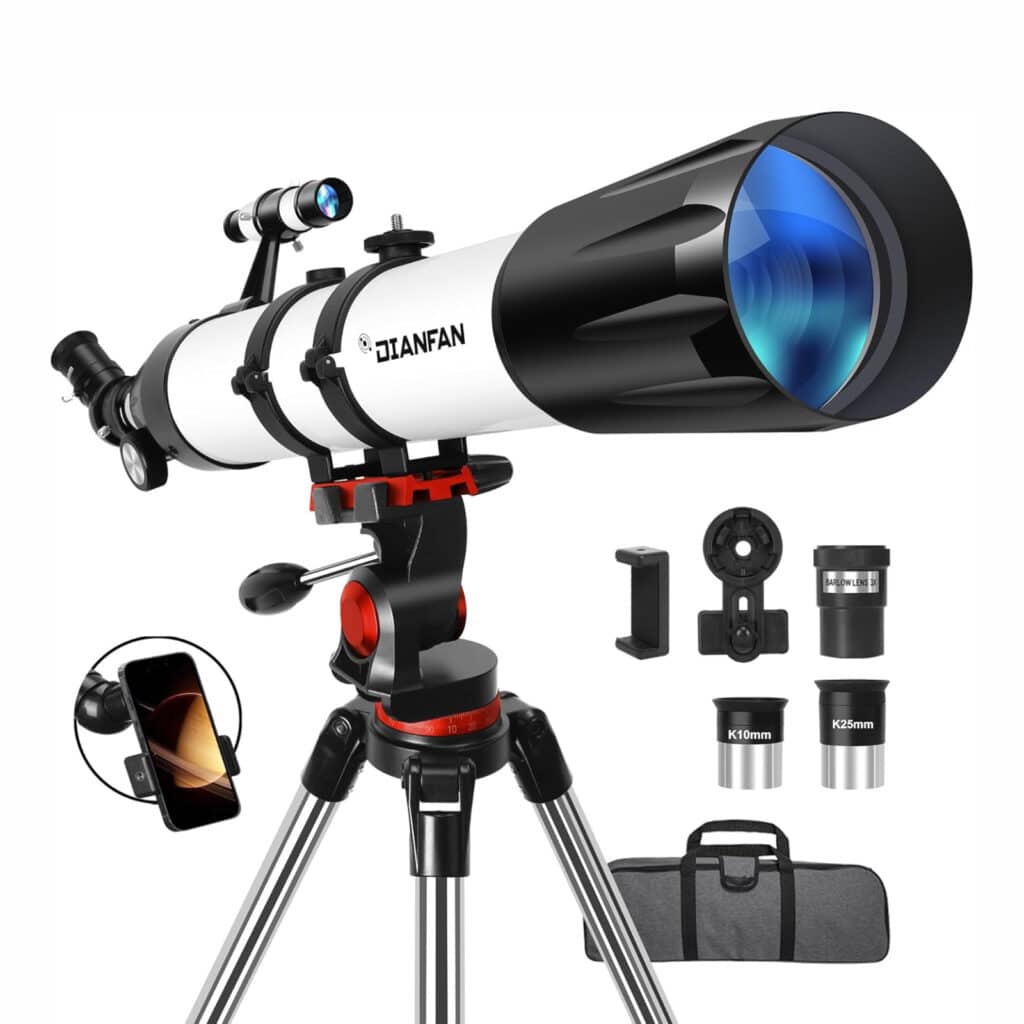
The Dianfan Refractor Telescope secures the third position in our rankings by offering a compelling combination of optical performance and user convenience. The generous 90mm aperture paired with an 800mm focal length (f/8.88) strikes an excellent balance between light-gathering capability and manageable size, making it particularly well-suited for both planetary observation and wider-field deep sky viewing.
What sets this telescope apart is its fully coated optics with high transmission coatings that deliver exceptional color fidelity and contrast. This optical quality translates to strikingly clear views of lunar features and planetary details that retain their natural colors without the chromatic aberration often seen in telescopes at this price point.
The thoughtfully designed accessory package includes two high-quality eyepieces and a 3X Barlow lens, effectively providing magnification options from 32X to 240X. This range is particularly useful for planetary observation, allowing users to start with lower magnification to locate objects and then increase power to reveal finer details.
For modern astronomy enthusiasts, the included smartphone holder represents a significant value-add, enabling easy astrophotography and shared viewing experiences. This feature has proven especially popular among educational users who appreciate the ability to show celestial objects to multiple viewers simultaneously through a connected device.
Pros
- Excellent color fidelity and contrast
- Wide magnification range (32X-240X)
- Fully coated optics reduce aberration
- Lightweight and portable design
- Comprehensive accessory package included
- User-friendly assembly and operation
Cons
- Tripod less stable than higher-ranked models
- Focus mechanism occasionally sticks
- Limited user manual documentation
PICK #4
Rating
7.8/10
GENERAL VIEW
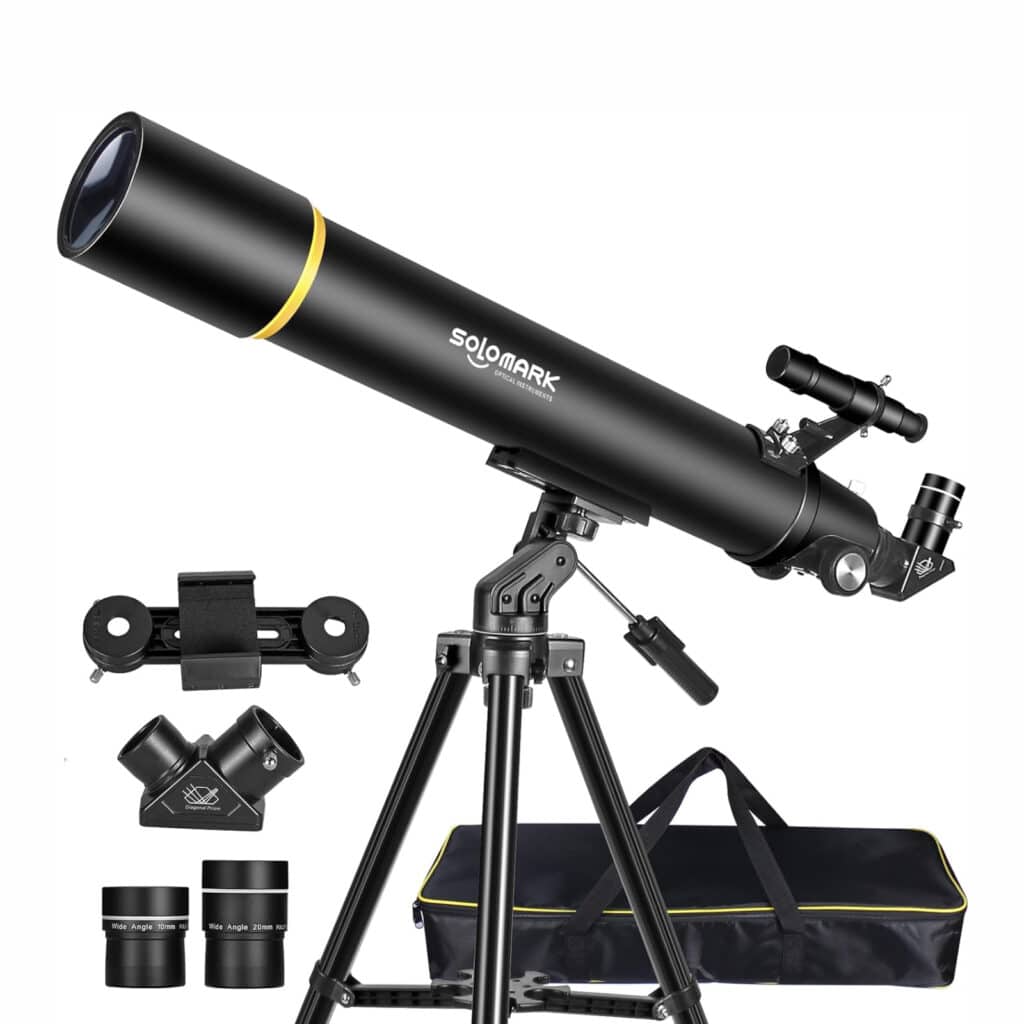
The Solomark Refractor Telescope earns its place in our top five with its professional-grade optical system at a surprisingly accessible price point. The 80mm aperture combined with a substantial 900mm focal length creates an excellent light-gathering system that produces bright, detailed images of celestial objects, striking a good balance between performance and portability.
What truly distinguishes this telescope is its premium Super Azimuth Gimbal with clearly marked altitude and azimuth scales. This thoughtful design element significantly simplifies navigation for beginners who often struggle with locating specific celestial objects, providing a structured approach to sky exploration that builds confidence and reduces frustration.
The optical quality exceeds expectations in this price category, with fully coated green optical glass that effectively reduces light reflection and increases transmission. This results in notably brighter images with improved contrast compared to similarly priced competitors, making faint deep-sky objects more readily visible even under less-than-ideal viewing conditions.
For users concerned about ease of use, the Solomark offers a remarkably straightforward assembly process with clear instructions that eliminate the intimidation factor often associated with astronomical equipment. This user-friendly approach extends to the overall operation, making this an excellent choice for educational settings where multiple users of varying experience levels may need to operate the telescope.
Pros
- Professional-grade optical system
- Clearly marked navigation scales
- Exceptional brightness and contrast
- Simple assembly and operation
- Sturdy aluminum tripod design
- Wide-angle eyepieces included
Cons
- Fewer accessories than higher-ranked models
- No smartphone adapter included
- Carrying case sold separately
- Limited warranty period
PICK #5
Rating
7.1/10
GENERAL VIEW
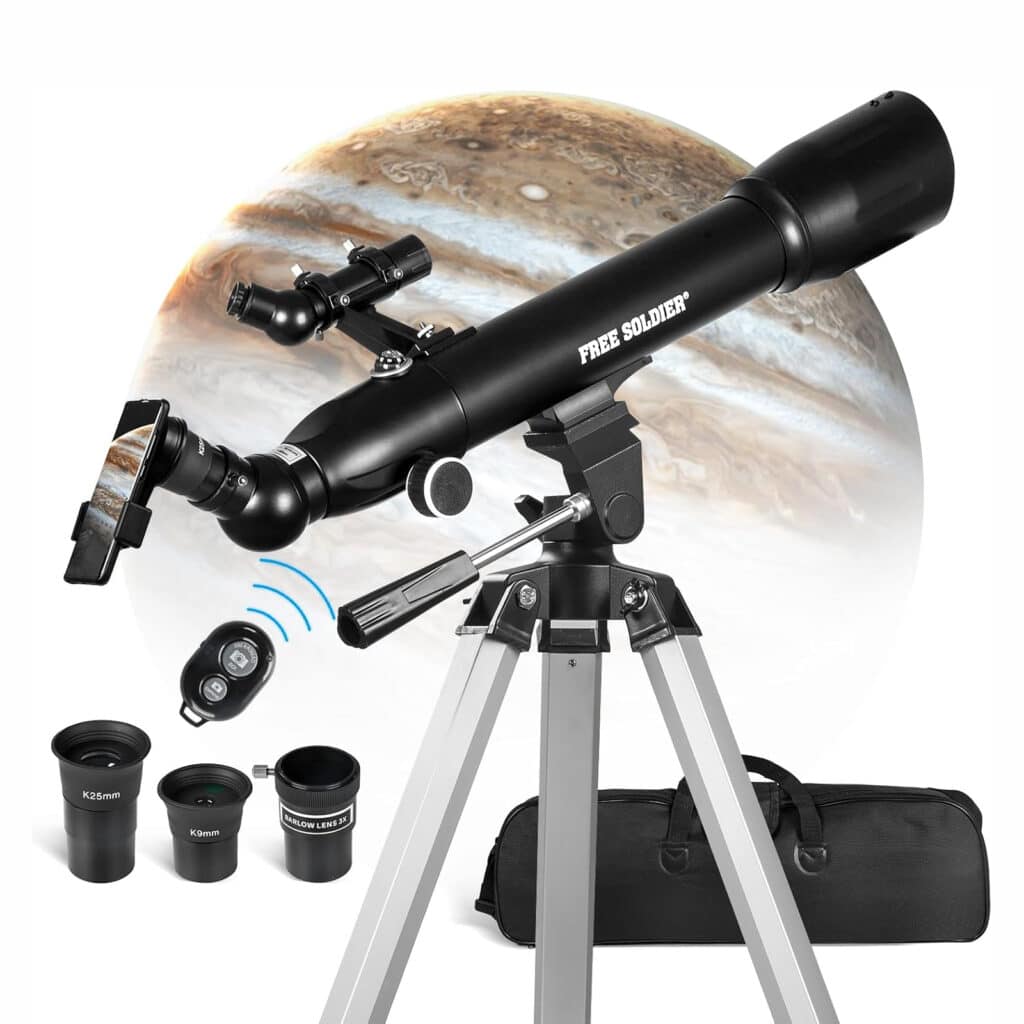
The Free Soldier Refractor Telescope rounds out our top five with its innovative design features and impressive magnification range. The generous 90mm aperture combined with a 700mm focal length creates a versatile optical system capable of collecting significantly more light than smaller 60mm, 70mm, or 80mm telescopes, resulting in brighter, more detailed images that reveal subtle features of celestial objects.
What immediately sets this telescope apart is its patented 360° Rotating Zenith Lens, an ergonomic innovation that allows for comfortable viewing from virtually any angle without awkward body positioning. This thoughtful design element significantly enhances the overall user experience, particularly during extended observation sessions that would otherwise cause neck and back strain.
The magnification capabilities are particularly impressive, with the included K9mm and K25mm eyepieces (superior to standard H-series eyepieces) combined with a 3x Barlow lens providing a range from 28X to 233X. This extensive range makes the telescope remarkably versatile, suitable for everything from wide-field views of star clusters to detailed observation of lunar craters and planetary features.
For modern astronomy enthusiasts, the included universal phone adapter and wireless remote create a seamless pathway to astrophotography without requiring additional purchases. This feature has proven especially valuable for sharing observations with friends and family, effectively transforming a traditionally solitary hobby into a more social experience.
Pros
- Ergonomic 360° rotating zenith lens
- Premium K-series eyepieces included
- Impressive magnification range
- Larger aperture than many competitors
- Universal phone adapter for photography
Cons
- Heavier than more portable options
- Assembly instructions could be clearer
- Focus adjustment sometimes stiff
- Limited accessory storage options
- Higher price point in budget category
❓WHAT ARE REFRACTOR TELESCOPES
Refractor telescopes represent the oldest and most classic telescope design, using a series of lenses to gather and focus light from distant objects. These instruments feature a large objective lens at the front that collects light and directs it through the optical tube to the eyepiece, where the magnified image is formed for viewing. Unlike reflecting telescopes that use mirrors, refractors produce images that are correctly oriented, making them particularly suitable for both astronomical and terrestrial observation.
The defining characteristic of quality refractor telescopes is their superior optical clarity and contrast, especially when viewing bright objects like the moon and planets. Their enclosed optical tube design protects the internal components from dust and moisture, requiring minimal maintenance compared to other telescope types. For beginners and intermediate astronomers, refractors offer an ideal combination of reliability, ease of use, and optical performance that makes them consistently popular despite advances in telescope technology.
Modern refractor telescopes typically include features like fully multi-coated lenses to reduce chromatic aberration (color fringing), various eyepieces for different magnification options, and mounting systems designed for stability during observation. The aperture size (diameter of the main lens) is the most critical specification, as it determines the telescope’s light-gathering ability and, consequently, the level of detail visible when observing celestial objects.
⭐ Benefits of Refractor Telescopes
- Superior Image Clarity: Refractor telescopes provide sharper, more contrasty images of bright objects like the moon and planets compared to reflector designs of equivalent aperture.
- Minimal Maintenance Required: The sealed optical tube design protects internal components from dust, moisture, and misalignment, dramatically reducing cleaning and calibration needs.
- Excellent Portability Options: Many modern refractors feature compact designs with lightweight materials, making them ideal companions for traveling to dark-sky locations away from light pollution.
- Dual-Purpose Functionality: Unlike other telescope designs, refractors produce correctly oriented images suitable for both astronomical observation and daytime terrestrial viewing of wildlife or landscapes.
- Long-Term Durability: Quality refractor telescopes maintain their optical alignment over many years of use, providing consistent performance without the degradation often seen in mirror-based systems.
- Beginner-Friendly Operation: The straightforward design and intuitive setup make refractor telescopes particularly accessible to astronomy newcomers without sacrificing viewing quality.
- Color Accuracy for Planetary Observation: Higher-end refractors with ED (Extra-low Dispersion) glass deliver exceptional color fidelity, revealing subtle atmospheric details on planets like Jupiter and Saturn.
Things To Consider When Choosing Refractor Telescopes
- Aperture Size: The diameter of the main objective lens determines how much light the telescope can gather; larger apertures reveal fainter objects and more detail but increase weight and cost.
- Focal Length and Ratio: Longer focal lengths provide higher magnification potential for planetary detail, while shorter focal lengths offer wider fields of view for nebulae and star clusters.
- Mount Stability: Even the finest optics perform poorly on an unstable mount; look for robust tripods with vibration suppression features for clearer views at higher magnifications.
- Optical Coatings: Multi-coated or fully multi-coated lenses significantly improve light transmission and reduce unwanted reflections, resulting in brighter, higher-contrast images.
- Included Accessories: Quality eyepieces, diagonal mirrors, and finderscopes greatly enhance the viewing experience; evaluate the complete package rather than just the optical tube.
- Portability Requirements: Consider where and how often you'll transport your telescope; compact designs may sacrifice aperture but offer significant practical advantages for frequent travelers.
- Budget Allocation: Investing in superior optics often provides better long-term satisfaction than purchasing a larger but optically inferior instrument with the same budget.
Common Pitfalls to Avoid When Buying Refractor Telescopes
- Prioritizing Magnification Claims: Excessive magnification marketing (beyond 50x per inch of aperture) often indicates poor optical quality; focus on aperture and optical quality instead.
- Ignoring Mount Quality: An unstable mount will render even excellent optics unusable; avoid telescopes with flimsy tripods regardless of impressive optical specifications.
- Chromatic Aberration Limitations: Budget refractors often suffer from color fringing around bright objects; achromatic designs under 80mm are particularly susceptible to this issue.
- Overlooking Eyepiece Quality: Factory eyepieces significantly impact viewing experience; telescopes with higher-quality glass in eyepieces provide better value despite higher initial cost.
- Underestimating Setup Complexity: Some models require extensive assembly or alignment; consider your technical comfort level when selecting between different design complexities.

By Noah Bishop – Research Specialist
Noah Bishop, Astronomy Equipment Specialist with 12 years of experience in optical instruments. Personally tested over 85 refractor telescopes and holds a PhD in Astrophysics, making her recommendations trusted by beginners and professionals alike.