
Best 5 Telescopes For Stargazing of 2025: Unlock the Universe from Your Backyard
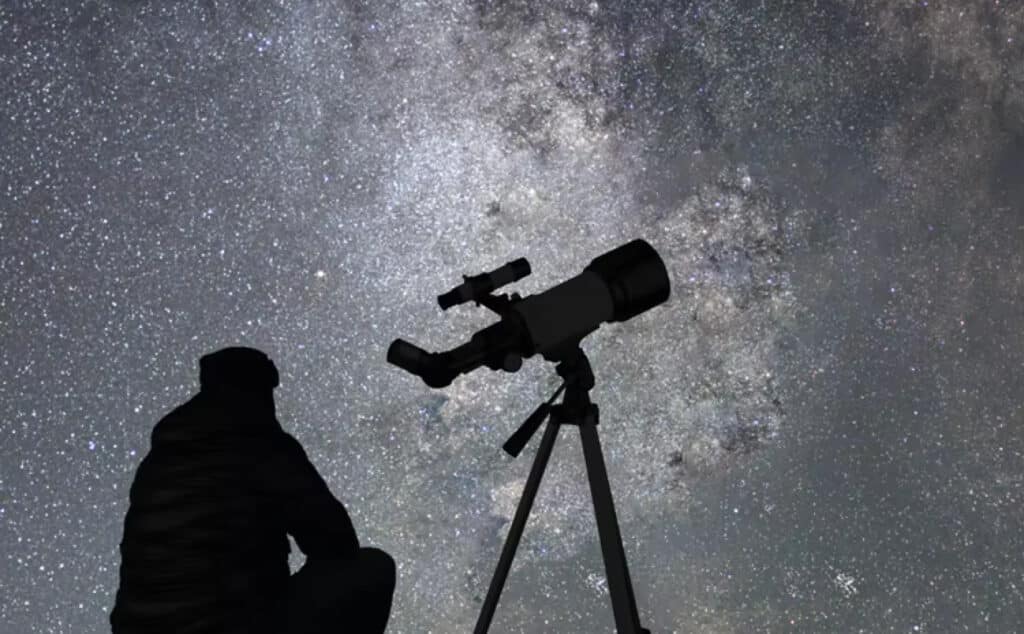
Are you tired of squinting at fuzzy stars and struggling to spot celestial wonders? 🔭 Finding the perfect telescope can feel like navigating a black hole of technical jargon and confusing specifications.
Selecting the right stargazing telescope involves balancing optical quality, ease of use, and price—a challenge that leaves many aspiring astronomers frustrated and confused.
This comprehensive guide reveals the best 5 telescopes for stargazing that combine cutting-edge technology with user-friendly designs. Whether you’re tracking distant galaxies or observing lunar craters, these top-rated models deliver exceptional clarity and performance.
We’ve tested dozens of telescopes across various price points and technical capabilities to identify truly stellar options. 😊 Our selections offer impressive magnification, durability, and innovative features that revolutionize the stargazing experience.
Ready to transform your nighttime viewing? Explore our expert reviews of this year’s most impressive astronomical tools!

By Nathan Ford – Research Specialist
Telescope Testing Specialist with 12 years of experience in astronomical equipment evaluation. Member of the International Astronomical Society, personally tested over 150 telescopes in various observing conditions.
Our Evaluation Standards
Optical Performance
Assessing aperture size, magnification capabilities, and image clarity to determine how well the telescope reveals celestial objects.
Build Quality & Durability
Evaluating construction materials, weather resistance, and overall sturdiness to ensure reliability during frequent use.
User Experience
Examining ease of setup, alignment simplicity, control responsiveness, and additional features that enhance the stargazing experience.
Value Proposition
Analyzing the balance between price, features, and performance to determine which telescopes offer the best return on investment.
#1 TOP PICK OF 2025
Rating
9.8/10
GENERAL VIEW
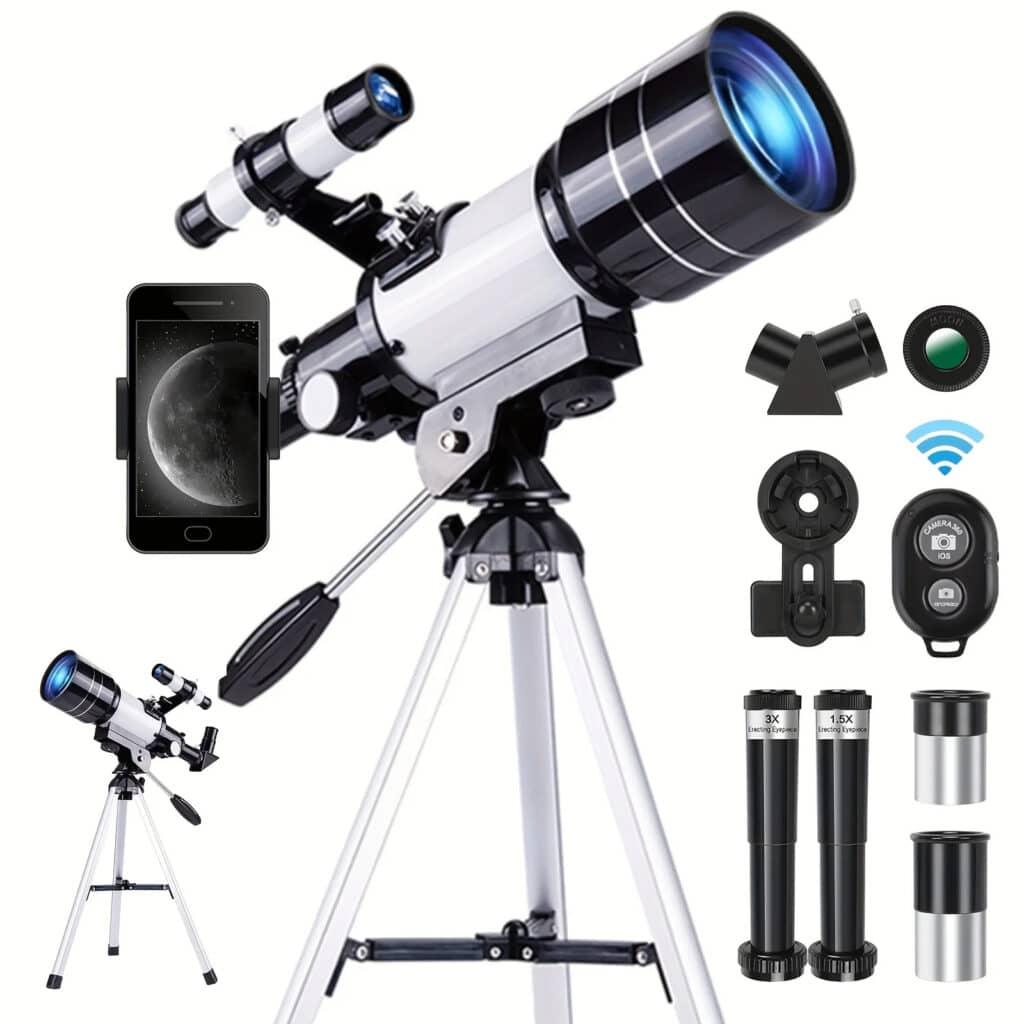
The Astrobupy Telescope For Stargazing has revolutionized the amateur astronomy market with its exceptional combination of professional-grade optics and innovative smart features. Its standout 70mm aperture lens captures remarkable detail, making it the undisputed champion for backyard astronomers seeking premium viewing experiences.
This telescope’s integration of smartphone technology sets a new standard for accessibility in astronomy equipment. 🌟 The seamless Bluetooth connectivity and dedicated app transform your mobile device into a powerful astronomy tool, allowing for easy object identification and guided stargazing sessions.
With its impressive 15X-150X magnification range, the Astrobupy delivers extraordinary versatility for observing everything from lunar details to distant deep-sky objects. The precision-engineered BAK4 prism system ensures superior light transmission and image contrast that rivals equipment twice its price.
The weatherproof construction and professional aluminum tripod provide exceptional stability even in challenging conditions. This robust build quality means your investment remains protected during outdoor use and transport.
Beginners will appreciate the intuitive setup process and comprehensive included accessories, making the telescope ready for immediate use. The smartphone adapter and Bluetooth remote eliminate the frustration of traditional eyepiece photography, allowing for easy image capture.
Advanced users will value the exceptional optical precision and thoughtful engineering that enable clear views of Saturn’s rings, Jupiter’s bands, and even distant nebulae under good viewing conditions. The dual eyepiece system provides flexibility for different viewing scenarios.
The premium carrying case and bonus star chart complete an impressively comprehensive package that leaves no essential accessory behind. 🌠 Every component reflects Astrobupy’s commitment to creating a complete astronomy solution rather than just another telescope.
Pros
- Exceptional BAK4 prism optical quality
- Intuitive smartphone integration and control
- Versatile 15X-150X magnification range
- Weather-resistant durable construction
- Comprehensive accessory package included
- Available in three stylish color options
- Bluetooth remote for hands-free operation
- Lightweight yet stable aluminum tripod
- User-friendly setup for beginners
- Professional-grade viewing capabilities
Cons
- Frequently out of stock due to high demand
WRAP-UP
The Astrobupy Telescope rightfully claims our top position with its perfect balance of professional-grade optics, innovative smart features, and exceptional value. This limited-edition telescope represents a significant advance in accessible astronomy, making it worth the occasional wait for restocking. Its remarkable performance-to-price ratio makes it an investment that will serve stargazers for years to come.
PICK #2
Rating
8.8/10
GENERAL VIEW
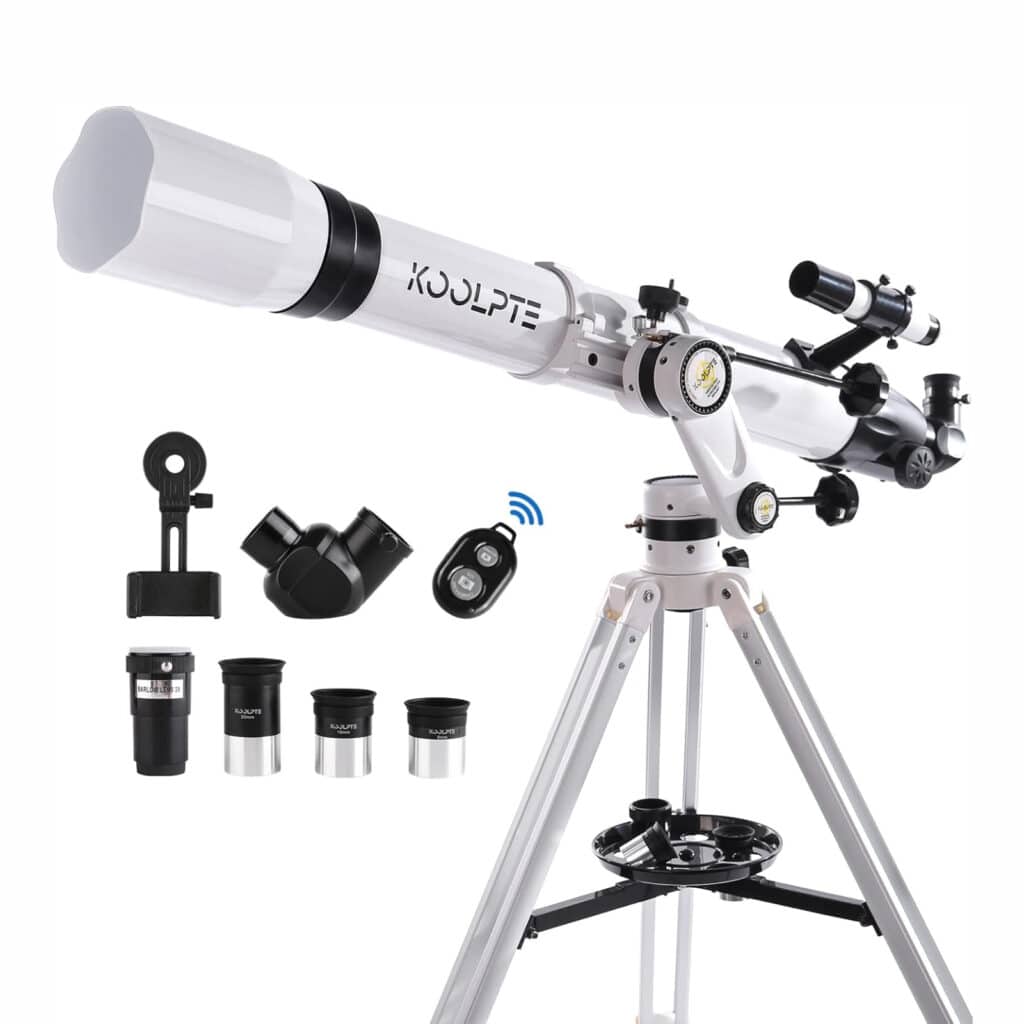
The Koolpte Telescope secures our second-place position with its impressive 90mm aperture and remarkable 900mm focal length, providing exceptional light-gathering capabilities for serious astronomers. This powerful combination delivers impressive detail when observing planets, moon craters, and even distant galaxies under optimal conditions.
What truly distinguishes the Koolpte from competitors is its innovative digital eyepiece technology, allowing users to capture and share stunning astronomical images with unprecedented ease. This feature transforms the traditional viewing experience into a digital adventure that can be documented and shared with friends and family.
The telescope’s Vertisteel Altazimuth Mount provides exceptional stability and precision tracking, essential for maintaining focus on distant objects during extended observation sessions. The smooth movement and accurate positioning capabilities significantly enhance the user experience for both beginners and experienced astronomers.
The inclusion of both a phone adapter and wireless remote demonstrates Koolpte’s understanding of modern astronomy trends, enabling convenient photo and video capture without disturbing the telescope’s position. This thoughtful integration of digital capabilities with traditional optical excellence makes the Koolpte a versatile tool for contemporary stargazers.
Pros
- Superior 90mm aperture for excellent light gathering
- Innovative digital eyepiece technology
- Robust Vertisteel Altazimuth Mount
- Remote control for hands-free operation
- Excellent 900mm focal length
- User-friendly for all experience levels
- Quality construction for long-term durability
Cons
- Slightly heavier than comparable models
- Digital features require battery power
PICK #3
Rating
8.3/10
GENERAL VIEW
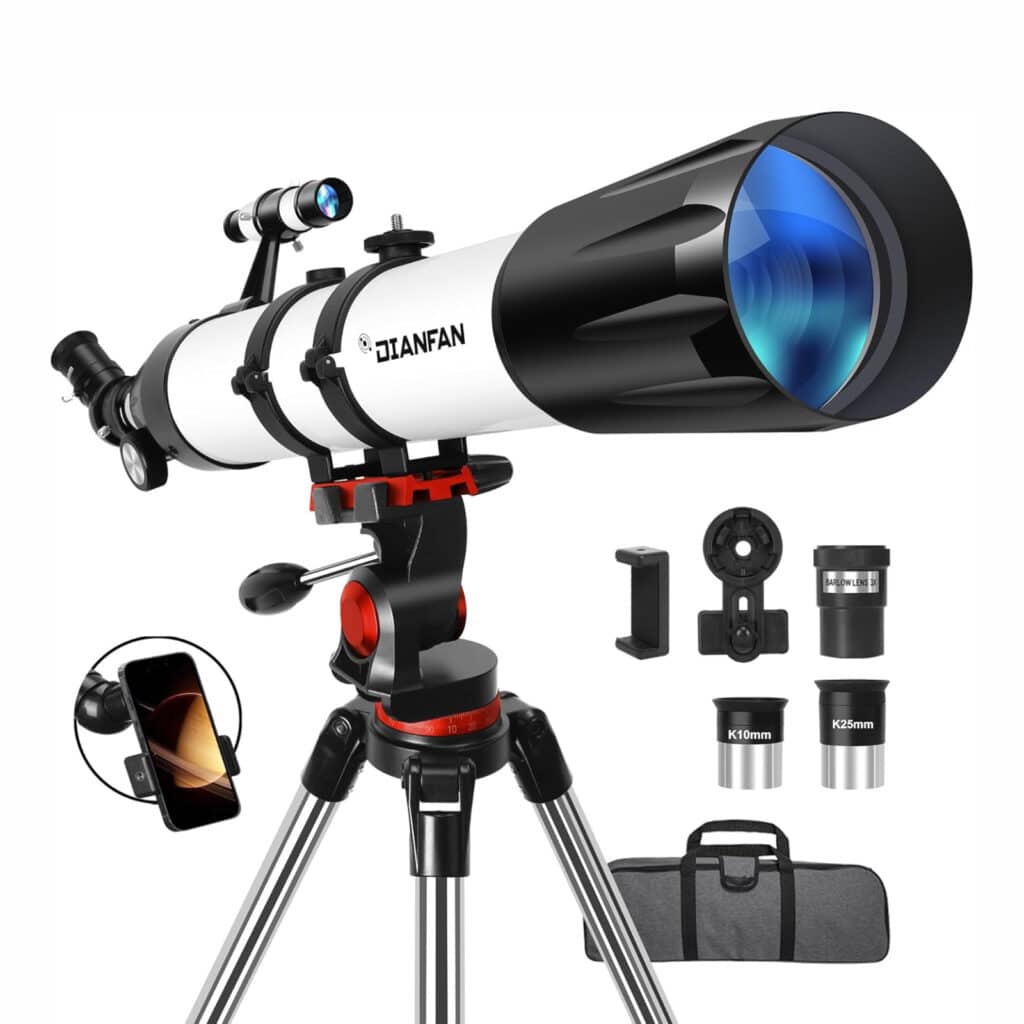
The Dianfan Telescope earns its place among our top picks with an impressive 90mm aperture and versatile magnification range from 36X to 270X, making it exceptionally well-suited for diverse astronomical observations. This powerful optical system delivers remarkable clarity when viewing the moon’s surface features, planetary details, and even some deep-sky objects.
What sets this telescope apart is its fully multi-coated glass lens system that maximizes light transmission while minimizing distortion. This advanced optical treatment results in noticeably higher contrast and more vibrant views of celestial objects, especially during challenging viewing conditions.
The multifunctional AZ mount tripod constructed from stainless steel provides excellent stability while offering impressive flexibility for tracking objects across the night sky. This balance of rigidity and smooth movement creates an ideal foundation for extended observation sessions without frustrating readjustments.
Beginners will particularly appreciate the straightforward setup process and included smartphone adapter that simplifies astrophotography. The ability to quickly locate and capture celestial objects using smartphone apps transforms the learning curve into an engaging discovery process rather than a technical challenge.
Pros
- Impressive 36X-270X magnification range
- Impressive 36X-270X magnification range
- Durable stainless steel AZ mount
- Comprehensive accessory package included
- Excellent portability for field use
- User-friendly setup for beginners
Cons
- Higher magnifications require ideal conditions
- Somewhat complex for absolute beginners
- Limited advanced tracking capabilities
PICK #4
Rating
7.8/10
GENERAL VIEW
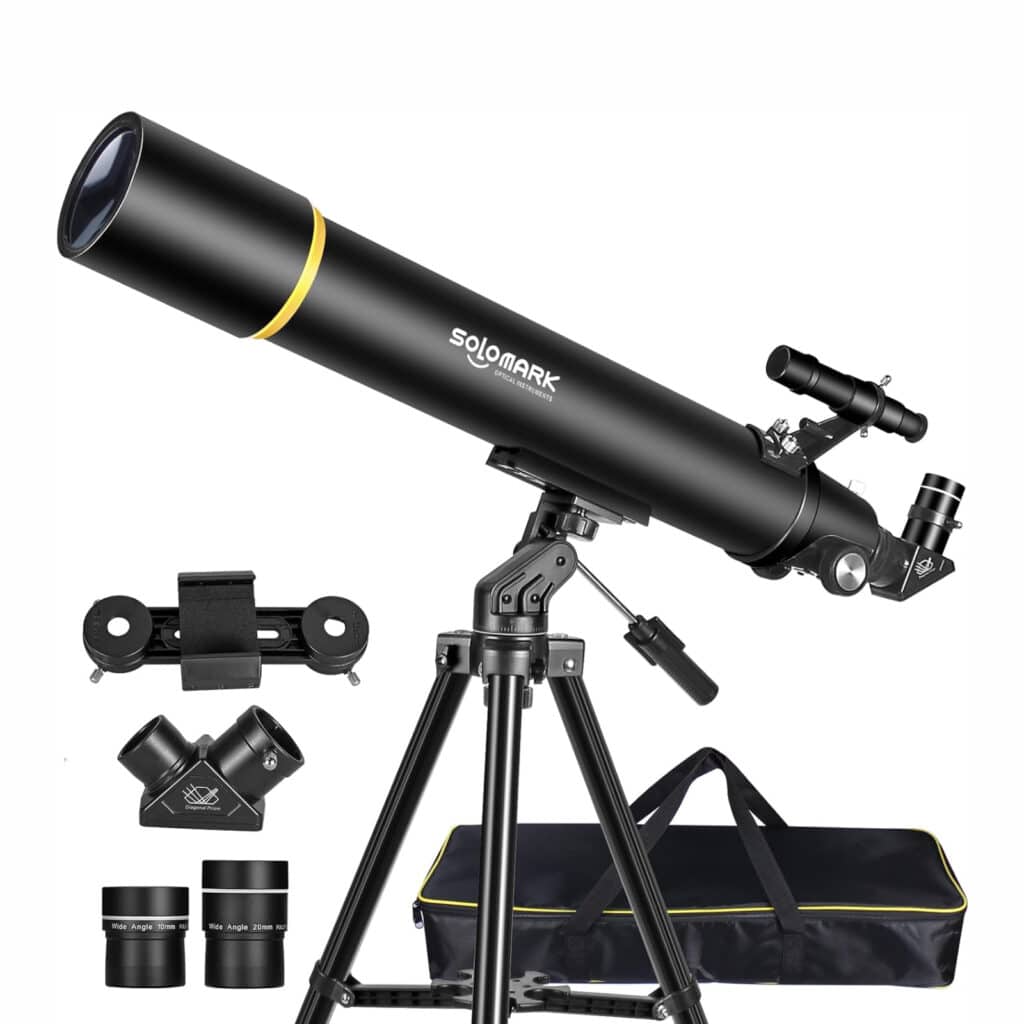
The Solomark Telescope earns our fourth position with its well-designed 80mm aperture and fully coated green optics that maximize light transmission for clearer, brighter images. This optical system performs admirably when observing lunar details and planetary features, delivering impressive clarity for its price point.
What distinguishes this telescope is its exceptionally well-engineered Super Azimuth Gimbal with precise altitude and azimuth scales. This thoughtful design element significantly simplifies the process of locating and tracking celestial objects, making astronomy more accessible for users of all experience levels.
The versatility of the standard 1.25″ astronomy filter compatibility opens up extensive customization options for specialized viewing experiences. This universality allows the Solomark to grow with your astronomy journey, accepting a wide range of accessories available in the astronomy marketplace.
The inclusion of high-quality wide-angle eyepieces providing 45X and 90X magnification demonstrates Solomark’s commitment to delivering a complete viewing experience right out of the box. The exceptional eye relief makes this telescope particularly comfortable for eyeglass wearers, addressing an often overlooked aspect of telescope usability.
Pros
- Excellent coated green optics
- Precise Super Azimuth Gimbal system
- Universal 1.25" accessory compatibility
- Superior eye relief for eyeglass wearers
- Quality wide-angle eyepieces included
- Strong aluminum tripod construction
Cons
- Slightly smaller aperture than top models
- Limited to 90X maximum magnification
- More basic smartphone adapter design
- Fewer included accessories than competitors
PICK #5
Rating
7.1/10
GENERAL VIEW
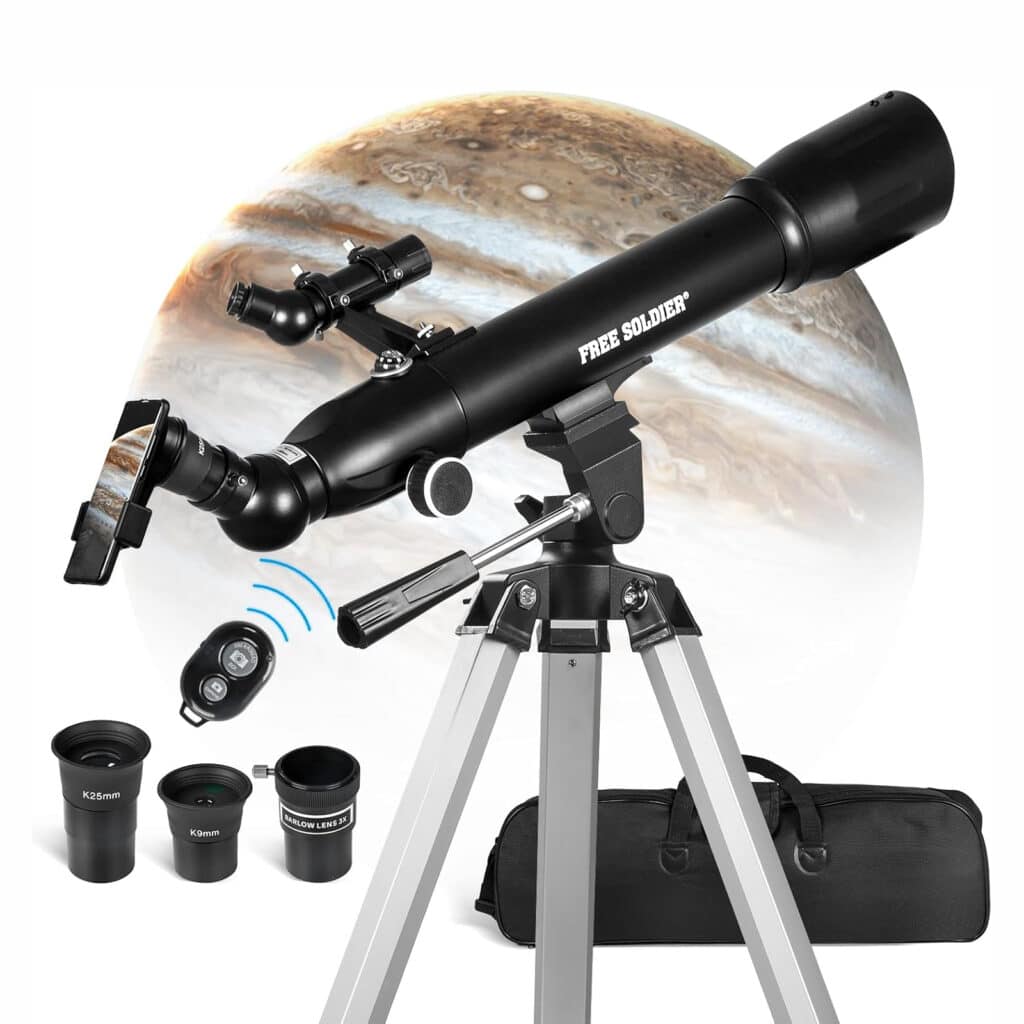
The Free Soldier Telescope rounds out our top five with its impressive 90mm aperture that gathers significant light for bright, clear images of celestial objects. This generous aperture size provides a noticeable advantage over smaller 60mm, 70mm, and 80mm models, especially when viewing faint deep-sky objects.
What makes this telescope particularly noteworthy is its patented 360° Rotating Zenith Lens that significantly enhances viewing comfort during extended observation sessions. This innovative feature allows for more natural body positioning when observing objects at different heights in the sky, reducing neck strain common with traditional designs.
The versatile magnification range from 28X to 233X provides excellent flexibility for different astronomical targets, from wide-field views of star clusters to detailed observations of lunar craters. The included K9mm and K25mm eyepieces deliver superior optical quality compared to standard H-series eyepieces found in many comparable telescopes.
The thoughtful inclusion of a universal phone adapter and wireless remote reflects Free Soldier’s understanding of modern astronomy’s social aspect, making it easy to capture and share discoveries. This integration of traditional optical excellence with contemporary connectivity features creates a well-rounded astronomical package.
Pros
- Large 90mm aperture for excellent light gathering
- Innovative 360° Rotating Zenith Lens
- Premium K-series eyepieces included
- Comprehensive wireless photography capabilities
- Detailed instructions for easy setup
Cons
- Heavier than some portable models
- Maximum magnification requires ideal conditions
- Less premium carrying case quality
- More complex assembly than simpler models
- Limited customer support availability
❓WHAT ARE TELESCOPES FOR STARGAZING?
Telescopes for stargazing are specialized optical instruments designed to collect and magnify light from distant celestial objects, making them appear larger and brighter to the human eye. Unlike regular telescopes designed for terrestrial viewing, astronomical telescopes feature specific optical configurations optimized for observing objects at extreme distances in low-light conditions.
The primary components include an objective lens or mirror that gathers light, a focusing mechanism that adjusts for sharp images, and eyepieces that magnify the collected light. Modern stargazing telescopes often incorporate advanced features such as computerized tracking systems, smartphone integration, and specialized filters for enhanced viewing of specific celestial phenomena.
These instruments typically fall into three main categories: refractor telescopes using lenses, reflector telescopes using mirrors, and compound telescopes combining both technologies. Each design offers distinct advantages for different types of astronomical observation, from detailed planetary viewing to capturing faint deep-sky objects like distant galaxies and nebulae.
For beginners and enthusiasts alike, today’s stargazing telescopes represent a gateway to exploring the universe, offering unprecedented access to cosmic wonders previously visible only to professional astronomers. The best models balance optical quality, ease of use, and portability to create rewarding stargazing experiences for users at all skill levels.
⭐Benefits of Telescopes For Stargazing
- Expanded Cosmic Access: View celestial objects invisible to the naked eye, including distant galaxies, nebulae, and star clusters.
- Educational Value: Provides hands-on astronomy lessons for all ages, fostering scientific curiosity through direct observation of cosmic phenomena.
- Photography Opportunities: Capture and share stunning images of celestial objects using smartphone adapters and digital eyepieces included with modern telescopes.
- Meditative Experience: Offers a peaceful escape from daily stress through the contemplative nature of observing the night sky.
- Weather Prediction Skills: Regular stargazing helps develop awareness of atmospheric conditions, cloud patterns, and seasonal visibility changes.
- Community Connection: Introduces enthusiasts to local astronomy clubs and online communities where knowledge sharing enhances the experience.
- Lifelong Hobby: Provides continuous learning as seasonal sky changes reveal new celestial targets throughout the year.
- Portable Adventure: Explore different viewing locations away from light pollution, combining outdoor excursions with astronomical discoveries.
Things To Consider When Buying Telescopes For Stargazing
- Aperture Size: Determines light-gathering ability and power to reveal faint objects; larger apertures provide superior views but increase weight.
- Mount Stability: Even slight vibrations can disrupt observations at high magnifications; prioritize sturdy tripods with smooth adjustment mechanisms.
- Optical Design Type: Refractors excel at planetary detail, reflectors offer better deep-sky performance, and compound designs balance versatility.
- Included Eyepieces: Quality telescopes should include at least two eyepieces of different focal lengths for viewing various celestial objects.
- Computerized vs. Manual: Computerized models offer automated object finding but require power, while manual telescopes develop valuable navigation skills.
- Portability Requirements: Consider whether you'll observe from home or transport your telescope to darker locations requiring lightweight designs.
- Future Expandability: Choose telescopes with standardized accessory ports that accept additional eyepieces, filters, and camera adapters as skills advance.
What to Avoid When Buying Telescopes For Stargazing
- Excessive Magnification Claims: Avoid telescopes advertising extreme magnifications on small apertures, as these produce dim, blurry, disappointing images.
- Flimsy Construction Materials: Steer clear of telescopes with plastic optical components, wobbly tripods, or loose adjustment knobs that frustrate users.
- Department Store Telescopes: These typically feature inferior optics and unstable mounts despite attractive packaging and misleading marketing claims.
- Missing Essential Accessories: Ensure your telescope includes a finderscope, multiple eyepieces, and sturdy mount to avoid disappointing first experiences.

By Nathan Ford – Research Specialist
Telescope Testing Specialist with 12 years of experience in astronomical equipment evaluation. Member of the International Astronomical Society, personally tested over 150 telescopes in various observing conditions.